
Katilda, Dawnhart Martyr // Katilda's Rising Dawn
Katilda, Dawnhart Martyr

 Legendary Creature — Spirit WarlockPower and toughness*/*
Card text
Flying, lifelink, protection from Vampires
Katilda's power and toughness are each equal to the number of permanents you control that are Spirits and/or enchantments.
Disturb  (You may cast this card from your graveyard transformed for its disturb cost.)
Katilda's Rising Dawn
Legendary Enchantment — Aura
Card text
Enchant creature
Enchanted creature has flying, lifelink, and protection from Vampires, and it gets +X/+X, where X is the number of permanents you control that are Spirits and/or enchantments.
If Katilda's Rising Dawn would be put into a graveyard from anywhere, exile it instead.
Showing Innistrad: Crimson Vow#21
Price
0.92 $
Foil 1.55 $
12 printings · up to 3.06 $
Daily estimate from Scryfall, not a shop quote.
Katilda, Dawnhart Martyr // Katilda's Rising Dawn keyword rules
Flying Rule 702.9
Flying is an evasion ability.
A creature with flying can’t be blocked except by creatures with flying and/or reach. A creature with flying can block a creature with or without flying. (See rule , “Declare Blockers Step,” and rule , “Reach.”)
Multiple instances of flying on the same creature are redundant.
Lifelink Rule 702.15
Lifelink is a static ability.
Damage dealt by a source with lifelink causes that source’s controller, or its owner if it has no controller, to gain that much life (in addition to any other results that damage causes). See rule .
If an object changes zones before an effect causes it to deal damage, its last known information is used to determine whether it had lifelink.
The lifelink rules function no matter what zone an object with lifelink deals damage from.
If multiple sources with lifelink deal damage at the same time, they cause separate life gain events (see rules –10).
Multiple instances of lifelink on the same object are redundant.
Transform Rule 701.28
To transform a permanent, turn it over so that its other face is up. Only transforming tokens and permanents represented by transforming double-faced cards can transform. (See rule , “Double-Faced Cards.”)
Although transforming a permanent uses the same physical action as turning a permanent face up or face down, they are different game actions. Abilities that trigger when a permanent is turned face down won’t trigger when that permanent transforms, and so on.
If a spell or ability instructs a player to transform a permanent that isn’t represented by a transforming token or a transforming double-faced card, nothing happens.
If a spell or ability instructs a player to transform a permanent, and the face that permanent would transform into is represented by an instant or sorcery card face, or is a transforming token that was created with an instant or sorcery face, nothing happens.
Some triggered abilities trigger when an object “transforms into” an object with a specified characteristic. Such an ability triggers if the object either transforms or converts (see rule ) and has the specified characteristic immediately after it does so.
If an activated or triggered ability of a permanent that isn’t a delayed triggered ability of that permanent tries to transform it, the permanent does so only if it hasn’t transformed or converted since the ability was put onto the stack. If a delayed triggered ability of a permanent tries to transform that permanent, the permanent does so only if it hasn’t transformed or converted since that delayed triggered ability was created. In both cases, if the permanent has already transformed or converted, an instruction to do either is ignored.
Some spells and abilities refer to a “transformed permanent.” This phrase refers to a permanent on the battlefield with its back face up that’s also a transforming double-faced card or a transforming token. A permanent with its front face up is never considered a transformed permanent, even if it had its back face up previously.
Protection Rule 702.16
Protection is a static ability, written “Protection from [quality].” This quality is usually a color (as in “protection from black”) but can be any characteristic value or information. If the quality happens to be a card name, it is treated as such only if the protection ability specifies that the quality is a name. If the quality is a card type, subtype, or supertype, the ability applies to sources that are permanents with that card type, subtype, or supertype and to any sources not on the battlefield that are of that card type, subtype, or supertype. This is an exception to rule .
A permanent or player with protection can’t be targeted by spells with the stated quality and can’t be targeted by abilities from a source with the stated quality.
A permanent or player with protection can’t be enchanted by Auras that have the stated quality. Such Auras attached to the permanent or player with protection will be put into their owners’ graveyards as a state-based action. (See rule , “State-Based Actions.”)
A permanent with protection can’t be equipped by Equipment that have the stated quality or fortified by Fortifications that have the stated quality. Such Equipment or Fortifications become unattached from that permanent as a state-based action, but remain on the battlefield. (See rule , “State-Based Actions.”)
Any damage that would be dealt by sources that have the stated quality to a permanent or player with protection is prevented.
Attacking creatures with protection can’t be blocked by creatures that have the stated quality.
“Protection from [quality A] and from [quality B]” is shorthand for “protection from [quality A]” and “protection from [quality B]”; it behaves as two separate protection abilities.
“Protection from each [characteristic]” is shorthand for “protection from [quality A],” “protection from [quality B],” and so on for each possible quality the listed characteristic could have; it behaves as multiple separate protection abilities.
“Protection from each [set of characteristics, qualities, or players]” is shorthand for “protection from [A],” “protection from [B],” and so on for each characteristic, quality, or player in the set. It behaves as multiple separate protection abilities.
“Protection from everything” is a variant of the protection ability. A permanent or player with protection from everything has protection from each object regardless of that object’s characteristic values. Such a permanent or player can’t be targeted by spells or abilities and can’t be enchanted by Auras. Such a permanent can’t be equipped by Equipment, fortified by Fortifications, or blocked by creatures. All damage that would be dealt to such a permanent or player is prevented.
“Protection from [a player]” is a variant of the protection ability. A permanent or player with protection from a specific player has protection from each object that player controls and protection from each object that player owns not controlled by another player, regardless of that object’s characteristic values. Such a permanent or player can’t be targeted by spells or abilities the specified player controls and can’t be enchanted by Auras that player controls. Such a permanent can’t be equipped by Equipment that player controls, fortified by Fortifications that player controls, or blocked by creatures that player controls. All damage that would be dealt to such a permanent or player by sources controlled by the specified player or owned by that player but not controlled by another player is prevented.
Multiple instances of protection from the same quality on the same permanent or player are redundant.
Some Auras both give the enchanted creature protection from a quality and say “this effect doesn’t remove” either that specific Aura or all Auras. This means that the specified Auras aren’t put into their owners’ graveyards as a state-based action. If the creature has other instances of protection from the same quality, those instances affect Auras as normal.
One Aura (Benevolent Blessing) gives the enchanted creature protection from a quality and says the effect doesn’t remove certain permanents that are “already attached to” that creature. This means that, when the protection effect starts to apply, any objects with the stated quality that are already attached to that creature (including the Aura giving that creature protection) will not be put into their owners’ graveyards as a state-based action. Other permanents with the stated quality can’t become attached to the creature. If the creature has other instances of protection from the same quality, those instances affect attached permanents as normal.
Enchant Rule 702.5
Enchant is a static ability, written “Enchant [object or player].” The enchant ability restricts what an Aura spell can target and what an Aura can enchant.
For more information about Auras, see rule , “Enchantments.”
If an Aura has multiple instances of enchant, all of them apply. The Aura’s target must follow the restrictions from all the instances of enchant. The Aura can enchant only objects or players that match all of its enchant abilities.
Auras that can enchant a player can target and be attached to players. Such Auras can’t target permanents and can’t be attached to permanents.
Disturb Rule 702.146
Disturb is an ability found on the front face of some transforming double-faced cards (see rule , “Double-Faced Cards”). “Disturb [cost]” means “You may cast this card transformed from your graveyard by paying [cost] rather than its mana cost.” See rule .
A resolving transforming double-faced spell that was cast using its disturb ability enters the battlefield with its back face up.
Katilda, Dawnhart Martyr // Katilda's Rising Dawn format legality
Constructed
- StandardNot legal
- PioneerLegal
- ModernLegal
- Future StandardNot legal
Eternal
- LegacyLegal
- VintageLegal
- PauperNot legal
- PremodernNot legal
- Old SchoolNot legal
- Penny DreadfulLegal
Commander
- CommanderLegal
- OathbreakerLegal
- Pauper CommanderNot legal
- Duel CommanderLegal
- PreDHNot legal
Arena & online
- HistoricLegal
- TimelessLegal
- AlchemyNot legal
- GladiatorLegal
- BrawlLegal
- Standard BrawlNot legal
- Competitive BrawlLegal
Other
- TLRLegal
All printings of Katilda, Dawnhart Martyr // Katilda's Rising Dawn 12
Cards similar to Katilda, Dawnhart Martyr // Katilda's Rising Dawn
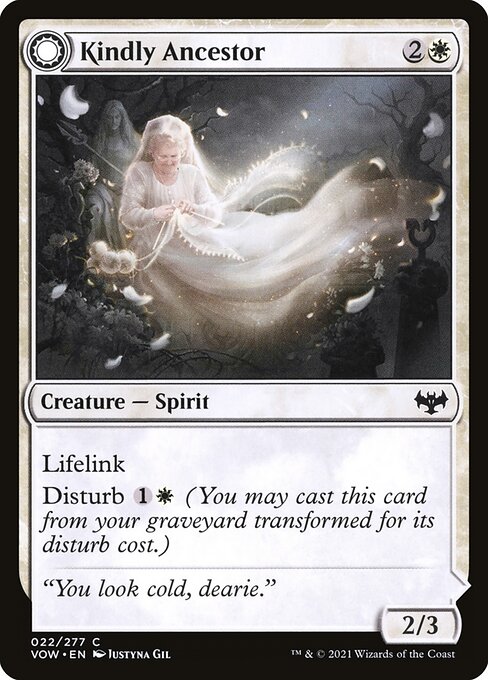 Kindly Ancestor // Ancestor's EmbraceCreature — Spirit // Enchantment — Aura
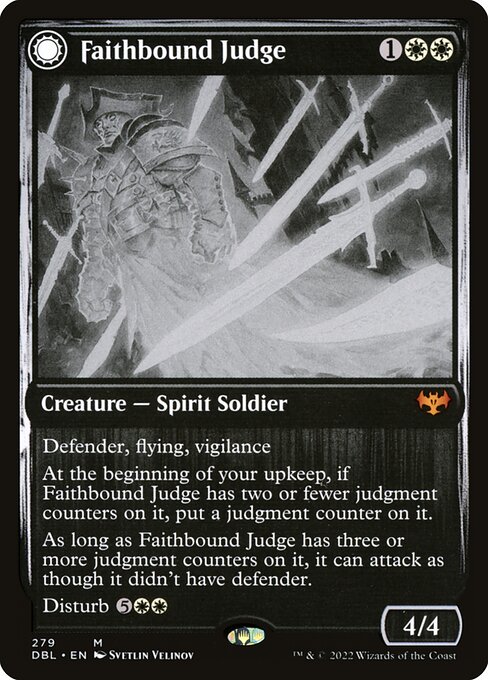 Faithbound Judge // Sinner's JudgmentCreature — Spirit Soldier // Enchantment — Aura Curse
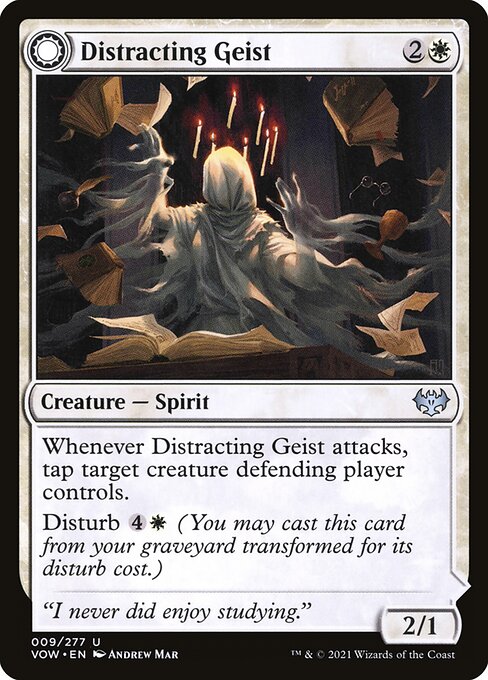 Distracting Geist // Clever DistractionCreature — Spirit // Enchantment — Aura
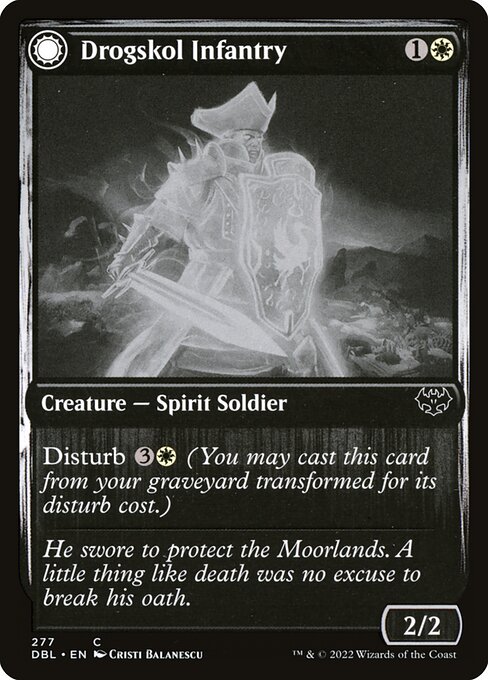 Drogskol Infantry // Drogskol ArmamentsCreature — Spirit Soldier // Enchantment — Aura
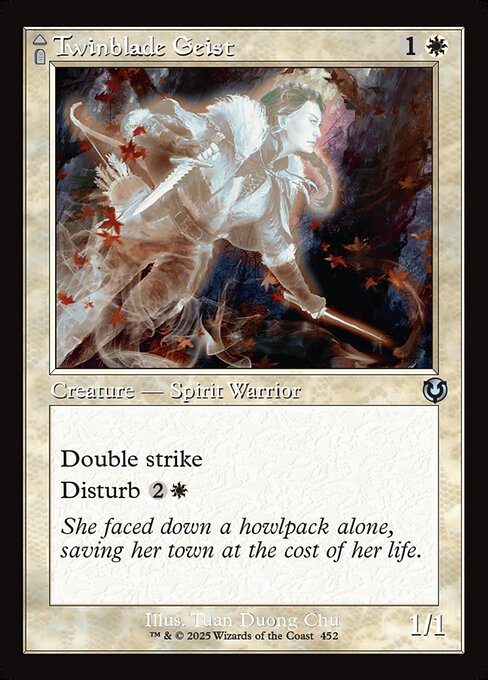 Twinblade Geist // Twinblade InvocationCreature — Spirit Warrior // Enchantment — Aura
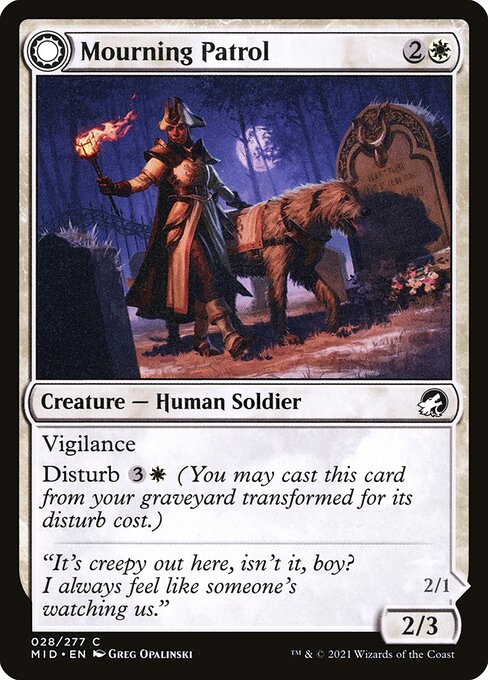 Mourning Patrol // Morning ApparitionCreature — Human Soldier // Creature — Spirit Soldier
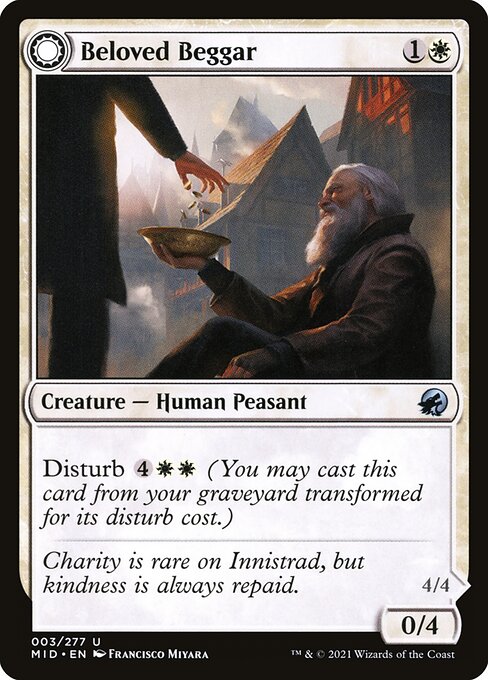 Beloved Beggar // Generous SoulCreature — Human Peasant // Creature — Spirit
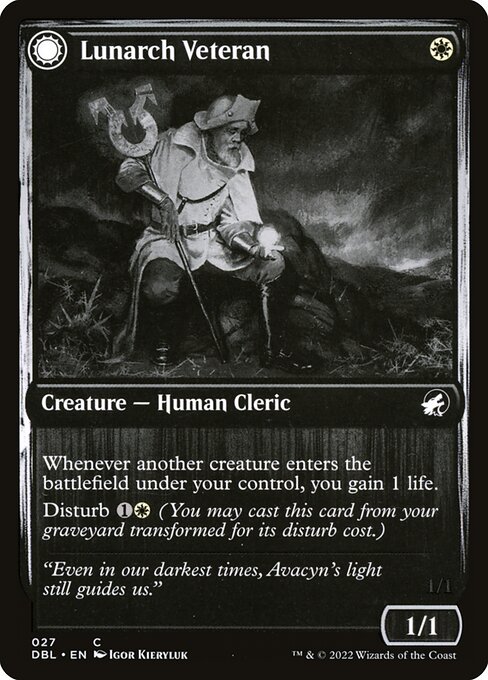 Lunarch Veteran // Luminous PhantomCreature — Human Cleric // Creature — Spirit Cleric
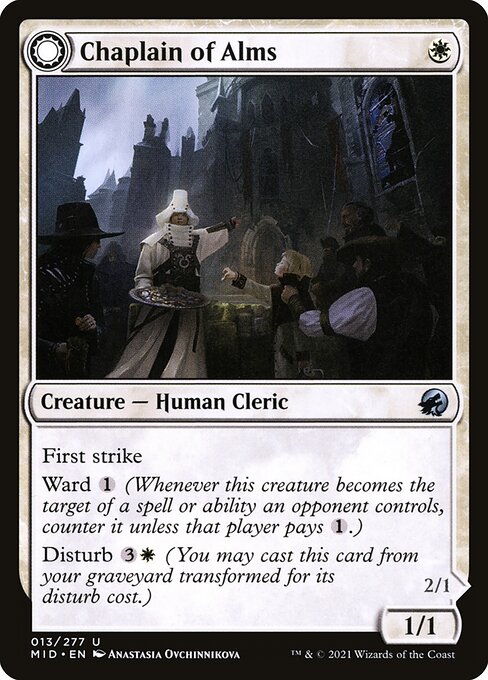 Chaplain of Alms // Chapel ShieldgeistCreature — Human Cleric // Creature — Spirit Cleric
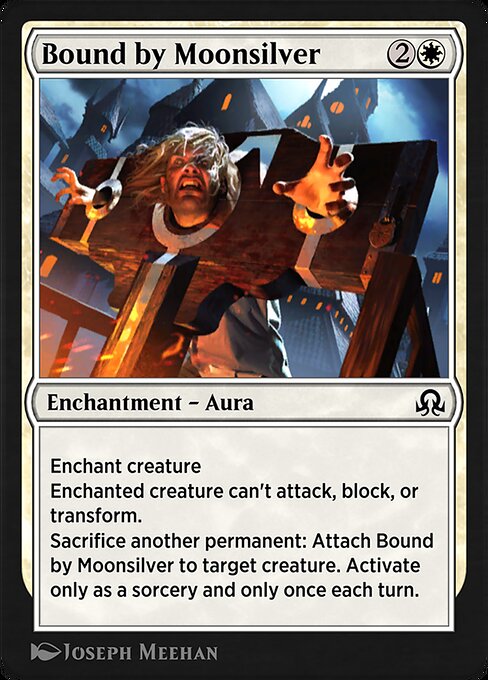 Bound by Moonsilver
 Enchantment — Aura
Show 20 more similar cards
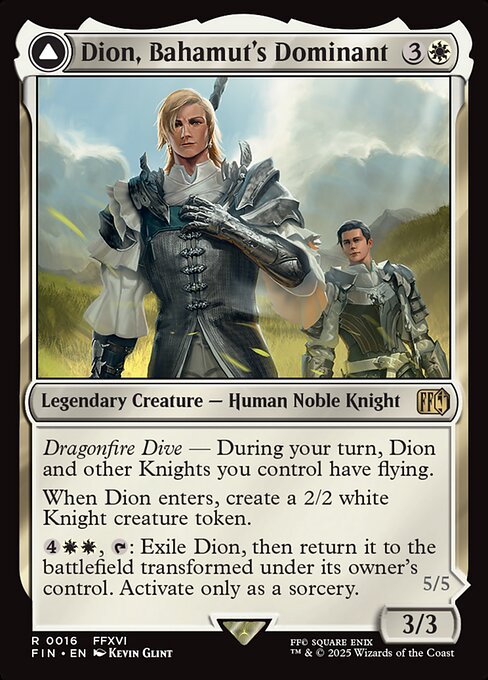 Dion, Bahamut's Dominant // Bahamut, Warden of LightLegendary Creature — Human Noble Knight // Legendary Enchantment Creature — Saga Dragon
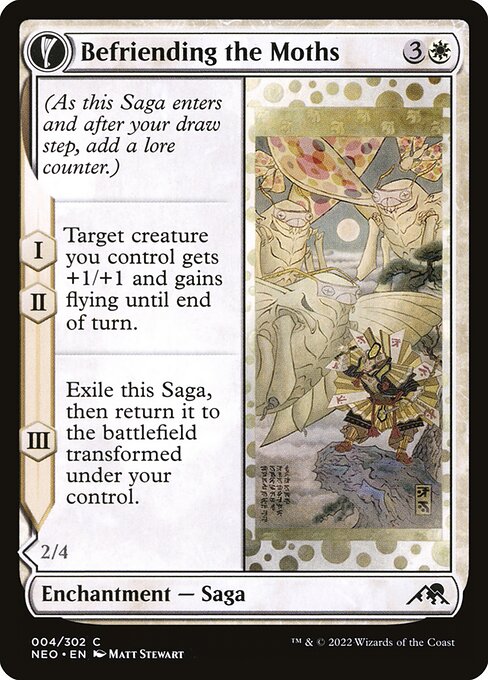 Befriending the Moths // Imperial MothEnchantment — Saga // Enchantment Creature — Insect
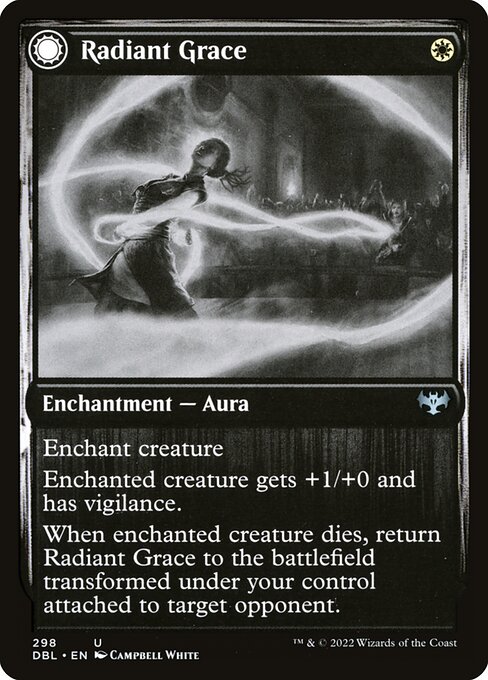 Radiant Grace // Radiant RestraintsEnchantment — Aura // Enchantment — Aura Curse
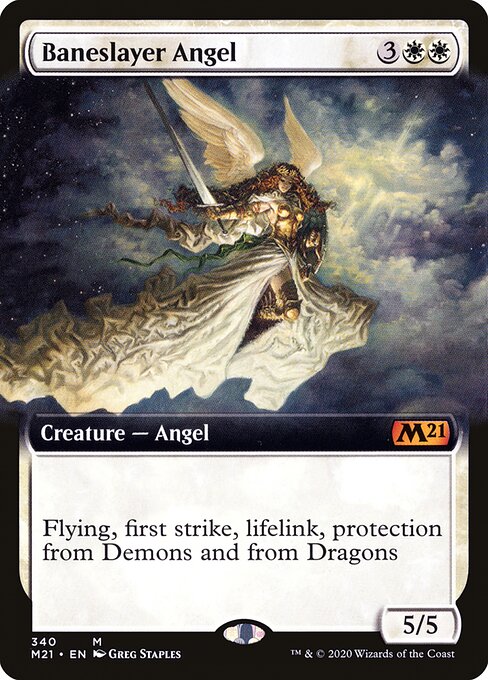 Baneslayer AngelCreature — Angel
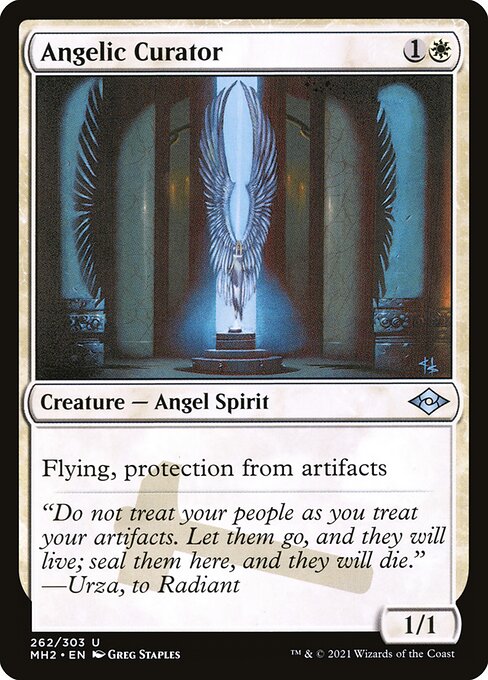 Angelic CuratorCreature — Angel Spirit
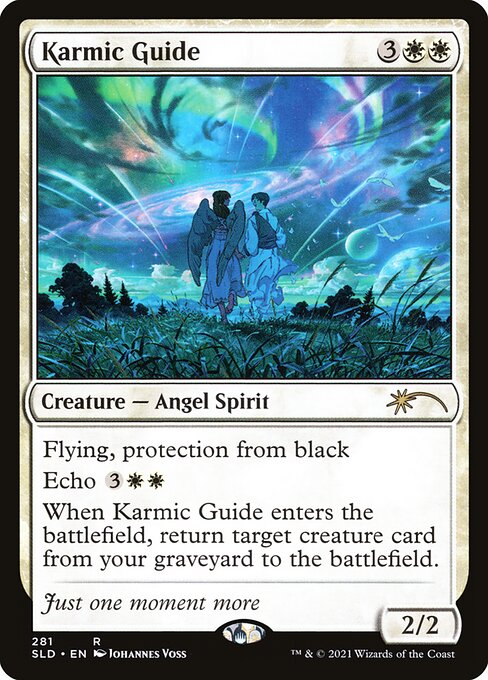 Karmic GuideCreature — Angel Spirit
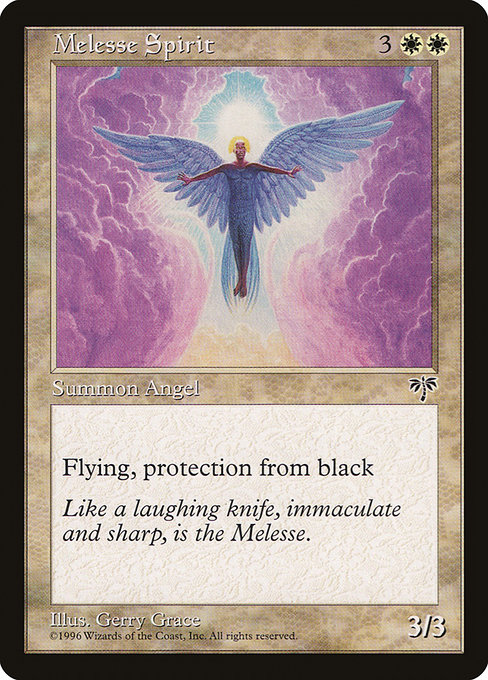 Melesse SpiritCreature — Angel Spirit
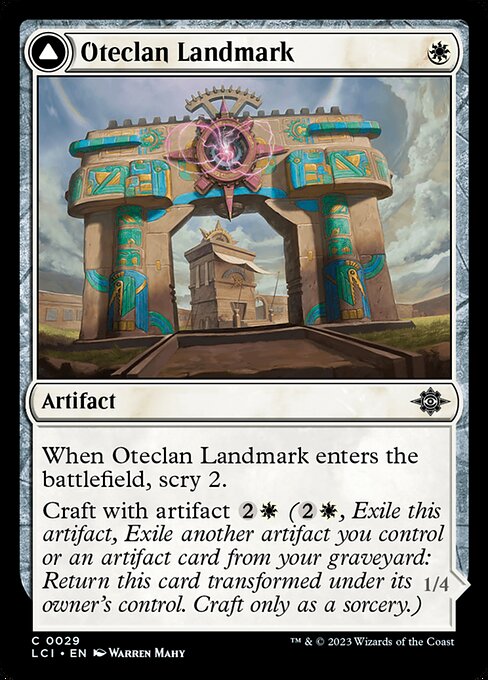 Oteclan Landmark // Oteclan LevitatorArtifact // Artifact Creature — Golem
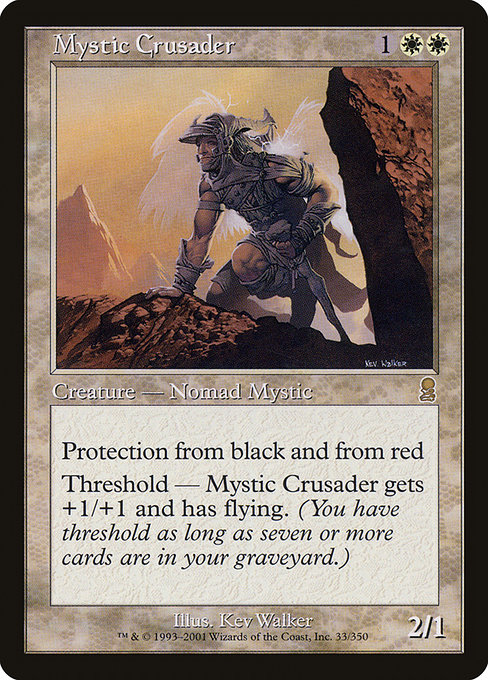 Mystic CrusaderCreature — Human Nomad Mystic
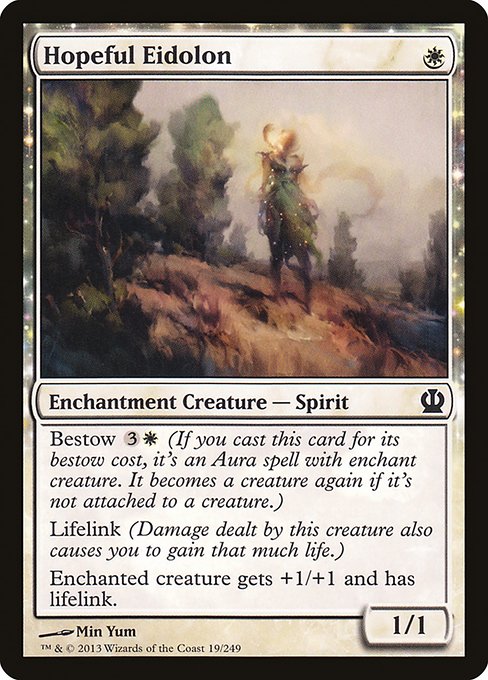 Hopeful EidolonEnchantment Creature — Spirit
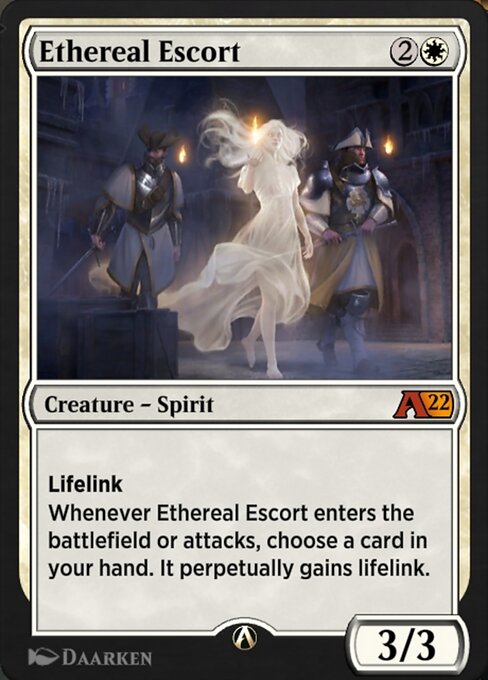 Ethereal EscortCreature — Spirit
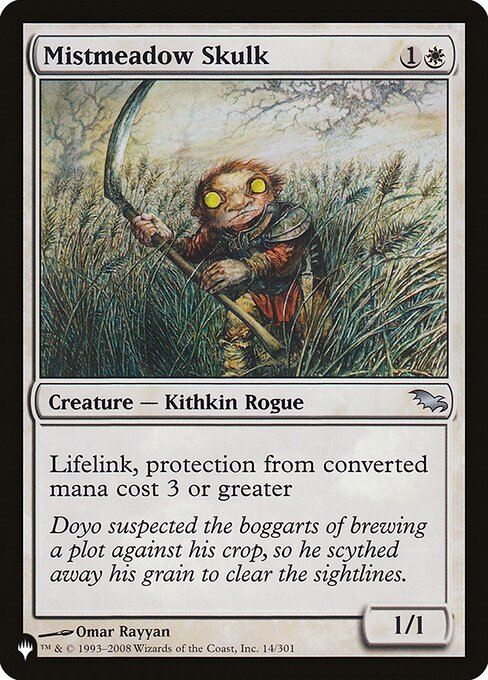 Mistmeadow SkulkCreature — Kithkin Rogue
 Shattered AcolyteCreature — Dwarf Warlock
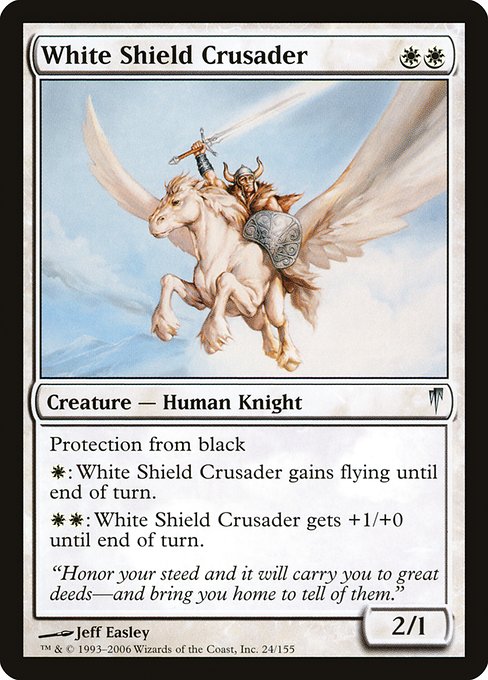 White Shield CrusaderCreature — Human Knight
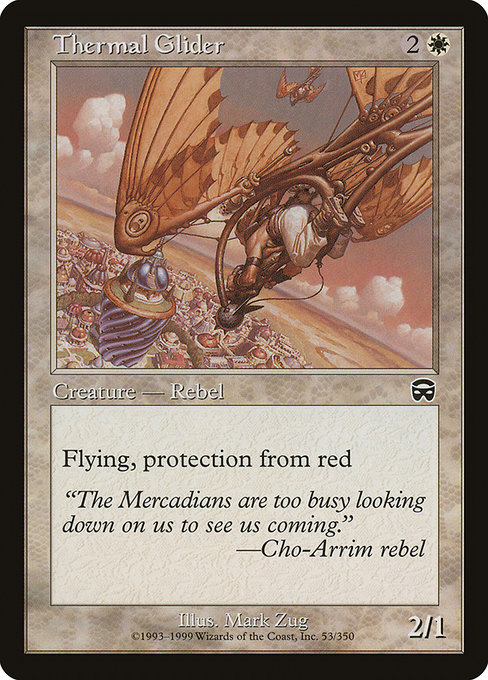 Thermal GliderCreature — Human Rebel
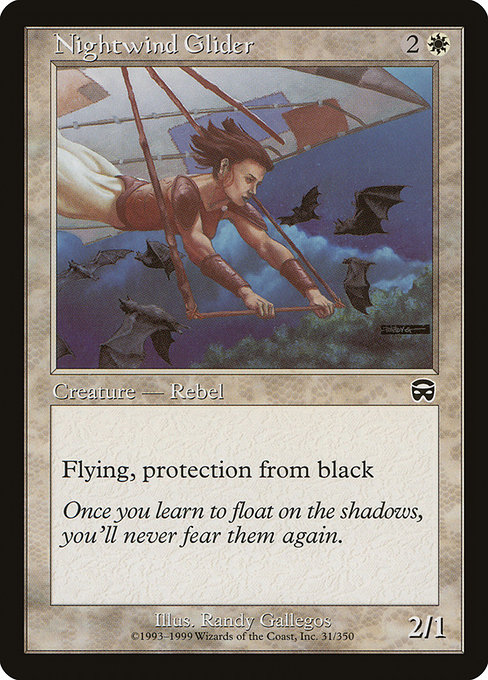 Nightwind GliderCreature — Human Rebel
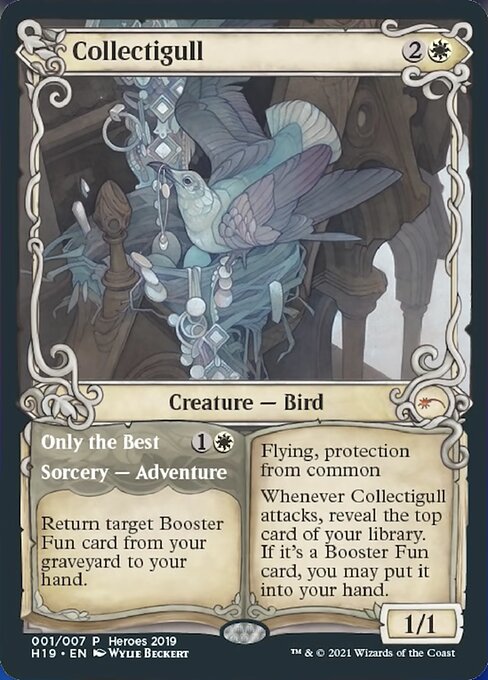 Collectigull // Only the Best // Creature — Bird // Sorcery — Adventure
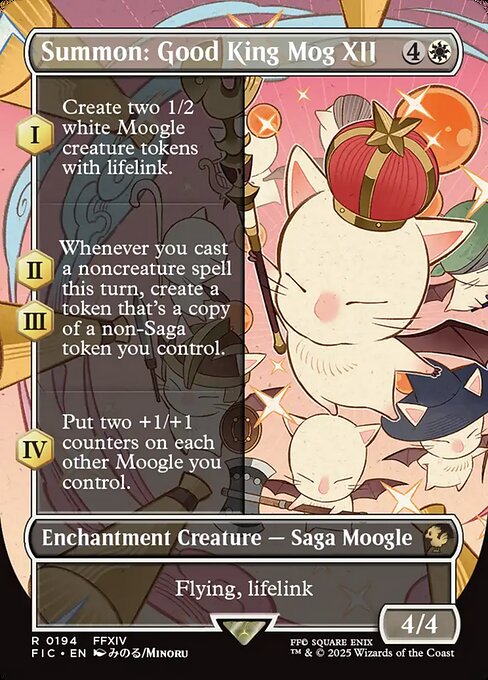 Summon: Good King Mog XII
 Enchantment Creature — Saga Moogle
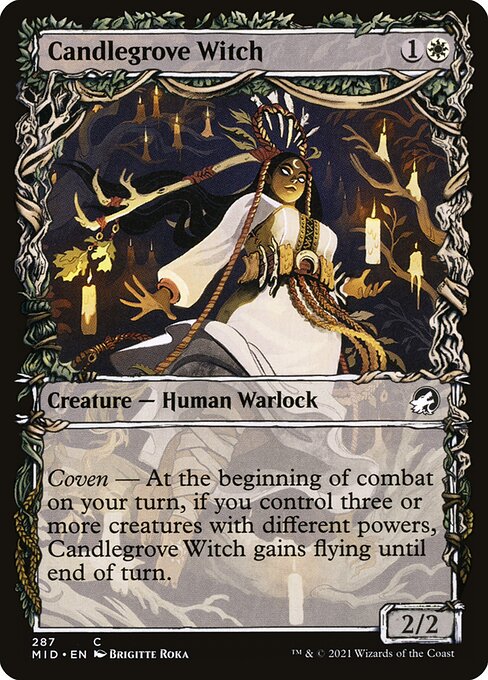 Candlegrove WitchCreature — Human Warlock
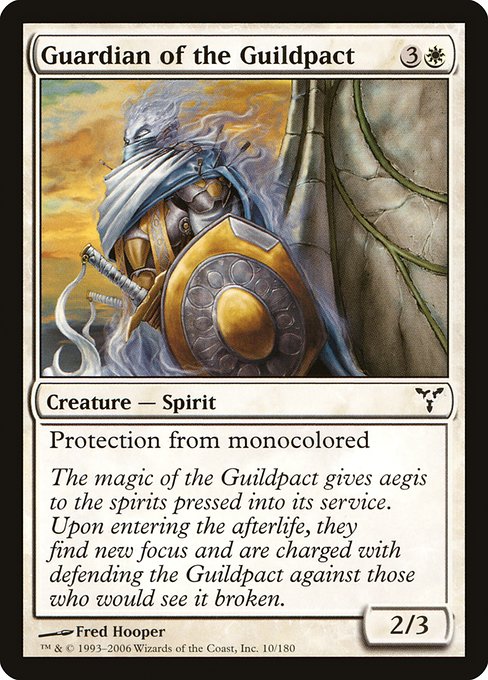 Guardian of the GuildpactCreature — Spirit