
Akroma, Angel of Fury

 Legendary Creature — AngelPower and toughness6/6
Card text
This spell can't be countered.
Flying, trample, protection from white and from blue
: Akroma gets +1/+0 until end of turn.
Morph  (You may cast this card face down as a 2/2 creature for . Turn her face up any time for her morph cost.)
Showing Planar Chaos#94
Price
1.42 $
Foil 18.23 $
42 printings · up to 1.81 $
Daily estimate from Scryfall, not a shop quote.
Akroma, Angel of Fury rulings
If Akroma, Angel of Fury is cast face down, it can be countered.
A spell or ability that counters spells can still target Akroma. When that spell or ability resolves, Akroma won't be countered, but any additional effects of the countering spell or ability will still happen.
In a Commander game where Akroma is your commander, you may cast it face down from the command zone by paying
plus  for each time it has been cast from your command zone. The cost to turn it face up is unaffected. While face down, the combat damage it deals is still counted as damage dealt by your commander.
Akroma, Angel of Fury keyword rules
Flying Rule 702.9
Flying is an evasion ability.
A creature with flying can’t be blocked except by creatures with flying and/or reach. A creature with flying can block a creature with or without flying. (See rule , “Declare Blockers Step,” and rule , “Reach.”)
Multiple instances of flying on the same creature are redundant.
Morph Rule 702.37
Morph is a static ability that functions in any zone from which you could play the card it’s on, and the morph effect works any time the card is face down. “Morph [cost]” means “You may cast this card as a 2/2 face-down creature with no text, no name, no subtypes, and no mana cost by paying {3} rather than paying its mana cost.” (See rule , “Face-Down Spells and Permanents.”)
Megamorph is a variant of the morph ability. “Megamorph [cost]” means “You may cast this card as a 2/2 face-down creature with no text, no name, no subtypes, and no mana cost by paying {3} rather than paying its mana cost” and “As this permanent is turned face up, put a +1/+1 counter on it if its megamorph cost was paid to turn it face up.” A megamorph cost is a morph cost.
To cast a card using its morph ability, turn it face down and announce that you’re using a morph ability. It becomes a 2/2 face-down creature card with no text, no name, no subtypes, and no mana cost. Any effects or prohibitions that would apply to casting a card with these characteristics (and not the face-up card’s characteristics) are applied to casting this card. These values are the copiable values of that object’s characteristics. (See rule , “Interaction of Continuous Effects,” and rule , “Copying Objects.”) Put it onto the stack (as a face-down spell with the same characteristics), and pay {3} rather than pay its mana cost. This follows the rules for paying alternative costs. You can use a morph ability to cast a card from any zone from which you could normally cast it. When the spell resolves, it enters the battlefield with the same characteristics the spell had. The morph effect applies to the face-down object wherever it is, and it ends when the permanent is turned face up.
You can’t normally cast a card face down. A morph ability allows you to do so.
Any time you have priority, you may turn a face-down permanent you control with a morph ability face up. This is a special action; it doesn’t use the stack (see rule ). To do this, show all players what the permanent’s morph cost would be if it were face up, pay that cost, then turn the permanent face up. (If the permanent wouldn’t have a morph cost if it were face up, it can’t be turned face up this way.) The morph effect on it ends, and it regains its normal characteristics. Any abilities relating to the permanent entering the battlefield don’t trigger when it’s turned face up and don’t have any effect, because the permanent has already entered the battlefield.
If a permanent’s morph cost includes X, other abilities of that permanent may also refer to X. The value of X in those abilities is equal to the value of X chosen as the morph special action was taken.
See rule , “Face-Down Spells and Permanents,” for more information about how to cast cards with a morph ability.
Protection Rule 702.16
Protection is a static ability, written “Protection from [quality].” This quality is usually a color (as in “protection from black”) but can be any characteristic value or information. If the quality happens to be a card name, it is treated as such only if the protection ability specifies that the quality is a name. If the quality is a card type, subtype, or supertype, the ability applies to sources that are permanents with that card type, subtype, or supertype and to any sources not on the battlefield that are of that card type, subtype, or supertype. This is an exception to rule .
A permanent or player with protection can’t be targeted by spells with the stated quality and can’t be targeted by abilities from a source with the stated quality.
A permanent or player with protection can’t be enchanted by Auras that have the stated quality. Such Auras attached to the permanent or player with protection will be put into their owners’ graveyards as a state-based action. (See rule , “State-Based Actions.”)
A permanent with protection can’t be equipped by Equipment that have the stated quality or fortified by Fortifications that have the stated quality. Such Equipment or Fortifications become unattached from that permanent as a state-based action, but remain on the battlefield. (See rule , “State-Based Actions.”)
Any damage that would be dealt by sources that have the stated quality to a permanent or player with protection is prevented.
Attacking creatures with protection can’t be blocked by creatures that have the stated quality.
“Protection from [quality A] and from [quality B]” is shorthand for “protection from [quality A]” and “protection from [quality B]”; it behaves as two separate protection abilities.
“Protection from each [characteristic]” is shorthand for “protection from [quality A],” “protection from [quality B],” and so on for each possible quality the listed characteristic could have; it behaves as multiple separate protection abilities.
“Protection from each [set of characteristics, qualities, or players]” is shorthand for “protection from [A],” “protection from [B],” and so on for each characteristic, quality, or player in the set. It behaves as multiple separate protection abilities.
“Protection from everything” is a variant of the protection ability. A permanent or player with protection from everything has protection from each object regardless of that object’s characteristic values. Such a permanent or player can’t be targeted by spells or abilities and can’t be enchanted by Auras. Such a permanent can’t be equipped by Equipment, fortified by Fortifications, or blocked by creatures. All damage that would be dealt to such a permanent or player is prevented.
“Protection from [a player]” is a variant of the protection ability. A permanent or player with protection from a specific player has protection from each object that player controls and protection from each object that player owns not controlled by another player, regardless of that object’s characteristic values. Such a permanent or player can’t be targeted by spells or abilities the specified player controls and can’t be enchanted by Auras that player controls. Such a permanent can’t be equipped by Equipment that player controls, fortified by Fortifications that player controls, or blocked by creatures that player controls. All damage that would be dealt to such a permanent or player by sources controlled by the specified player or owned by that player but not controlled by another player is prevented.
Multiple instances of protection from the same quality on the same permanent or player are redundant.
Some Auras both give the enchanted creature protection from a quality and say “this effect doesn’t remove” either that specific Aura or all Auras. This means that the specified Auras aren’t put into their owners’ graveyards as a state-based action. If the creature has other instances of protection from the same quality, those instances affect Auras as normal.
One Aura (Benevolent Blessing) gives the enchanted creature protection from a quality and says the effect doesn’t remove certain permanents that are “already attached to” that creature. This means that, when the protection effect starts to apply, any objects with the stated quality that are already attached to that creature (including the Aura giving that creature protection) will not be put into their owners’ graveyards as a state-based action. Other permanents with the stated quality can’t become attached to the creature. If the creature has other instances of protection from the same quality, those instances affect attached permanents as normal.
Trample Rule 702.19
Trample is a static ability that modifies the rules for assigning an attacking creature’s combat damage. The ability has no effect when a creature with trample is blocking or is dealing noncombat damage. (See rule , “Combat Damage Step.”)
The controller of an attacking creature with trample first assigns damage to the creature(s) blocking it. Once all those blocking creatures are assigned lethal damage, any excess damage is assigned as its controller chooses among those blocking creatures and the player, planeswalker, or battle the creature is attacking. When checking for assigned lethal damage, take into account damage already marked on the creature and damage from other creatures that’s being assigned during the same combat damage step, but not any abilities or effects that might change the amount of damage that’s actually dealt. The attacking creature’s controller need not assign lethal damage to all those blocking creatures but in that case can’t assign any damage to the player or planeswalker it’s attacking.
Trample over planeswalkers is a variant of trample that modifies the rules for assigning combat damage to planeswalkers. The controller of a creature with trample over planeswalkers assigns that creature’s combat damage as described in rule , with one exception. If that creature is attacking a planeswalker, after lethal damage is assigned to all blocking creatures and damage at least equal to the loyalty of the planeswalker the creature is attacking is assigned to that planeswalker, further excess damage may be assigned as the attacking creature’s controller chooses among those blocking creatures, that planeswalker, and that planeswalker’s controller. When checking for assigned damage equal to a planeswalker’s loyalty, take into account damage from other creatures that’s being assigned during the same combat damage step, but not any abilities or effects that might change the amount of damage that’s actually dealt.
If an attacking creature with trample or trample over planeswalkers is blocked, but there are no creatures blocking it when damage is assigned, its damage is assigned to the defending player and/or planeswalker as though all blocking creatures have been assigned lethal damage.
If a creature with trample over planeswalkers is attacking a planeswalker and that planeswalker is removed from combat, the creature’s damage may be assigned to the defending player once all blocking creatures have been dealt lethal damage or, if there are no blocking creatures when damage is assigned, all its damage is assigned to the defending player. This is an exception to rule , and it does not cause the creature to be attacking that player.
If a creature without trample over planeswalkers is attacking a planeswalker, none of its combat damage can be assigned to the defending player, even if that planeswalker has been removed from combat or the damage the attacking creature could assign is greater than the planeswalker’s loyalty.
Multiple instances of trample on the same creature are redundant. Multiple instances of trample over planeswalkers on the same creature are redundant.
Akroma, Angel of Fury format legality
Constructed
- StandardNot legal
- PioneerNot legal
- ModernLegal
- Future StandardNot legal
Eternal
- LegacyLegal
- VintageLegal
- PauperNot legal
- PremodernNot legal
- Old SchoolNot legal
- Penny DreadfulLegal
Commander
- CommanderLegal
- OathbreakerLegal
- Pauper CommanderNot legal
- Duel CommanderLegal
- PreDHLegal
Arena & online
- HistoricNot legal
- TimelessNot legal
- AlchemyNot legal
- GladiatorNot legal
- BrawlNot legal
- Standard BrawlNot legal
- Competitive BrawlNot legal
Other
- TLRNot legal
All printings of Akroma, Angel of Fury 42
Cards similar to Akroma, Angel of Fury
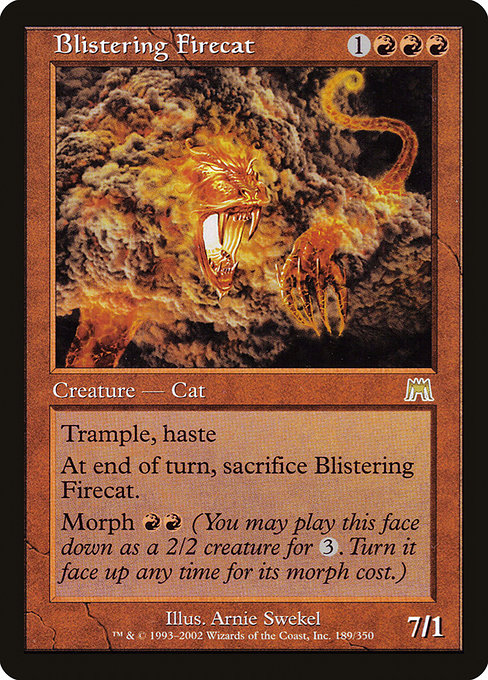 Blistering Firecat
 Creature — Elemental Cat
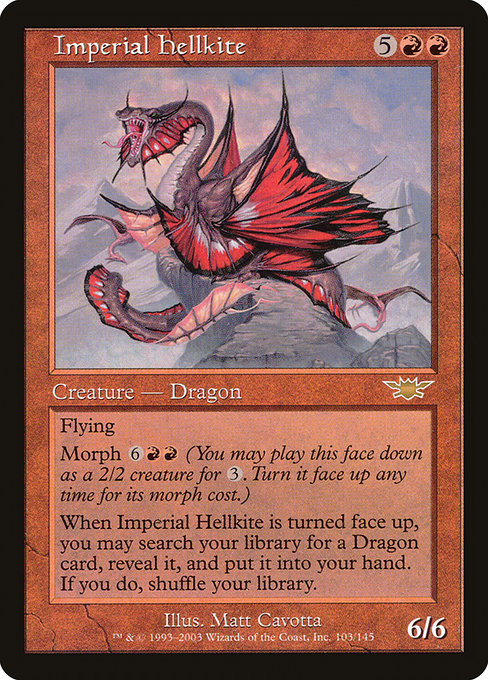 Imperial HellkiteCreature — Dragon
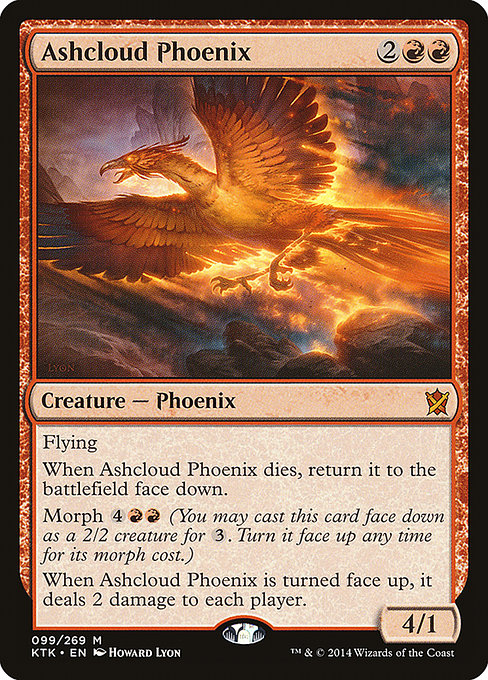 Ashcloud PhoenixCreature — Phoenix
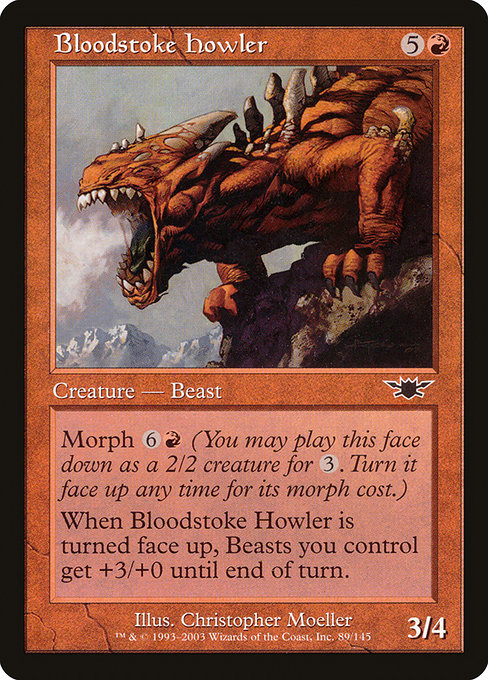 Bloodstoke HowlerCreature — Beast
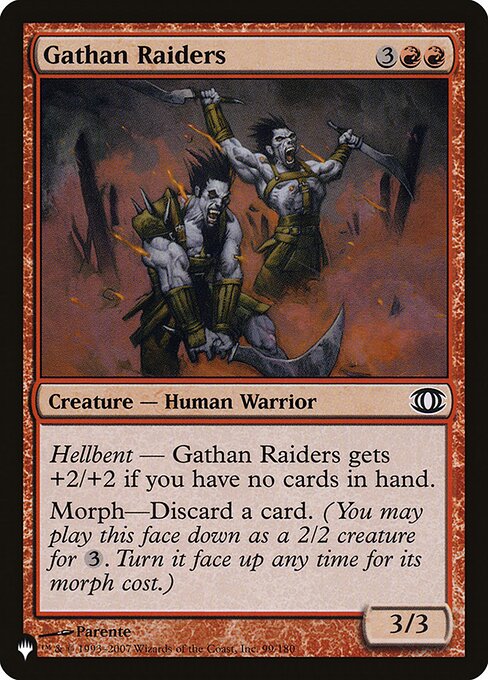 Gathan RaidersCreature — Human Warrior
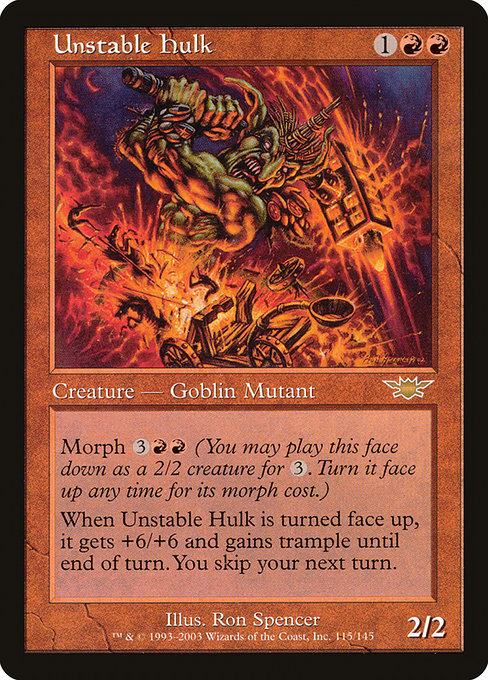 Unstable HulkCreature — Goblin Mutant
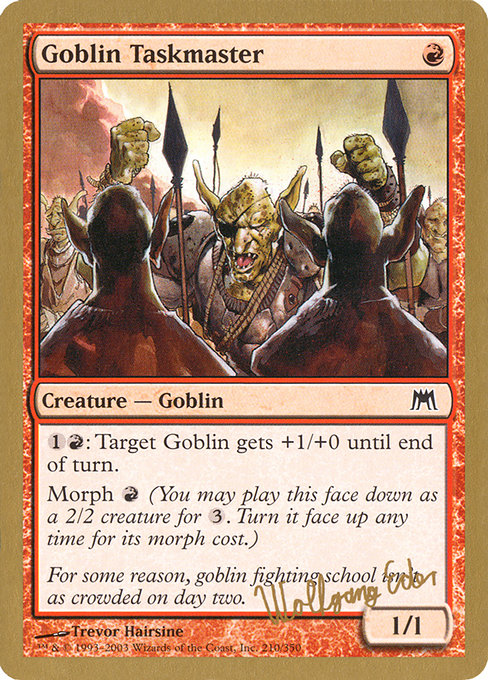 Goblin TaskmasterCreature — Goblin
 Balefang the UnslayableLegendary Creature — Demon Dragon
 Kevin, Questing Dragon
 Legendary Creature — Dragon
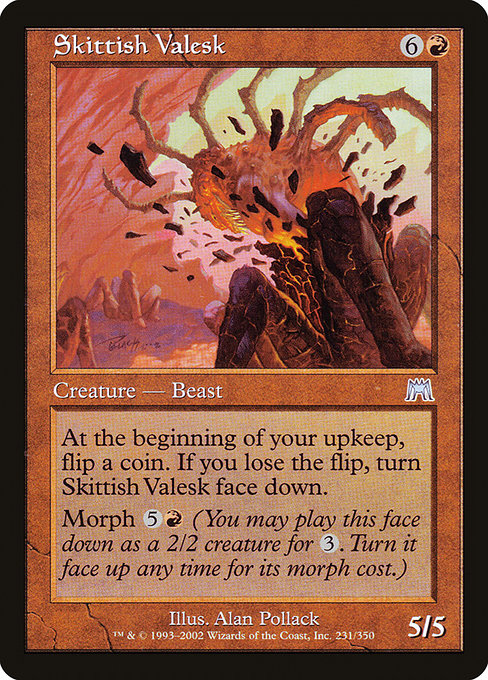 Skittish Valesk
 Creature — Beast
Show 20 more similar cards
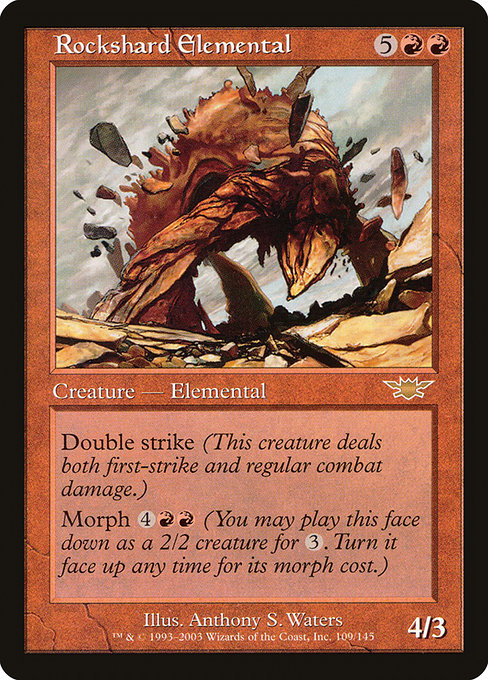 Rockshard ElementalCreature — Elemental
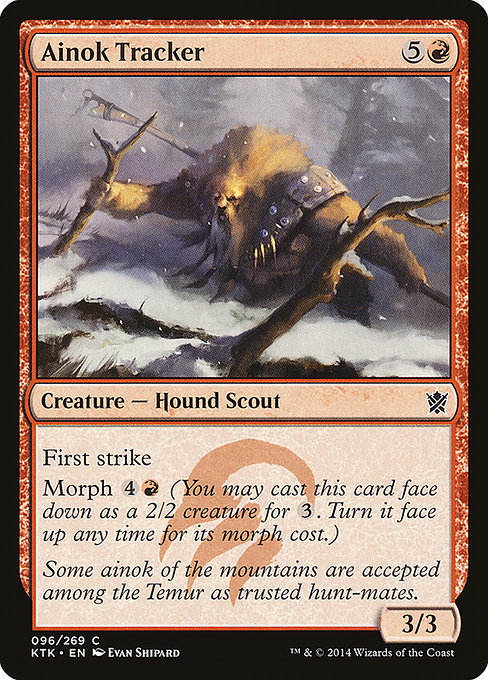 Ainok TrackerCreature — Dog Scout
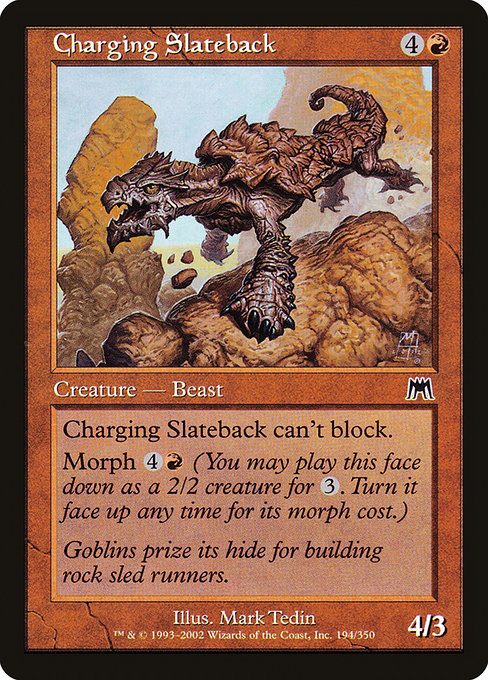 Charging SlatebackCreature — Beast
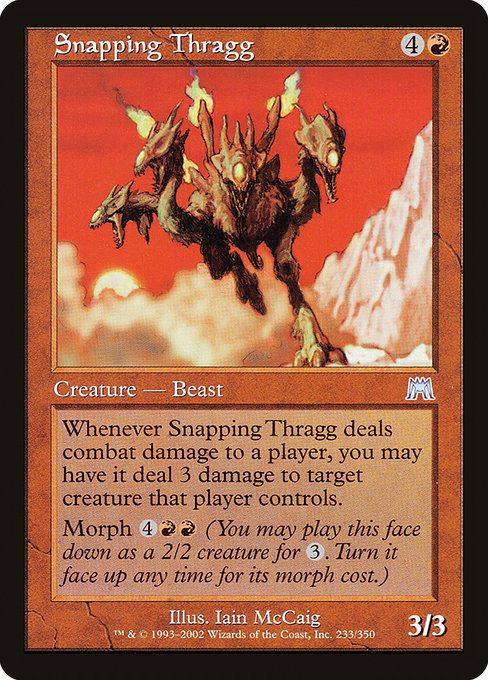 Snapping ThraggCreature — Beast
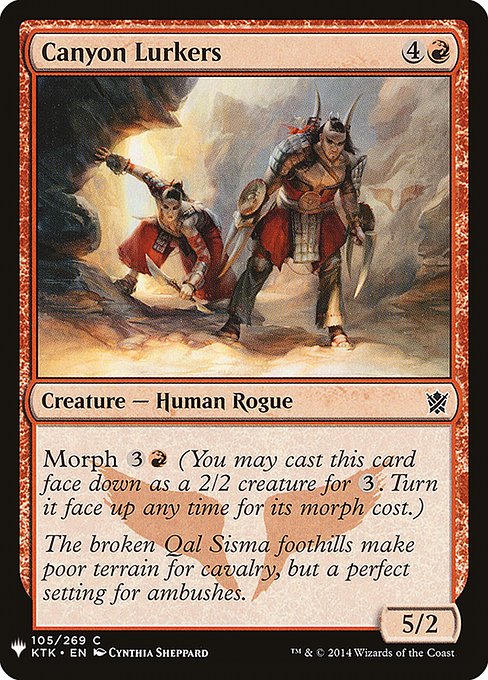 Canyon LurkersCreature — Human Rogue
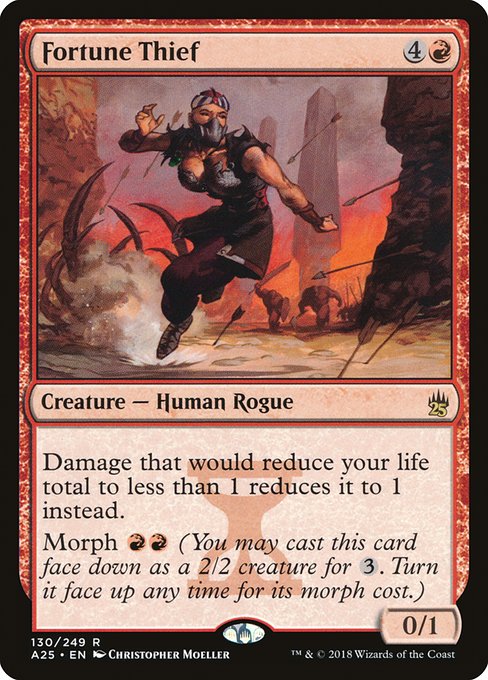 Fortune ThiefCreature — Human Rogue
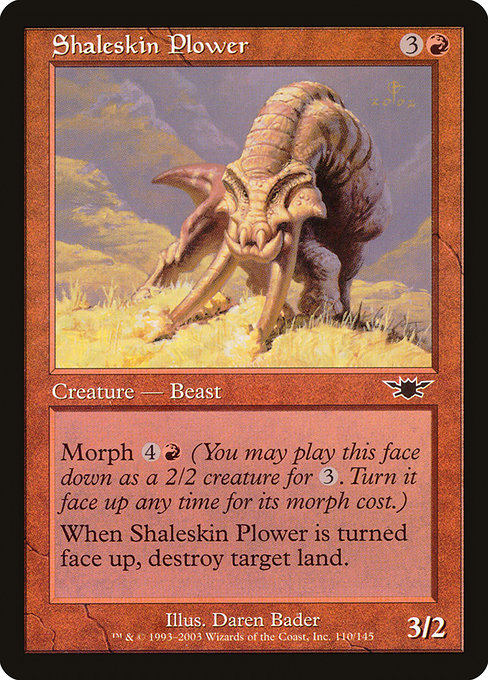 Shaleskin PlowerCreature — Beast
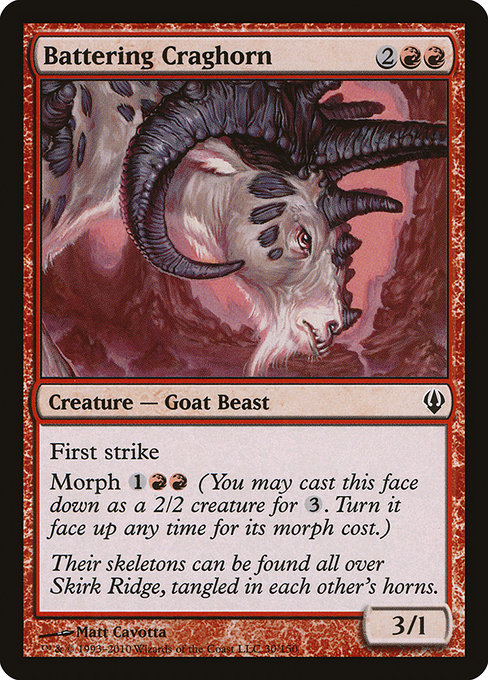 Battering CraghornCreature — Goat Beast
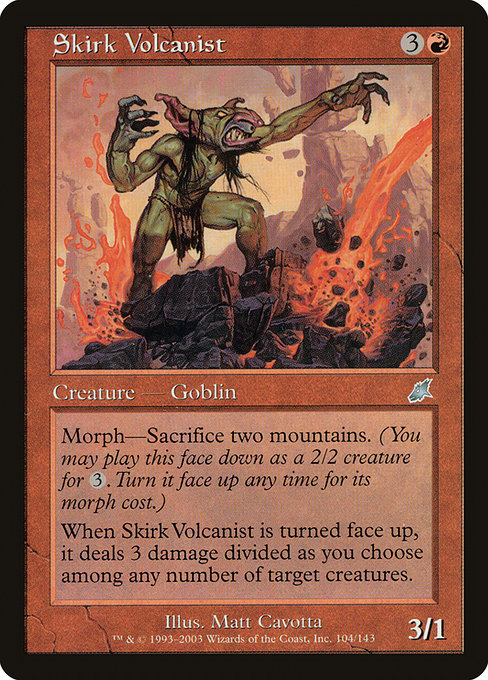 Skirk VolcanistCreature — Goblin
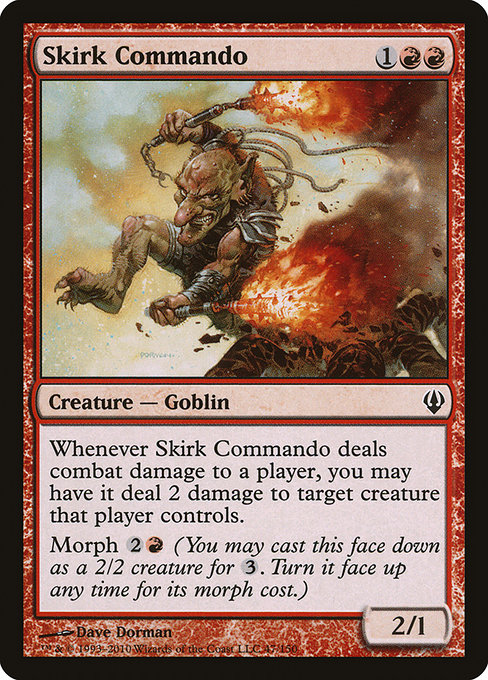 Skirk CommandoCreature — Goblin
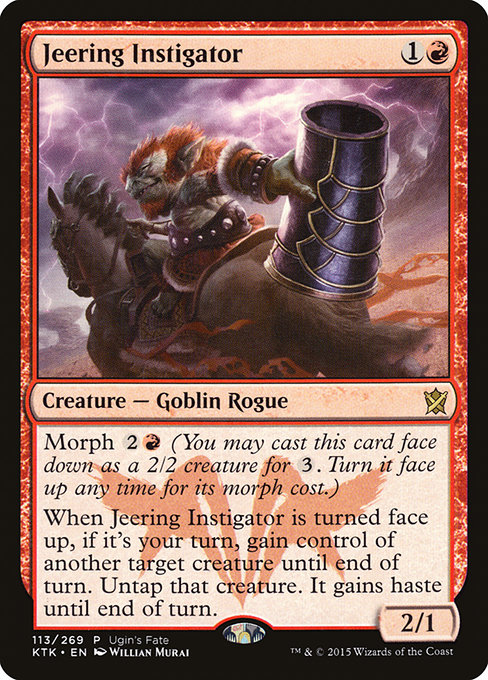 Jeering InstigatorCreature — Goblin Rogue
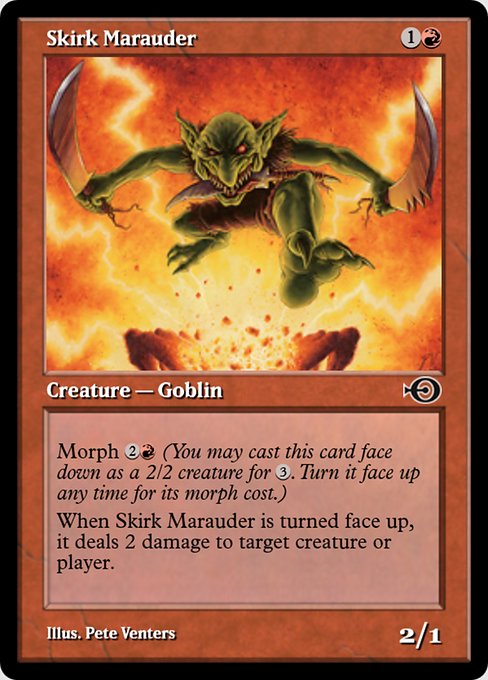 Skirk MarauderCreature — Goblin
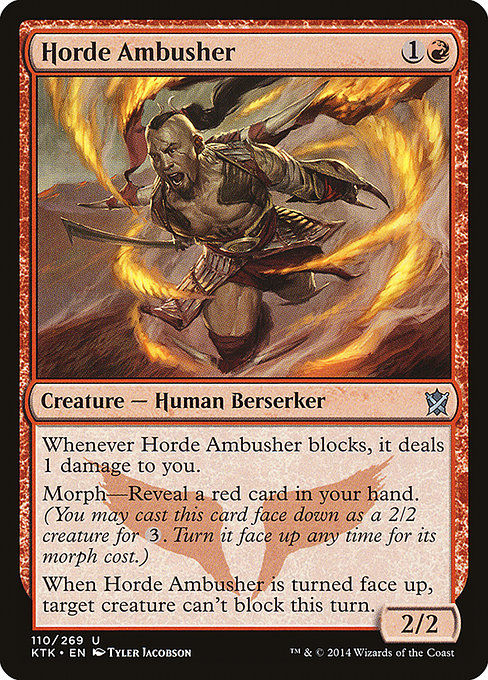 Horde AmbusherCreature — Human Berserker
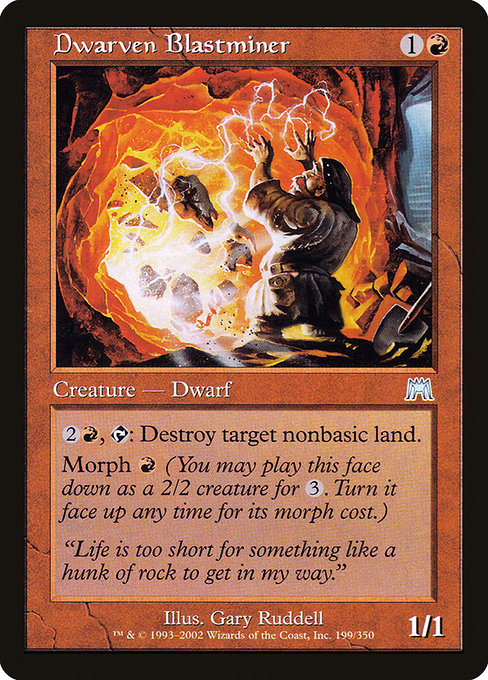 Dwarven BlastminerCreature — Dwarf
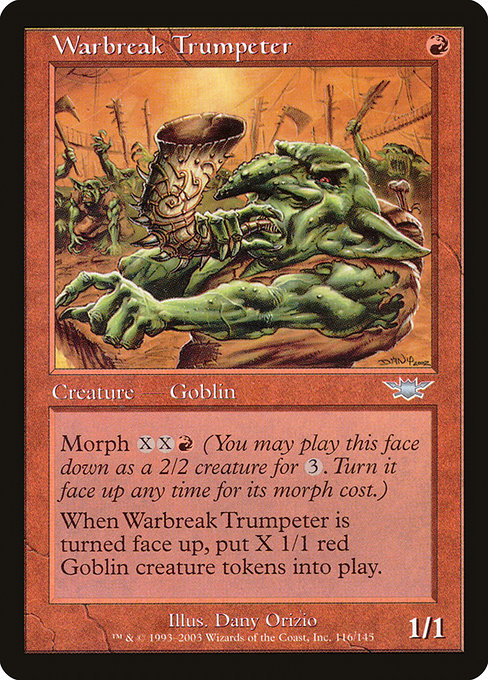 Warbreak TrumpeterCreature — Goblin
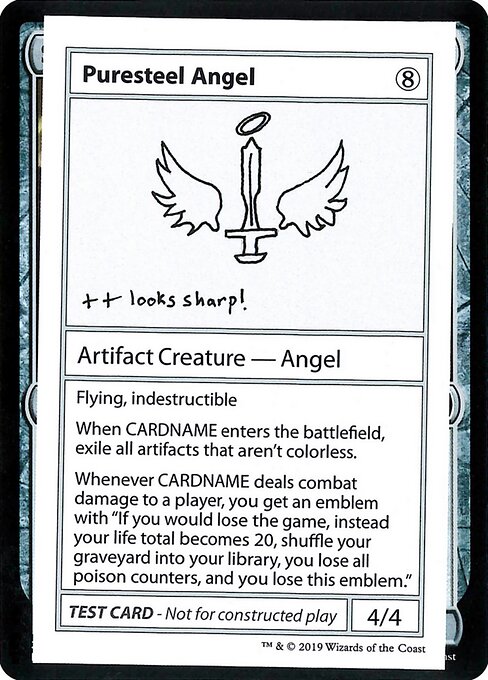 Puresteel Angel
 Artifact Creature — Angel
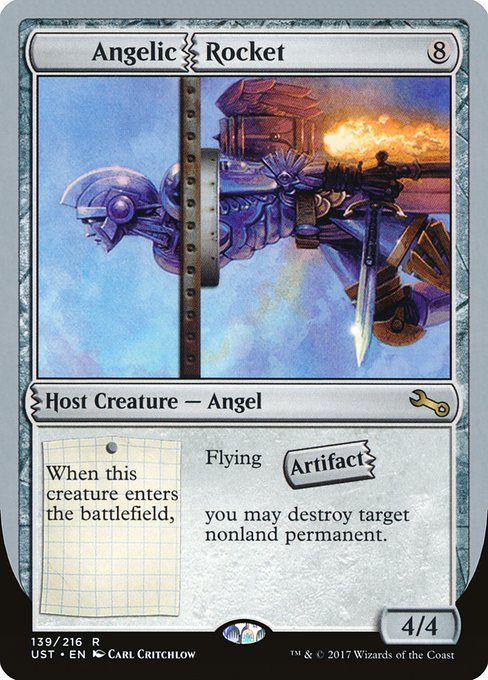 Angelic RocketHost Artifact Creature — Angel
 Emrakul, the Promised End
 Legendary Creature — Eldrazi
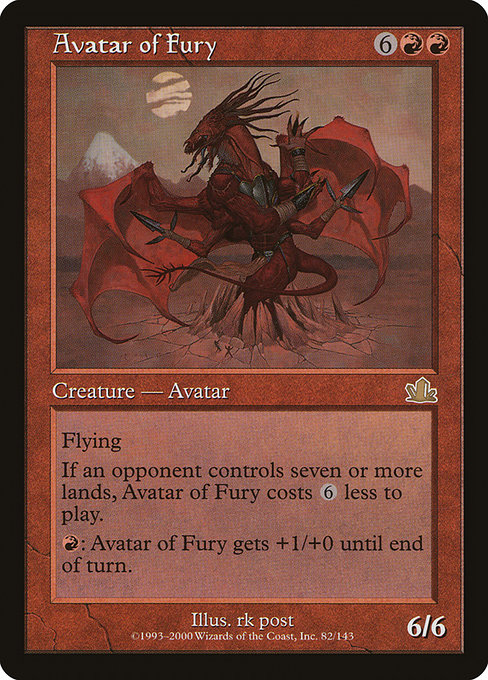 Avatar of FuryCreature — Avatar
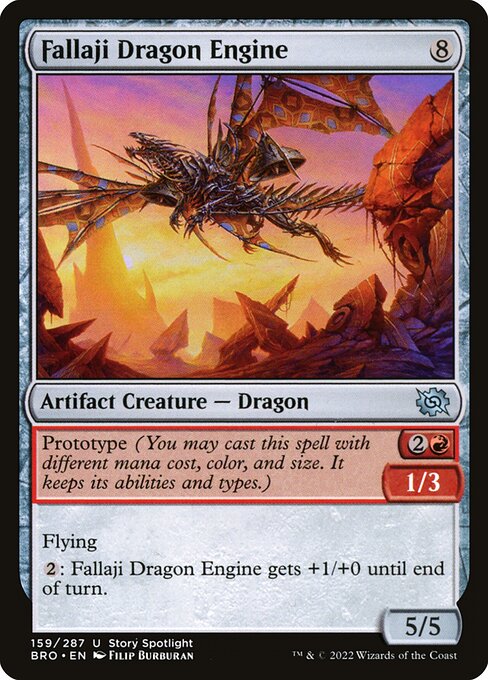 Fallaji Dragon EngineArtifact Creature — Dragon