
Decimator of the Provinces
 Creature — Eldrazi BoarPower and toughness7/7
Card text
Emerge 
 (You may cast this spell by sacrificing a creature and paying the emerge cost reduced by that creature's mana value.)
When you cast this spell, creatures you control get +2/+2 and gain trample until end of turn.
Trample, haste
Showing Eldritch Moon#2
Price
0.78 $
Foil 2.70 $
14 printings
Daily estimate from Scryfall, not a shop quote.
Decimator of the Provinces rulings
An ability that triggers when a player casts a spell resolves before the spell that caused it to trigger. It resolves even if that spell is countered or otherwise leaves the stack without resolving.
The set of creatures affected by the triggered ability is determined as the ability resolves. Creatures you begin to control later in the turn won’t get +2/+2 or trample.
The triggered ability resolves before Decimator of the Provinces enters the battlefield, so it won’t get +2/+2 from its own triggered ability.
Emerge represents two static abilities that function while the spell with emerge is on the stack. “Emerge [cost]” means “You may cast this spell by paying [cost] and sacrificing a creature rather than paying its mana cost” and “If you chose to pay this spell’s emerge cost, its total cost is reduced by an amount of generic mana equal to the sacrificed creature’s mana value.”
If you sacrifice a creature with
 in its mana cost, that X is 0.
A creature’s mana value is determined solely by the mana symbols printed in its upper right corner (unless that creature is the back face of a double-faced card, is a melded permanent, or is copying something else; see below). If the mana cost includes
, X is 0. If it’s a single-faced card with no mana symbols in its upper right corner (because it’s an animated land, for example), its mana value is 0. Ignore any alternative costs or additional costs (such as kicker) that were paid as the creature was cast.Colored mana components of emerge costs can’t be reduced with emerge.
You may sacrifice a creature with a mana value of 0, such as a token creature that’s not a copy of another permanent, to cast a spell for its emerge cost. You’ll just pay the full emerge cost with no reduction.
You may sacrifice a creature with mana value greater than or equal to the emerge cost. If you do, you’ll pay only the colored mana component of the emerge cost.
The mana value of the back face of a double-faced card is the mana value of its front face. The mana value of a melded permanent is the sum of the mana values of its front faces. A creature that’s a copy of either has a mana value of 0.
The mana value of a creature spell with emerge isn’t affected by whether its emerge cost is paid. For example, if you cast Decimator of the Provinces for its emerge cost and sacrifice a creature whose mana value is 3, Decimator of the Provinces’s mana value remains 10.
The creature chosen to be sacrificed is still on the battlefield as the cost of the emerge spell is determined and as you activate mana abilities to cast the emerge spell. Its abilities may affect the spell’s cost, be activated to generate mana, and so on. However, if it has an ability that triggers when a spell is cast, it will have been sacrificed before that ability can trigger.
Once you begin to cast a spell with emerge, no player may take actions until you’re done. Notably, opponents can’t try to remove the creature you wish to sacrifice.
If you cast a spell for another cost “rather than paying its mana cost,” such as an emerge cost, you can’t choose to cast it for any other alternative costs. You can, however, pay additional costs, such as kicker costs. If the spell has any mandatory additional costs, those must be paid to cast it.
Decimator of the Provinces keyword rules
Emerge Rule 702.119
Emerge represents two static abilities that function while the spell with emerge is on the stack. “Emerge [cost]” means “You may cast this spell by paying [cost] and sacrificing a creature rather than paying its mana cost” and “If you chose to pay this spell’s emerge cost, its total cost is reduced by an amount of generic mana equal to the sacrificed creature’s mana value.” Casting a spell using its emerge ability follows the rules for paying alternative costs in rules and –h.
Emerge from [quality] is a variant of emerge. “Emerge from [quality] [cost]” means “You may cast this spell by paying [cost] and sacrificing a [quality] permanent rather than paying its mana cost” and “If you pay this spell’s emerge cost, its total cost is reduced by an amount of generic mana equal to the sacrificed permanent’s mana value.”
You choose which permanent to sacrifice as you choose to pay a spell’s emerge cost (see rule ), and you sacrifice that permanent as you pay the total cost (see rule ).
Haste Rule 702.10
Haste is a static ability.
If a creature has haste, it can attack even if it hasn’t been controlled by its controller continuously since their most recent turn began. (See rule .)
If a creature has haste, its controller can activate its activated abilities whose cost includes the tap symbol or the untap symbol even if that creature hasn’t been controlled by that player continuously since their most recent turn began. (See rule .)
Multiple instances of haste on the same creature are redundant.
Trample Rule 702.19
Trample is a static ability that modifies the rules for assigning an attacking creature’s combat damage. The ability has no effect when a creature with trample is blocking or is dealing noncombat damage. (See rule , “Combat Damage Step.”)
The controller of an attacking creature with trample first assigns damage to the creature(s) blocking it. Once all those blocking creatures are assigned lethal damage, any excess damage is assigned as its controller chooses among those blocking creatures and the player, planeswalker, or battle the creature is attacking. When checking for assigned lethal damage, take into account damage already marked on the creature and damage from other creatures that’s being assigned during the same combat damage step, but not any abilities or effects that might change the amount of damage that’s actually dealt. The attacking creature’s controller need not assign lethal damage to all those blocking creatures but in that case can’t assign any damage to the player or planeswalker it’s attacking.
Trample over planeswalkers is a variant of trample that modifies the rules for assigning combat damage to planeswalkers. The controller of a creature with trample over planeswalkers assigns that creature’s combat damage as described in rule , with one exception. If that creature is attacking a planeswalker, after lethal damage is assigned to all blocking creatures and damage at least equal to the loyalty of the planeswalker the creature is attacking is assigned to that planeswalker, further excess damage may be assigned as the attacking creature’s controller chooses among those blocking creatures, that planeswalker, and that planeswalker’s controller. When checking for assigned damage equal to a planeswalker’s loyalty, take into account damage from other creatures that’s being assigned during the same combat damage step, but not any abilities or effects that might change the amount of damage that’s actually dealt.
If an attacking creature with trample or trample over planeswalkers is blocked, but there are no creatures blocking it when damage is assigned, its damage is assigned to the defending player and/or planeswalker as though all blocking creatures have been assigned lethal damage.
If a creature with trample over planeswalkers is attacking a planeswalker and that planeswalker is removed from combat, the creature’s damage may be assigned to the defending player once all blocking creatures have been dealt lethal damage or, if there are no blocking creatures when damage is assigned, all its damage is assigned to the defending player. This is an exception to rule , and it does not cause the creature to be attacking that player.
If a creature without trample over planeswalkers is attacking a planeswalker, none of its combat damage can be assigned to the defending player, even if that planeswalker has been removed from combat or the damage the attacking creature could assign is greater than the planeswalker’s loyalty.
Multiple instances of trample on the same creature are redundant. Multiple instances of trample over planeswalkers on the same creature are redundant.
Decimator of the Provinces format legality
Constructed
- StandardNot legal
- PioneerLegal
- ModernLegal
- Future StandardNot legal
Eternal
- LegacyLegal
- VintageLegal
- PauperNot legal
- PremodernNot legal
- Old SchoolNot legal
- Penny DreadfulLegal
Commander
- CommanderLegal
- OathbreakerLegal
- Pauper CommanderNot legal
- Duel CommanderLegal
- PreDHNot legal
Arena & online
- HistoricLegal
- TimelessLegal
- AlchemyNot legal
- GladiatorLegal
- BrawlLegal
- Standard BrawlNot legal
- Competitive BrawlLegal
Other
- TLRNot legal
All printings of Decimator of the Provinces 14
Cards similar to Decimator of the Provinces
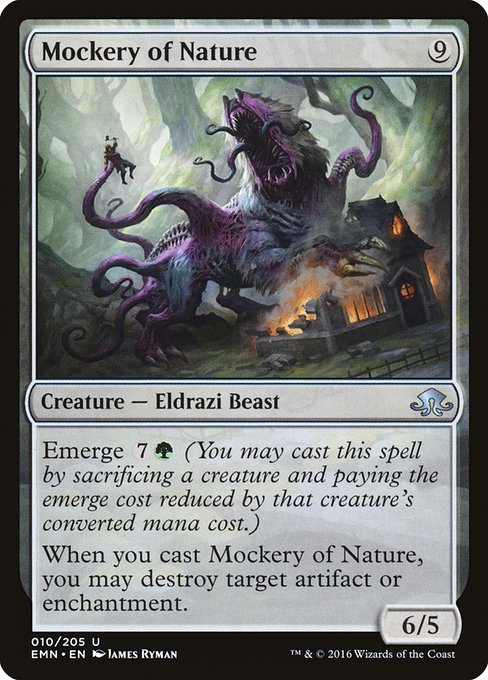 Mockery of Nature
 Creature — Eldrazi Beast
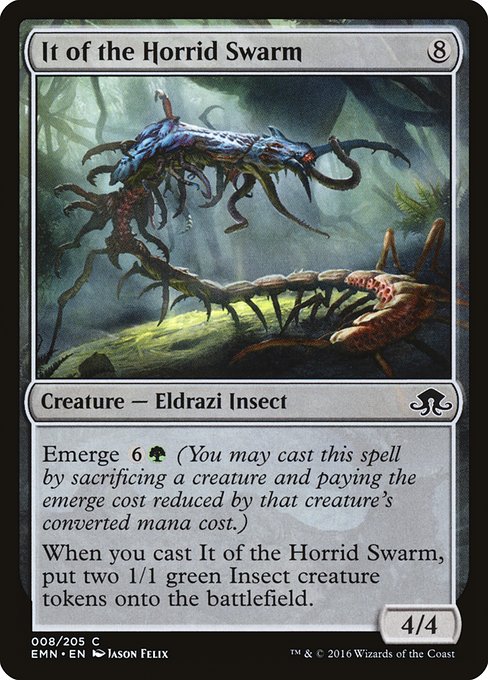 It of the Horrid Swarm
 Creature — Eldrazi Insect
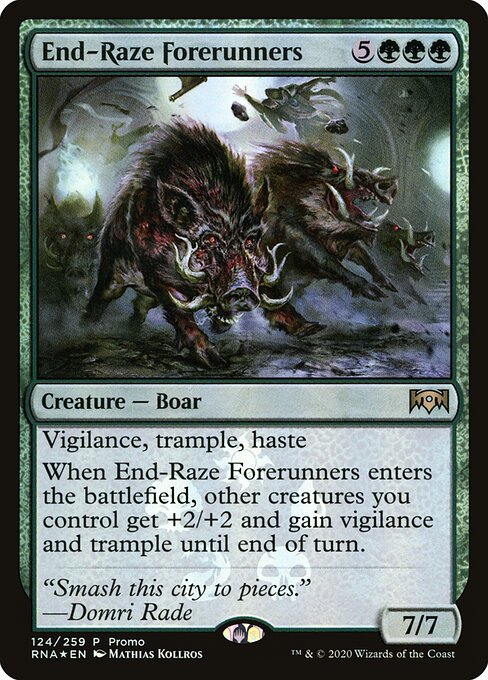 End-Raze Forerunners
 Creature — Boar
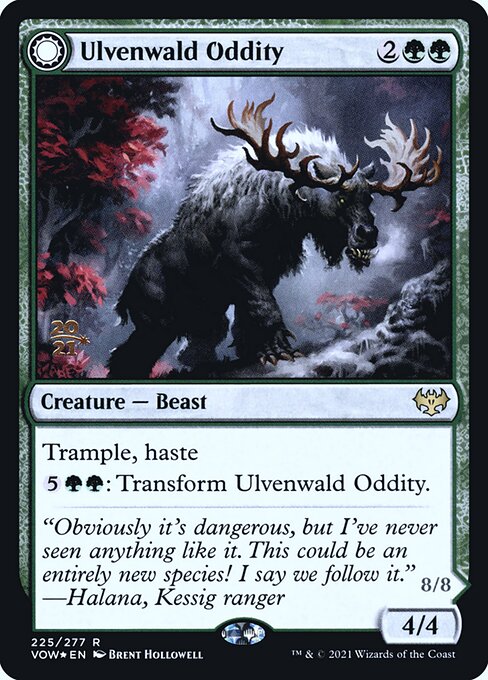 Ulvenwald Oddity // Ulvenwald BehemothCreature — Beast // Creature — Beast Horror
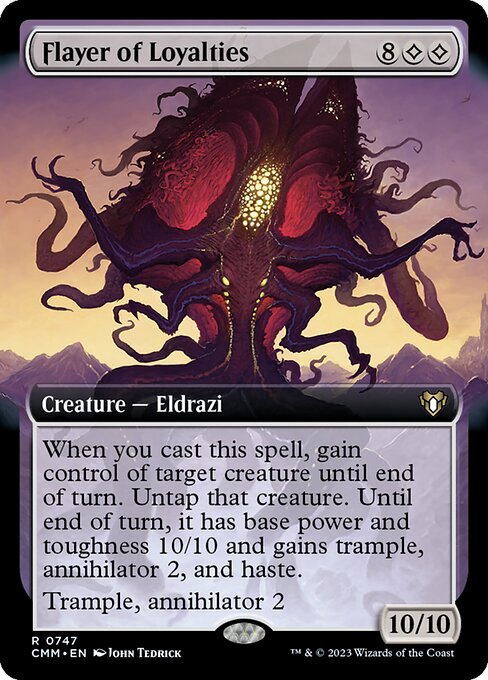 Flayer of Loyalties
 Creature — Eldrazi
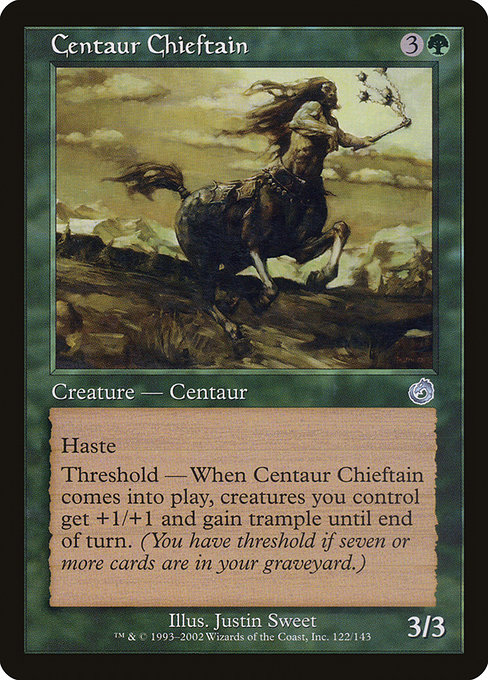 Centaur Chieftain
 Creature — Centaur
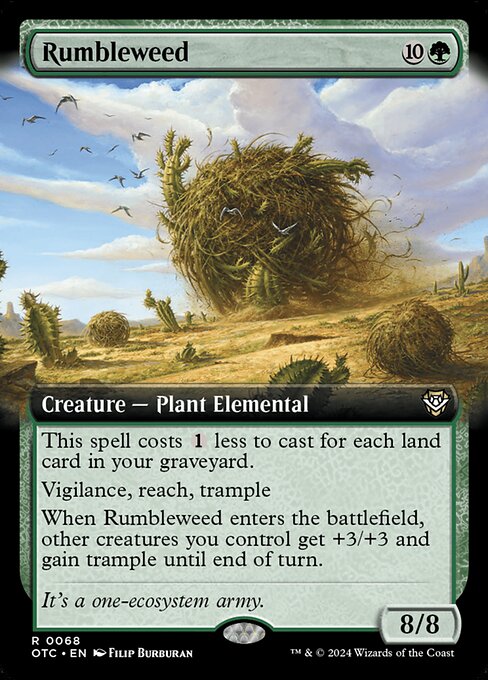 RumbleweedCreature — Plant Elemental
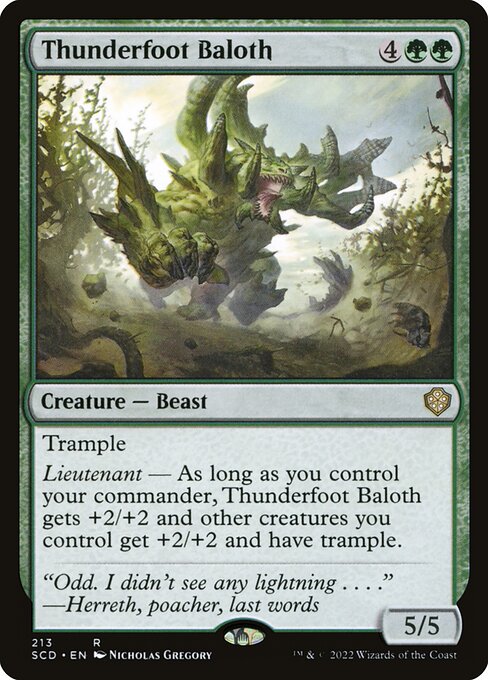 Thunderfoot Baloth
 Creature — Beast
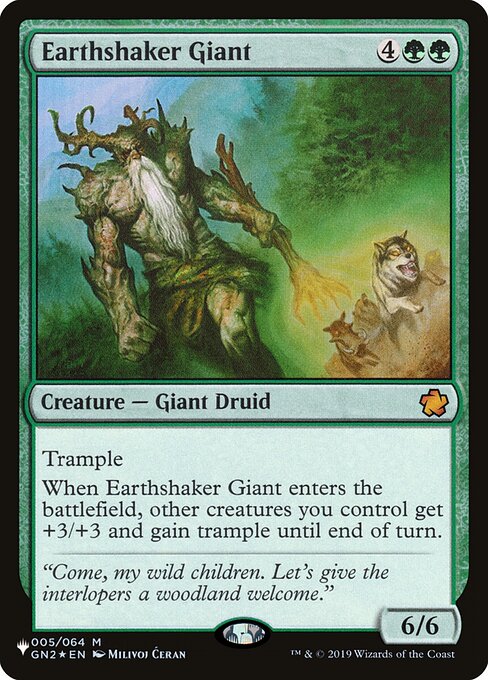 Earthshaker GiantCreature — Giant Druid
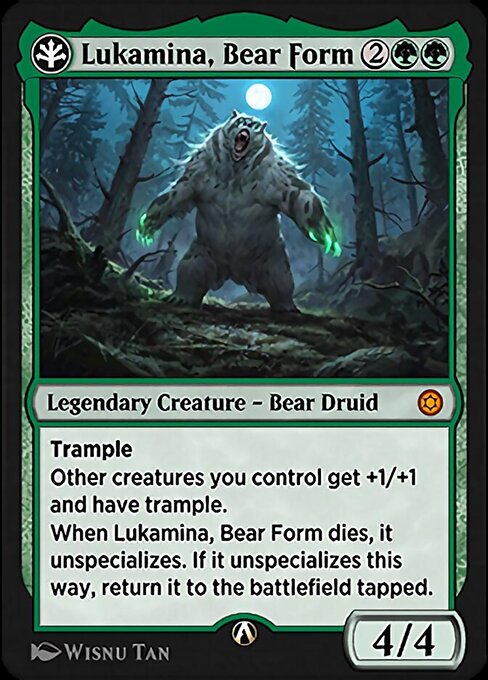 Lukamina, Bear Form
 Legendary Creature — Bear Druid
Show 20 more similar cards
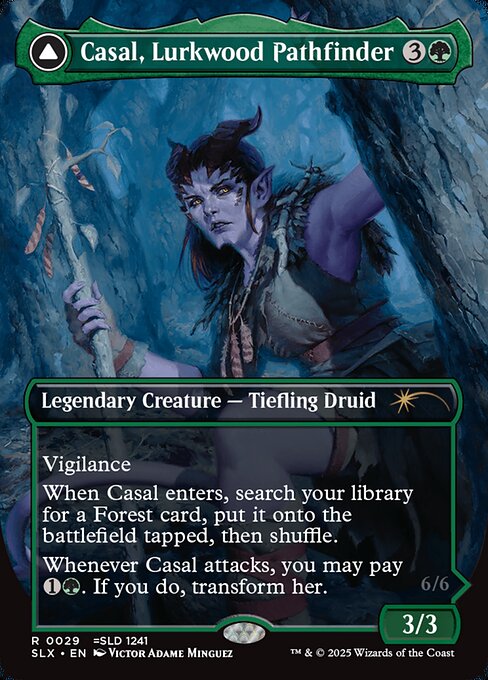 Casal, Lurkwood Pathfinder // Casal, Pathbreaker OwlbearLegendary Creature — Tiefling Druid // Legendary Creature — Bird Bear
 Emrakul, the Exigent DoomLegendary Creature — Eldrazi
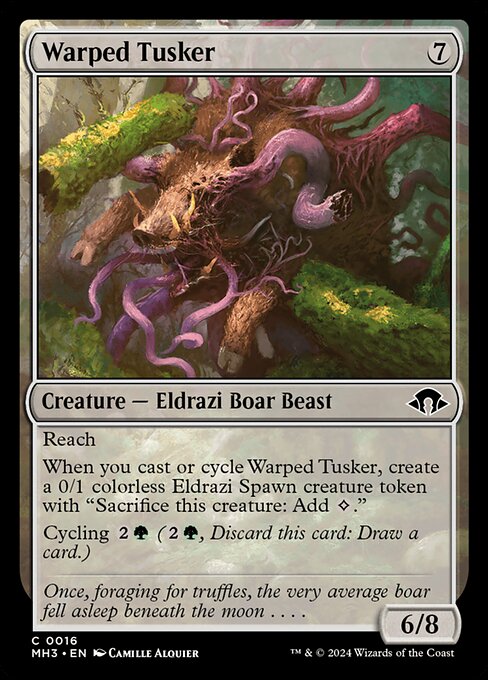 Warped Tusker
 Creature — Eldrazi Boar Beast
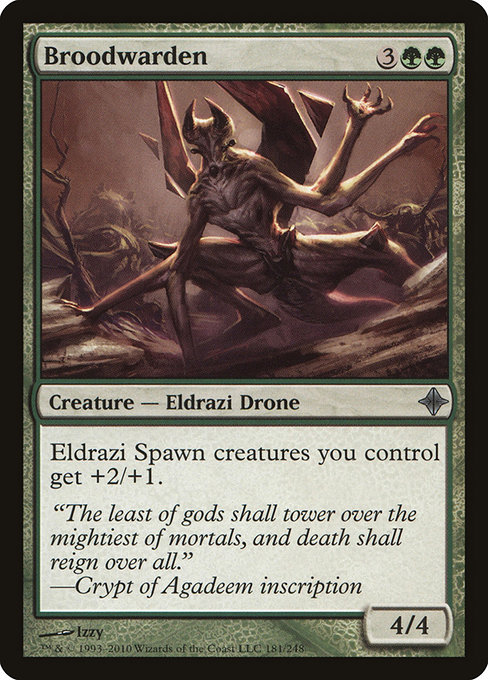 BroodwardenCreature — Eldrazi Drone
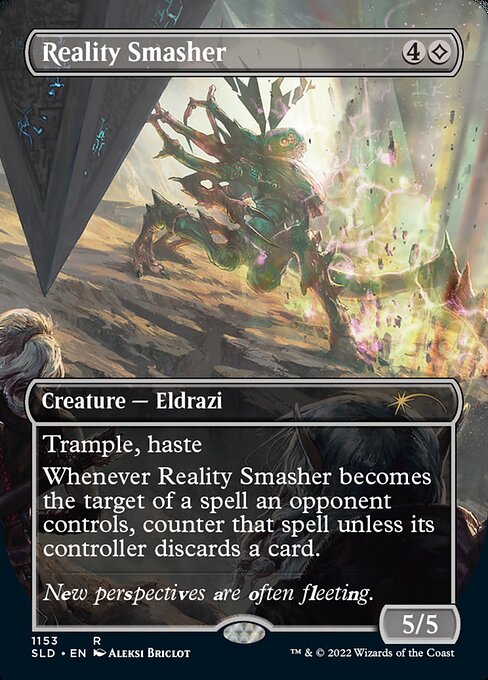 Reality SmasherCreature — Eldrazi
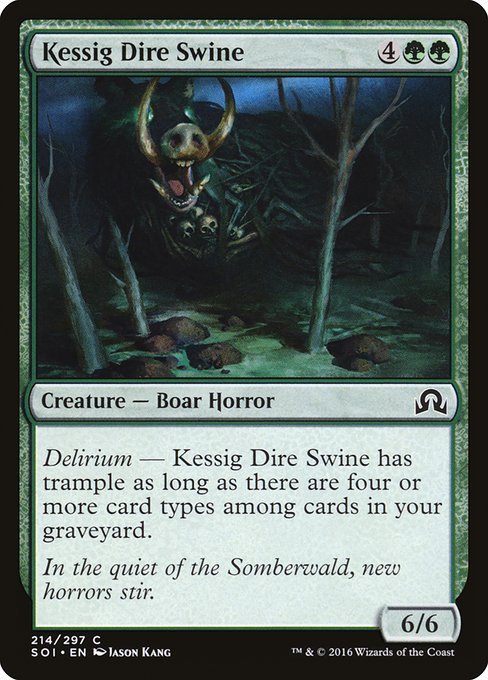 Kessig Dire SwineCreature — Boar Horror
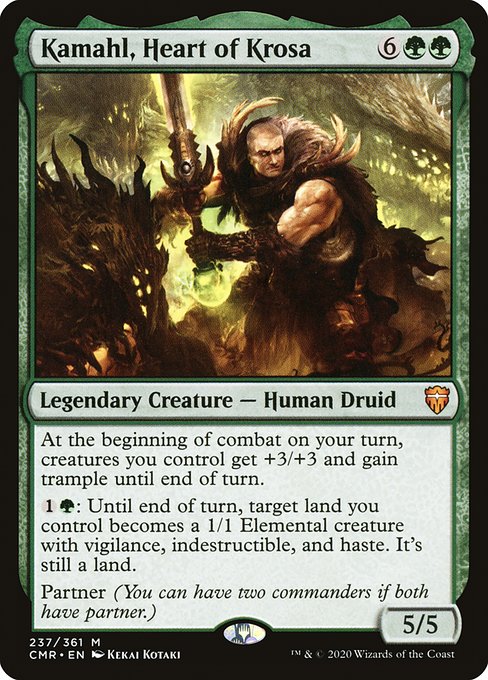 Kamahl, Heart of KrosaLegendary Creature — Human Druid
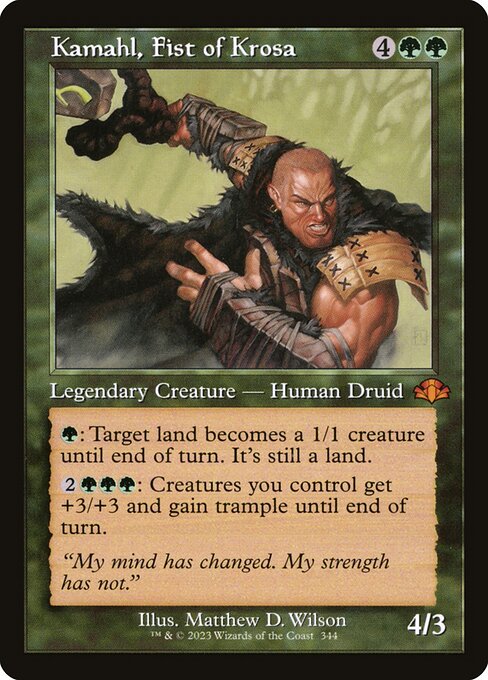 Kamahl, Fist of KrosaLegendary Creature — Human Druid
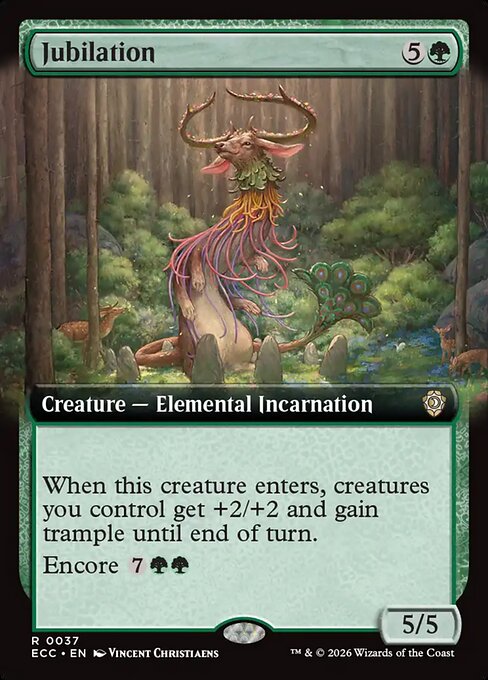 JubilationCreature — Elemental Incarnation
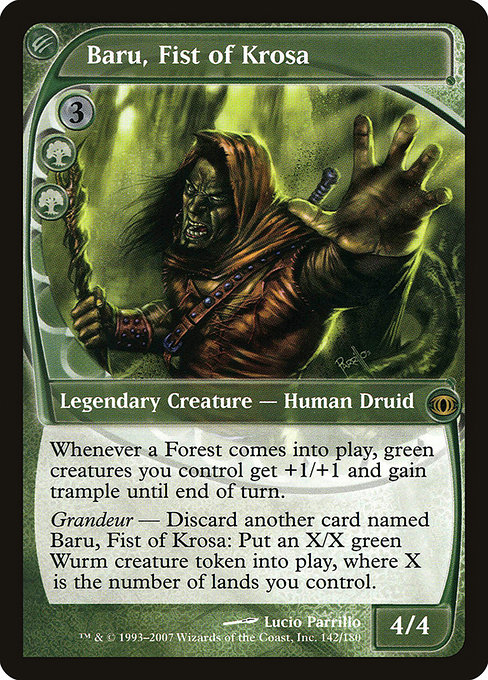 Baru, Fist of KrosaLegendary Creature — Human Druid
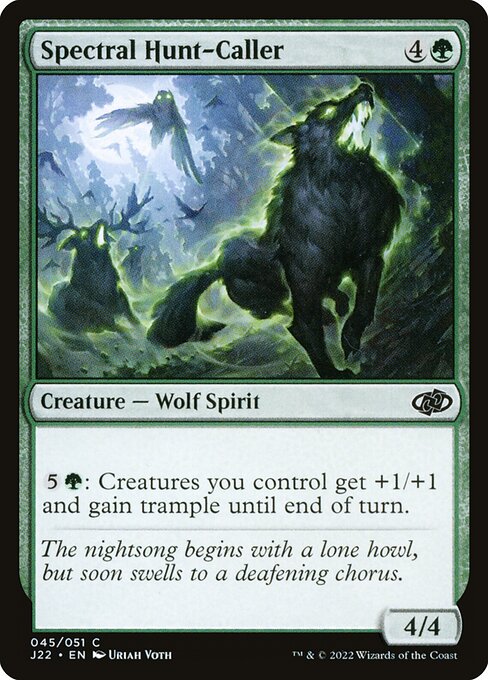 Spectral Hunt-CallerCreature — Wolf Spirit
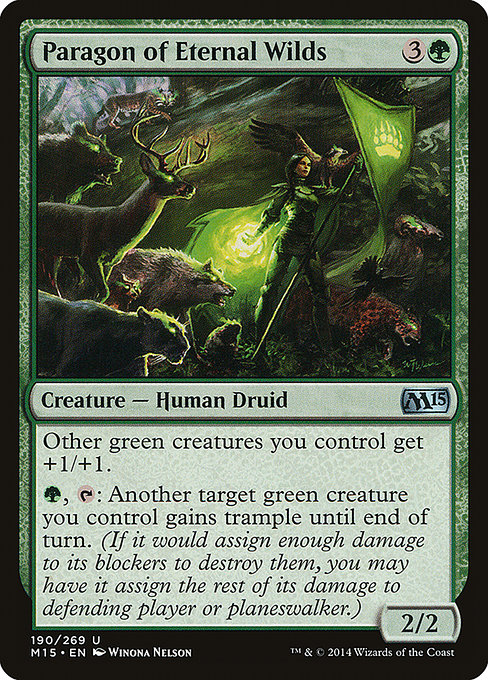 Paragon of Eternal WildsCreature — Human Druid
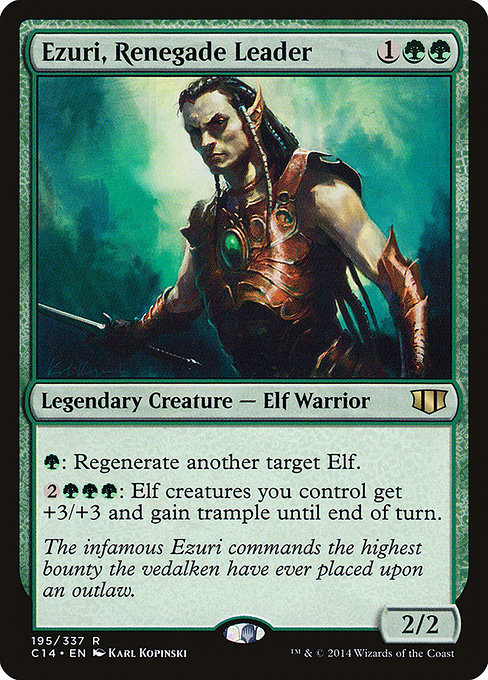 Ezuri, Renegade Leader
 Legendary Creature — Elf Warrior
 Thornfist StrikerCreature — Elf Druid
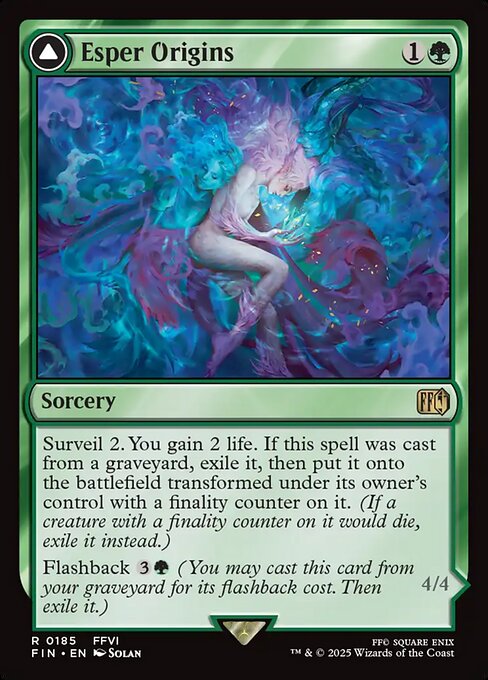 Esper Origins // Summon: Esper MaduinSorcery // Enchantment Creature — Saga Elemental
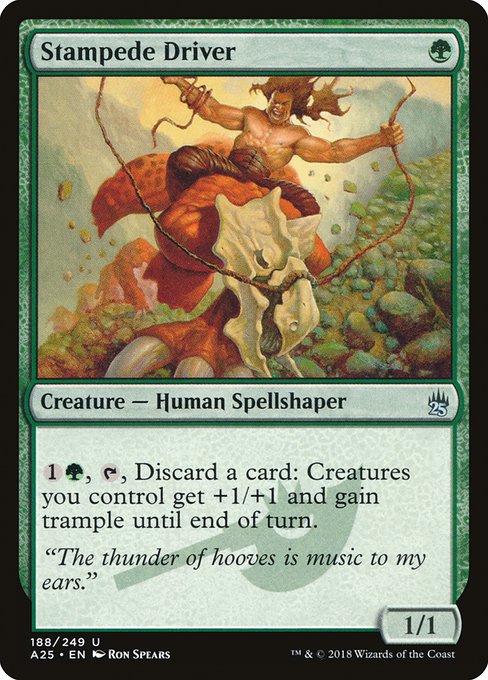 Stampede DriverCreature — Human Spellshaper
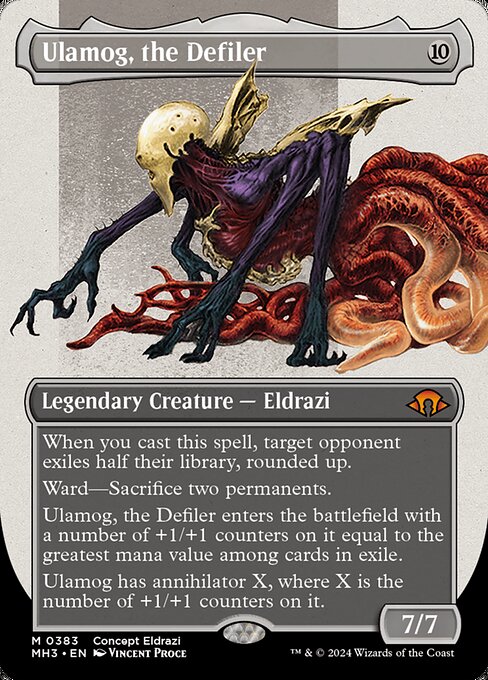 Ulamog, the DefilerLegendary Creature — Eldrazi
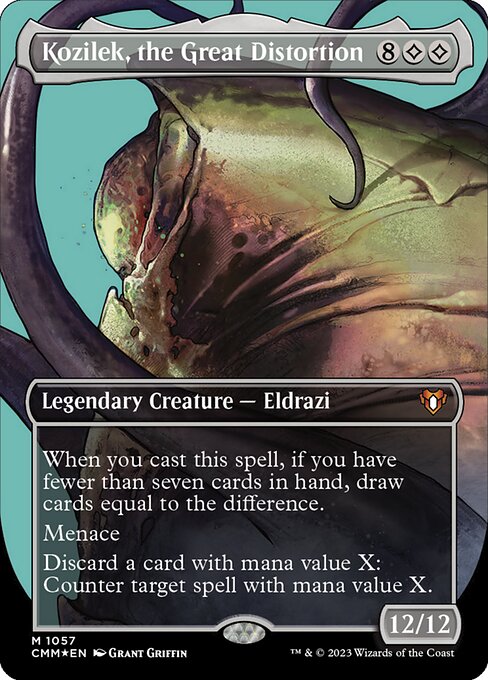 Kozilek, the Great DistortionLegendary Creature — Eldrazi
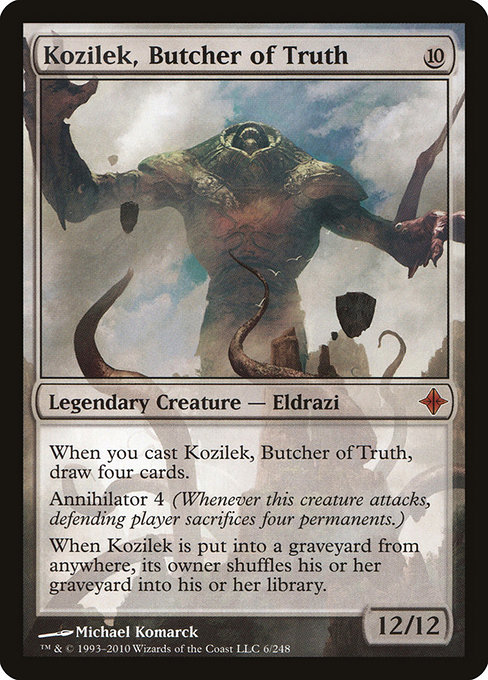 Kozilek, Butcher of TruthLegendary Creature — Eldrazi
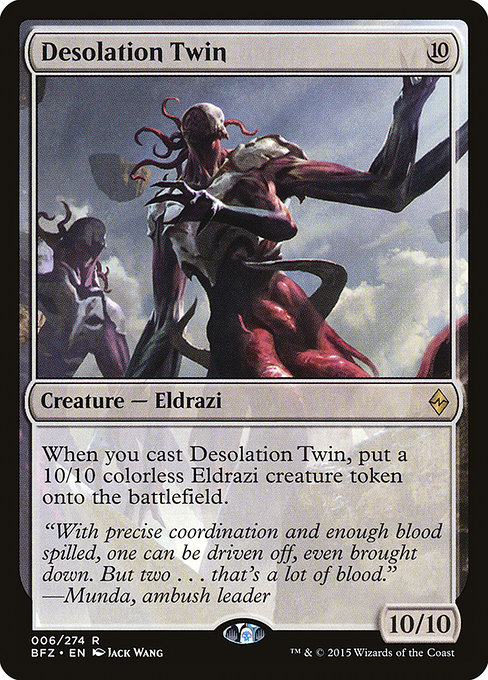 Desolation TwinCreature — Eldrazi