
Devouring Sugarmaw // Have for Dinner
Devouring Sugarmaw

 Creature — HorrorPower and toughness6/6
Card text
Menace, trample
At the beginning of your upkeep, you may sacrifice an artifact, enchantment, or token. If you don't, tap this creature.
Have for Dinner

 Instant — Adventure
Card text
Create a 1/1 white Human creature token and a Food token. (Then exile this card. You may cast the creature later from exile.)
Showing Wilds of Eldraine#224
Price
0.23 $
Foil 0.29 $
11 printings · up to 0.29 $
Daily estimate from Scryfall, not a shop quote.
Devouring Sugarmaw // Have for Dinner rulings
You can't sacrifice a Food to pay multiple costs. For example, you can't sacrifice a Food token to activate its own ability and also to activate Maraleaf Rider's ability.
Whatever you do, don't eat the delicious cards.
Food is an artifact type. Even though it appears on some creatures, it's never a creature type.
If an effect instructs you to choose a card name, you may choose the alternative Adventure name. Consider only the alternative characteristics to determine whether that is an appropriate name to choose.
Casting a card as an Adventure isn't casting it for an alternative cost. Effects that allow you to cast a spell for an alternative cost or without paying its mana cost may allow you to apply those to the Adventure.
An adventurer card is a permanent card in every zone except the stack, as well as while on the stack if not cast as an Adventure. Ignore its alternative characteristics in those cases. For example, while it's in your graveyard, Questing Druid is a green creature card whose mana value is 2. It can't be the target of Tenacious Tomeseeker's triggered ability ("return target instant or sorcery card from your graveyard to your hand").
When casting a spell as an Adventure, use the alternative characteristics and ignore all of the card's normal characteristics. The spell's color, mana cost, mana value, and so on are determined by only those alternative characteristics. If the spell leaves the stack, it immediately resumes using its normal characteristics.
If you cast an adventurer card as an Adventure, use only its alternative characteristics to determine whether it's legal to cast that spell. For example, if you control Johann, Apprentice Sorcerer ("Once each turn, you may cast an instant or sorcery spell from the top of your library.") and Questing Druid is on top of your library, you can cast Seek the Beast, but not Questing Druid.
If a spell is cast as an Adventure, its controller exiles it instead of putting it into its owner's graveyard as it resolves. For as long as it remains exiled, that player may cast it as a permanent spell. If an Adventure spell leaves the stack in any way other than resolving (most likely by being countered or by failing to resolve because its targets have all become illegal), that card won't be exiled and the spell's controller won't be able to cast it as a permanent later.
If an adventurer card ends up in exile for any other reason than by exiling itself while resolving, it won't give you permission to cast it as a permanent spell.
You must still follow any timing restrictions and permissions for the permanent spell you cast from exile. Normally, you'll be able to cast it only during your main phase while the stack is empty.
An effect may refer to a card, spell, or permanent that "has an Adventure." This refers to a card, spell, or permanent that has an adventurer card's set of alternative characteristics, even if they're not being used and even if that card was never cast as an Adventure.
If an effect copies an Adventure spell, that copy is exiled as it resolves. It ceases to exist as a state-based action; it's not possible to cast the copy as a permanent.
If an effect refers to a card, spell, or permanent that has an Adventure, it won't find an instant or sorcery spell on the stack that's been cast as an Adventure.
If an object becomes a copy of an object that has an Adventure, the copy also has an Adventure. If it changes zones, it will either cease to exist (if it's a token) or cease to be a copy (if it's a nontoken permanent), and so you won't be able to cast it as an Adventure.
Devouring Sugarmaw // Have for Dinner keyword rules
Trample Rule 702.19
Trample is a static ability that modifies the rules for assigning an attacking creature’s combat damage. The ability has no effect when a creature with trample is blocking or is dealing noncombat damage. (See rule , “Combat Damage Step.”)
The controller of an attacking creature with trample first assigns damage to the creature(s) blocking it. Once all those blocking creatures are assigned lethal damage, any excess damage is assigned as its controller chooses among those blocking creatures and the player, planeswalker, or battle the creature is attacking. When checking for assigned lethal damage, take into account damage already marked on the creature and damage from other creatures that’s being assigned during the same combat damage step, but not any abilities or effects that might change the amount of damage that’s actually dealt. The attacking creature’s controller need not assign lethal damage to all those blocking creatures but in that case can’t assign any damage to the player or planeswalker it’s attacking.
Trample over planeswalkers is a variant of trample that modifies the rules for assigning combat damage to planeswalkers. The controller of a creature with trample over planeswalkers assigns that creature’s combat damage as described in rule , with one exception. If that creature is attacking a planeswalker, after lethal damage is assigned to all blocking creatures and damage at least equal to the loyalty of the planeswalker the creature is attacking is assigned to that planeswalker, further excess damage may be assigned as the attacking creature’s controller chooses among those blocking creatures, that planeswalker, and that planeswalker’s controller. When checking for assigned damage equal to a planeswalker’s loyalty, take into account damage from other creatures that’s being assigned during the same combat damage step, but not any abilities or effects that might change the amount of damage that’s actually dealt.
If an attacking creature with trample or trample over planeswalkers is blocked, but there are no creatures blocking it when damage is assigned, its damage is assigned to the defending player and/or planeswalker as though all blocking creatures have been assigned lethal damage.
If a creature with trample over planeswalkers is attacking a planeswalker and that planeswalker is removed from combat, the creature’s damage may be assigned to the defending player once all blocking creatures have been dealt lethal damage or, if there are no blocking creatures when damage is assigned, all its damage is assigned to the defending player. This is an exception to rule , and it does not cause the creature to be attacking that player.
If a creature without trample over planeswalkers is attacking a planeswalker, none of its combat damage can be assigned to the defending player, even if that planeswalker has been removed from combat or the damage the attacking creature could assign is greater than the planeswalker’s loyalty.
Multiple instances of trample on the same creature are redundant. Multiple instances of trample over planeswalkers on the same creature are redundant.
Menace Rule 702.111
Menace is an evasion ability.
A creature with menace can’t be blocked except by two or more creatures. (See rule , “Declare Blockers Step.”)
Multiple instances of menace on the same creature are redundant.
Devouring Sugarmaw // Have for Dinner format legality
Constructed
- StandardLegal
- PioneerLegal
- ModernLegal
- Future StandardLegal
Eternal
- LegacyLegal
- VintageLegal
- PauperNot legal
- PremodernNot legal
- Old SchoolNot legal
- Penny DreadfulLegal
Commander
- CommanderLegal
- OathbreakerLegal
- Pauper CommanderNot legal
- Duel CommanderLegal
- PreDHNot legal
Arena & online
- HistoricLegal
- TimelessLegal
- AlchemyNot legal
- GladiatorLegal
- BrawlLegal
- Standard BrawlLegal
- Competitive BrawlLegal
Other
- TLRNot legal
All printings of Devouring Sugarmaw // Have for Dinner 11
Cards similar to Devouring Sugarmaw // Have for Dinner
 Gollum, Silent Slinker // Meager Meal
 // Legendary Creature — Halfling Horror // Sorcery — Adventure
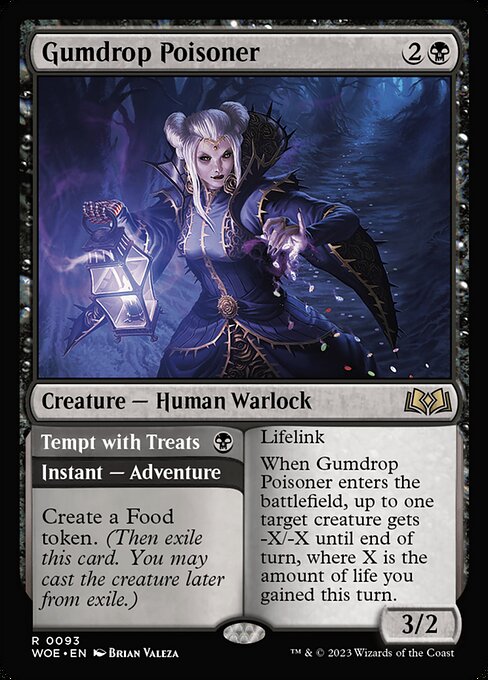 Gumdrop Poisoner // Tempt with Treats // Creature — Human Warlock // Instant — Adventure
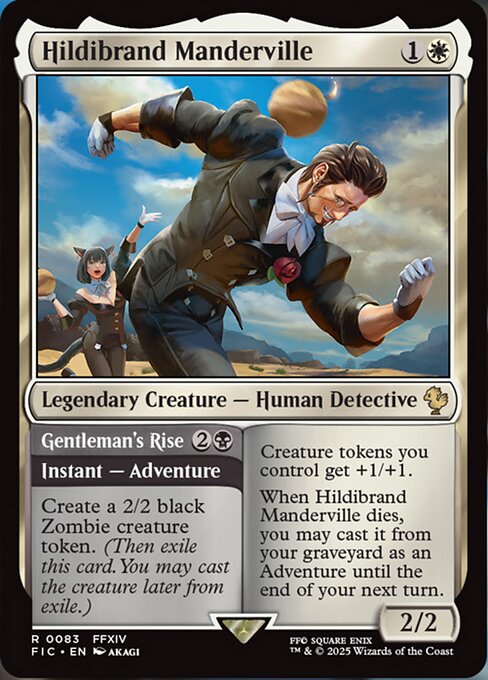 Hildibrand Manderville // Gentleman's Rise // Legendary Creature — Human Detective // Instant — Adventure
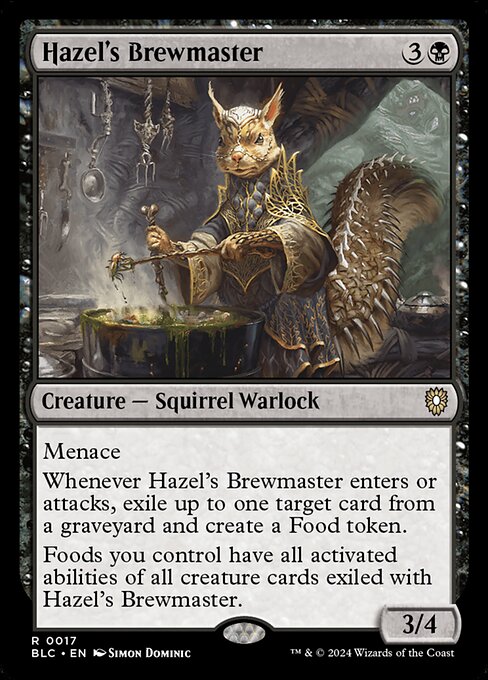 Hazel's BrewmasterCreature — Squirrel Warlock
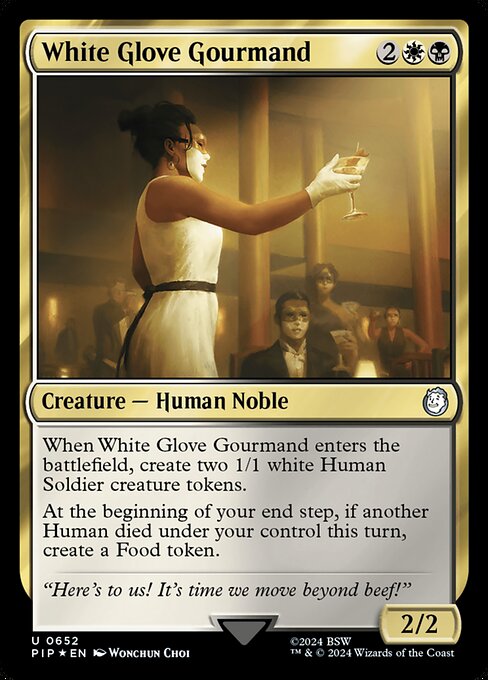 White Glove GourmandCreature — Human Noble
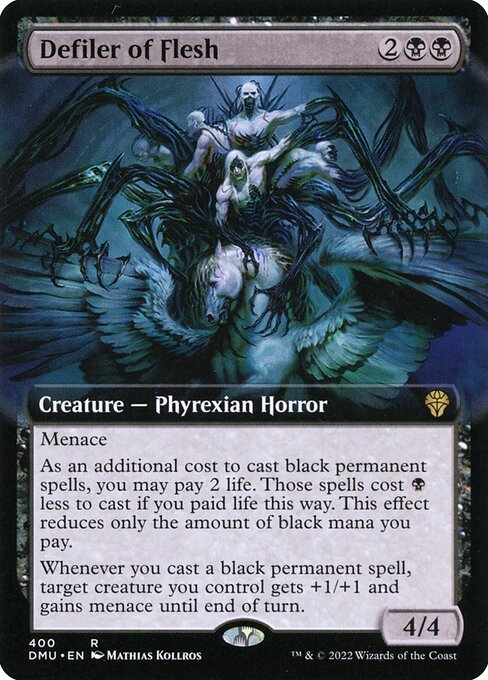 Defiler of FleshCreature — Phyrexian Horror
 Madame Hydra, ReanimatedLegendary Creature — Human Horror Villain
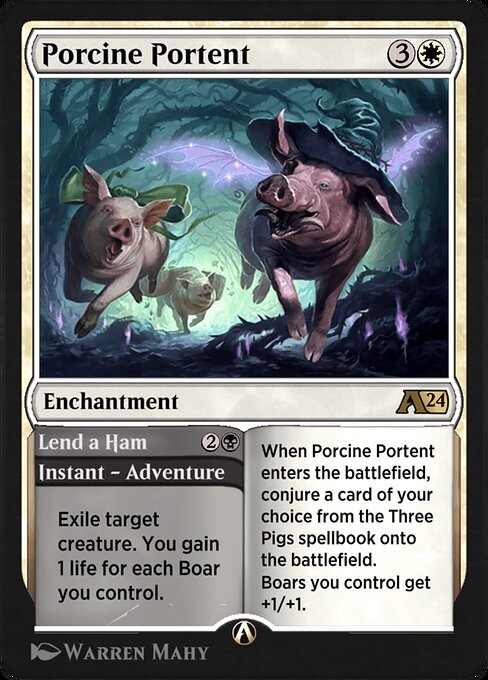 Porcine Portent // Lend a Ham // Enchantment // Instant — Adventure
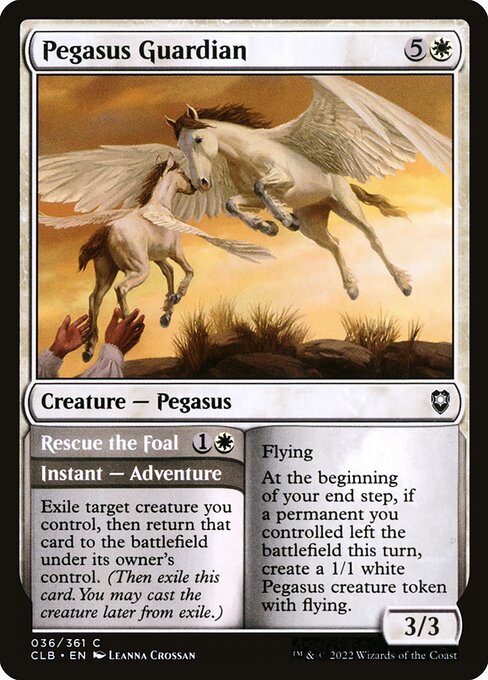 Pegasus Guardian // Rescue the Foal
 // Creature — Pegasus // Instant — Adventure
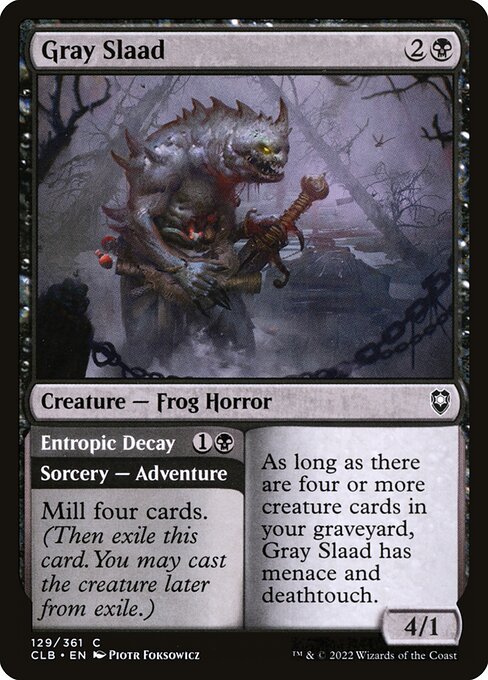 Gray Slaad // Entropic Decay // Creature — Frog Horror // Sorcery — Adventure
Show 20 more similar cards
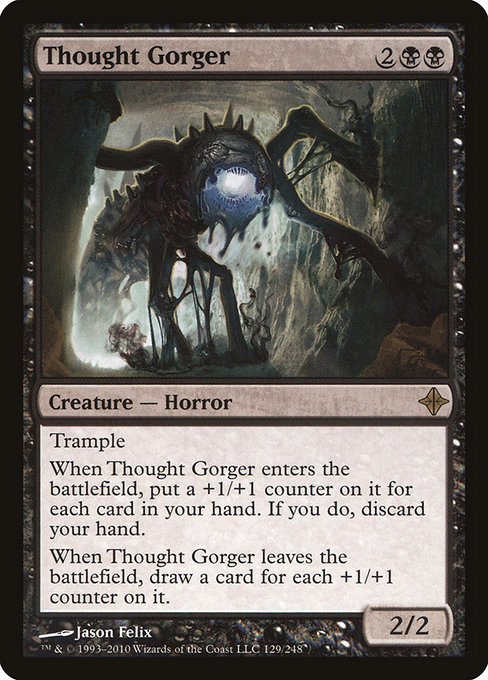 Thought GorgerCreature — Horror
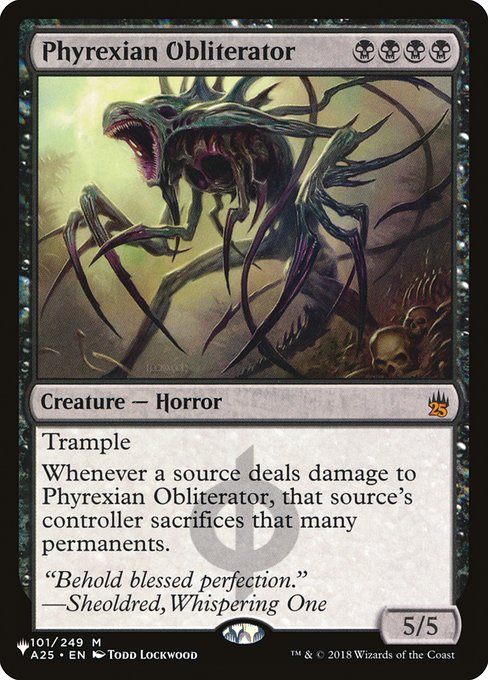 Phyrexian ObliteratorCreature — Phyrexian Horror
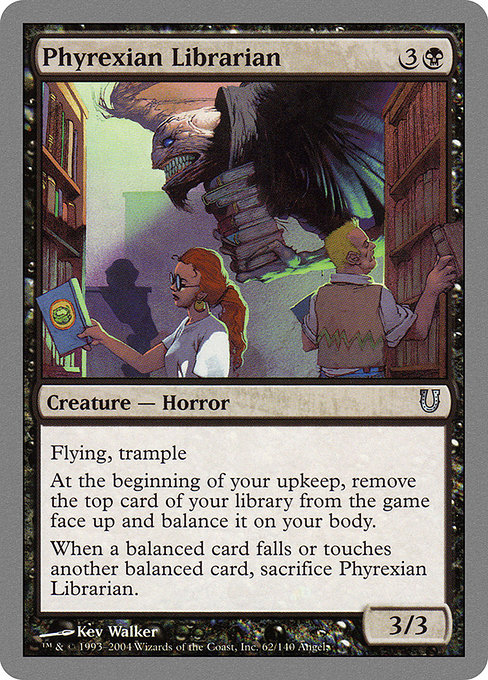 Phyrexian LibrarianCreature — Phyrexian Horror
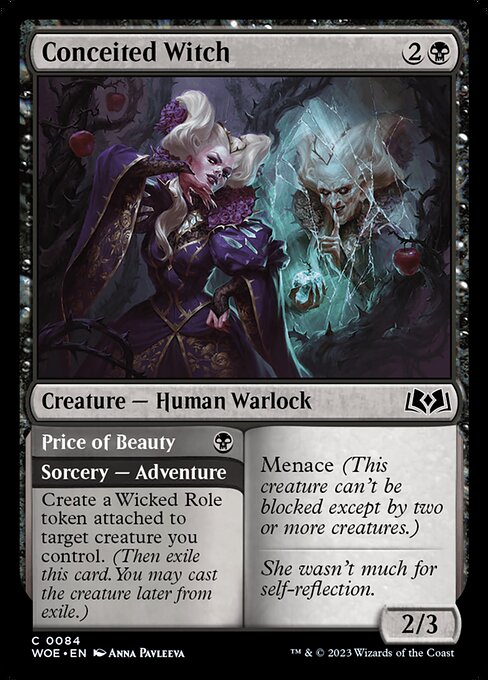 Conceited Witch // Price of Beauty // Creature — Human Warlock // Sorcery — Adventure
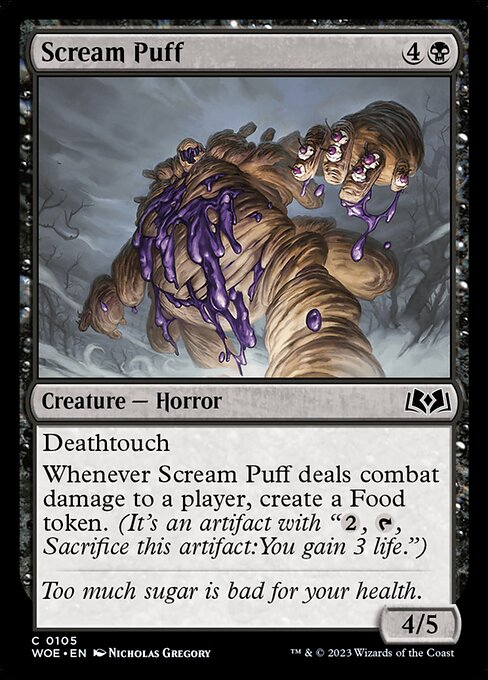 Scream Puff
 Creature — Horror
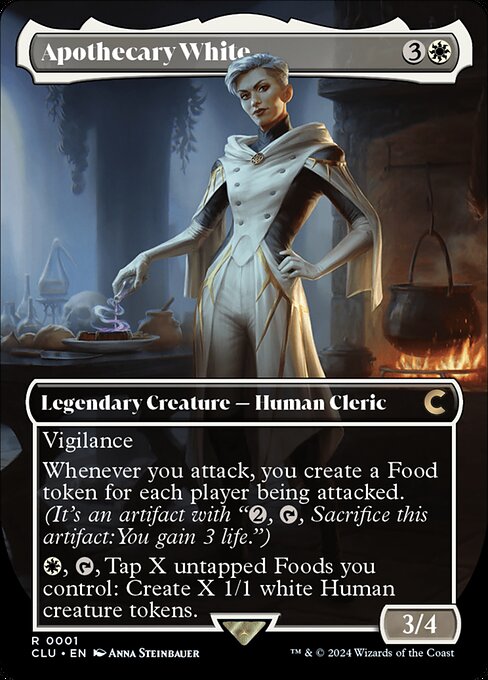 Apothecary WhiteLegendary Creature — Human Cleric
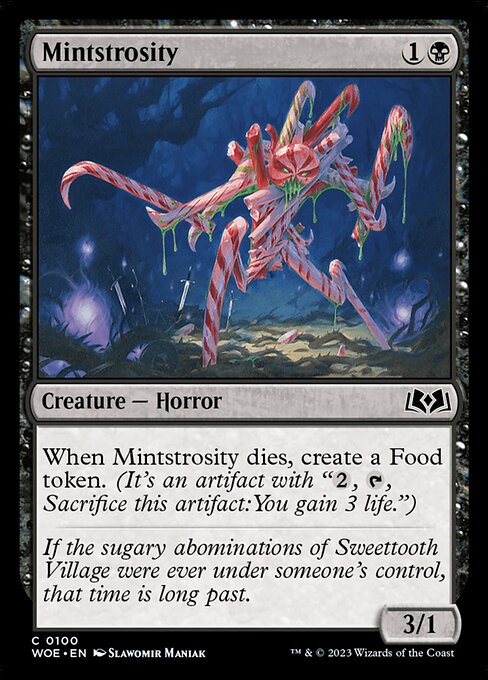 MintstrosityCreature — Horror
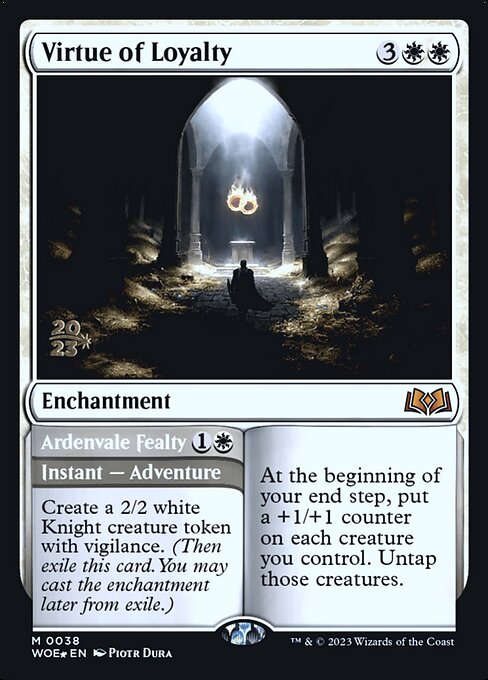 Virtue of Loyalty // Ardenvale Fealty // Enchantment // Instant — Adventure
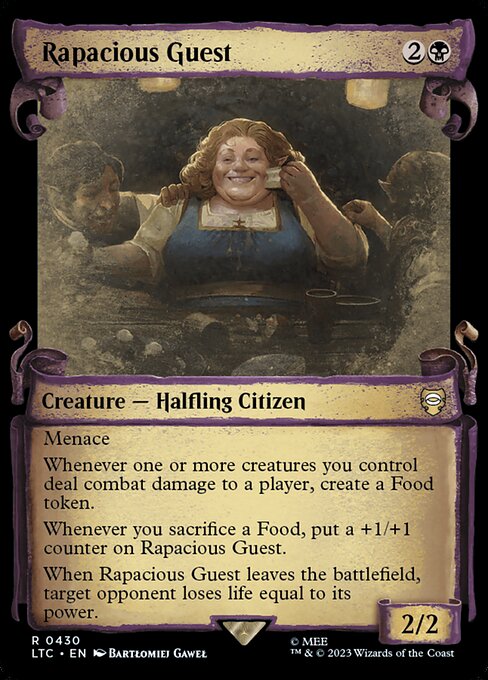 Rapacious GuestCreature — Halfling Citizen
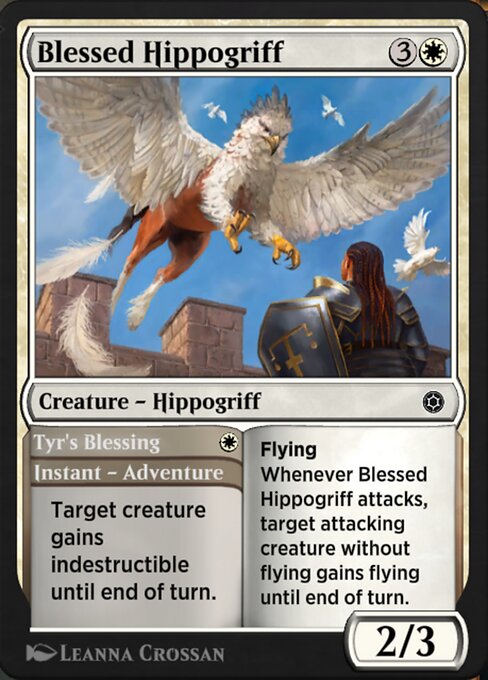 Blessed Hippogriff // Tyr's Blessing // Creature — Hippogriff // Instant — Adventure
 An Unexpected Party // At the Door //
  Enchantment // Sorcery — Adventure
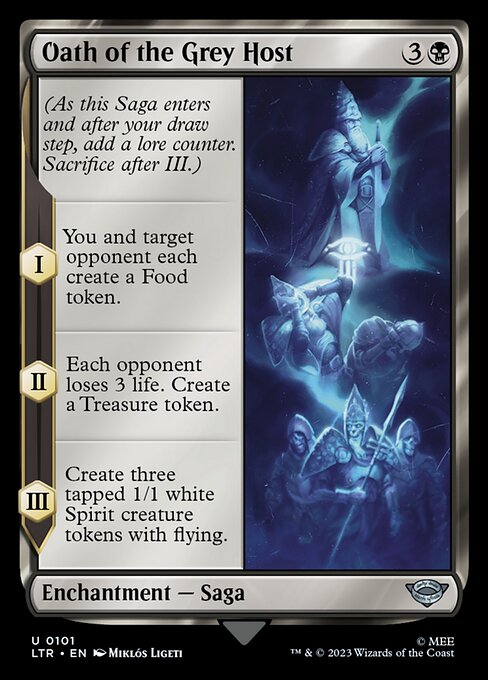 Oath of the Grey HostEnchantment — Saga
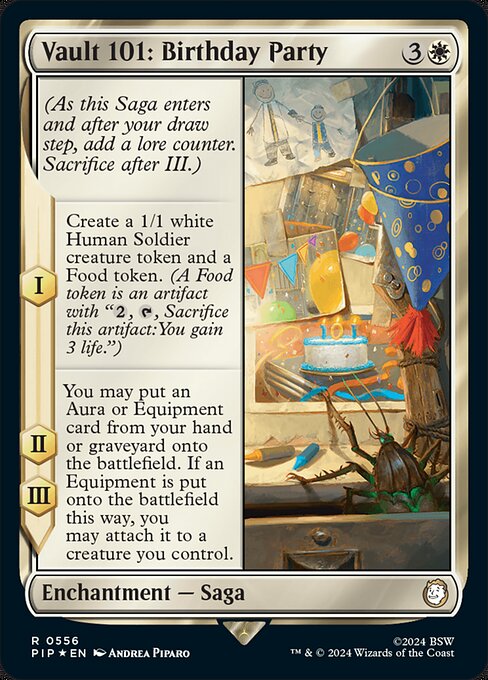 Vault 101: Birthday PartyEnchantment — Saga
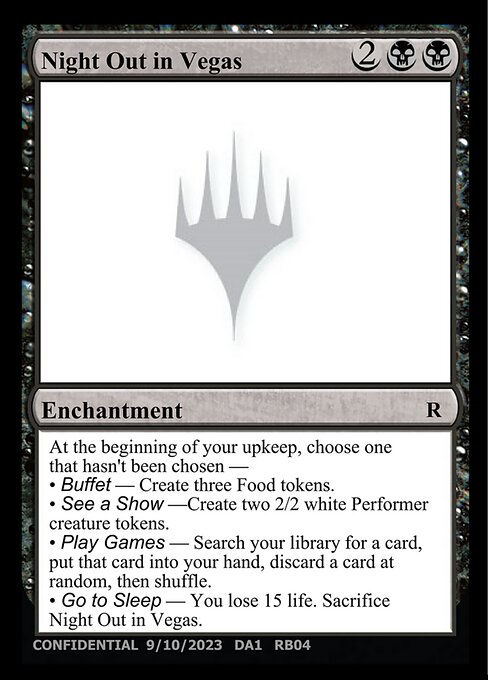 Night Out in VegasEnchantment
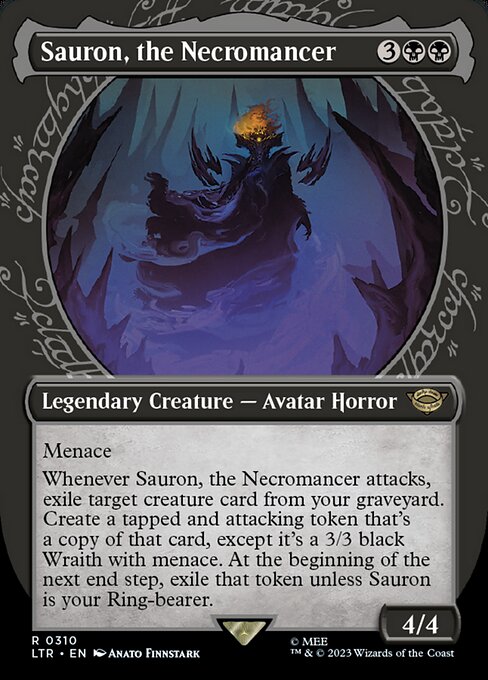 Sauron, the NecromancerLegendary Creature — Avatar Horror
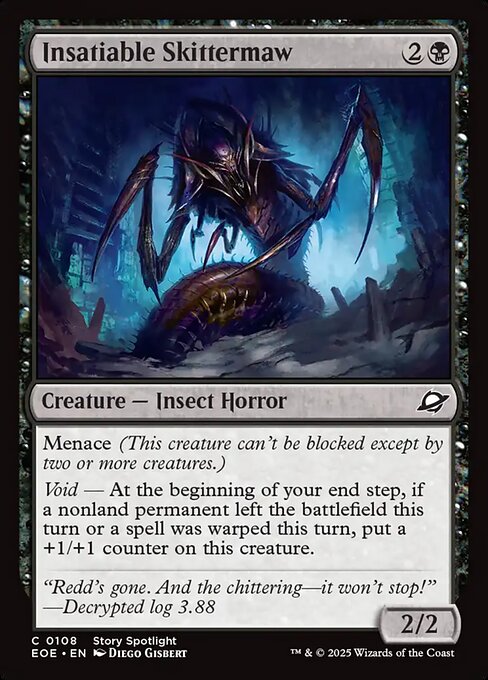 Insatiable SkittermawCreature — Insect Horror
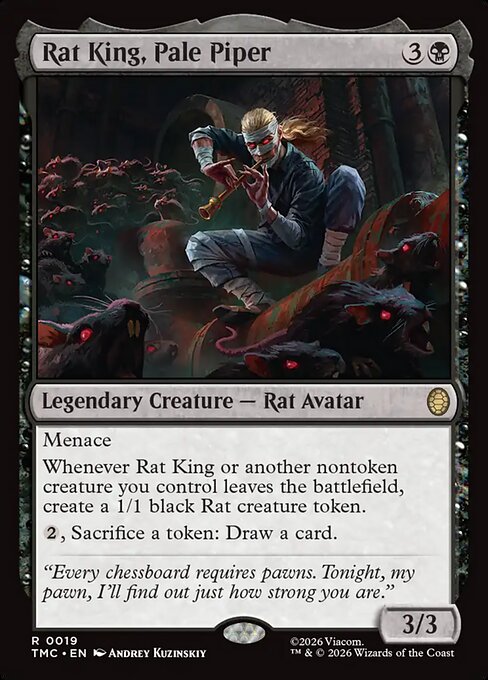 Rat King, Pale PiperLegendary Creature — Rat Avatar
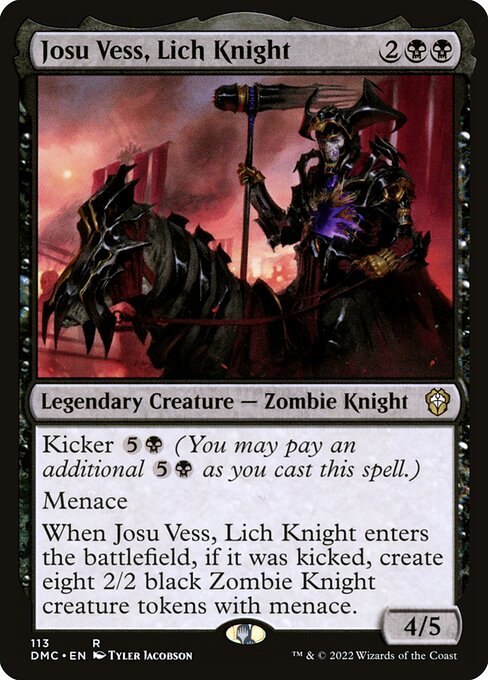 Josu Vess, Lich KnightLegendary Creature — Zombie Knight
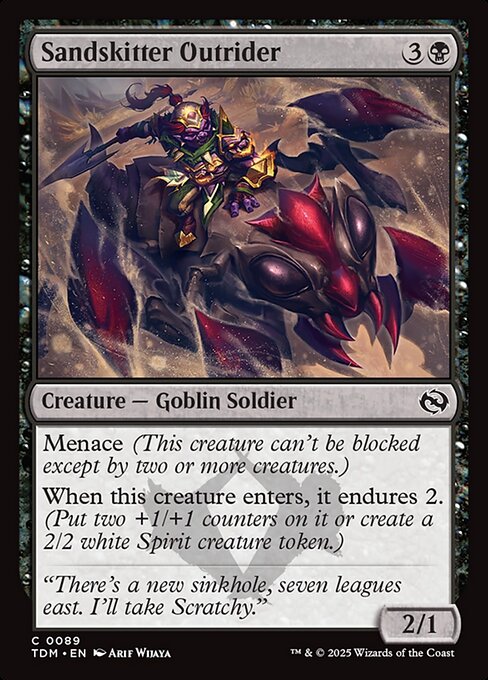 Sandskitter OutriderCreature — Goblin Soldier
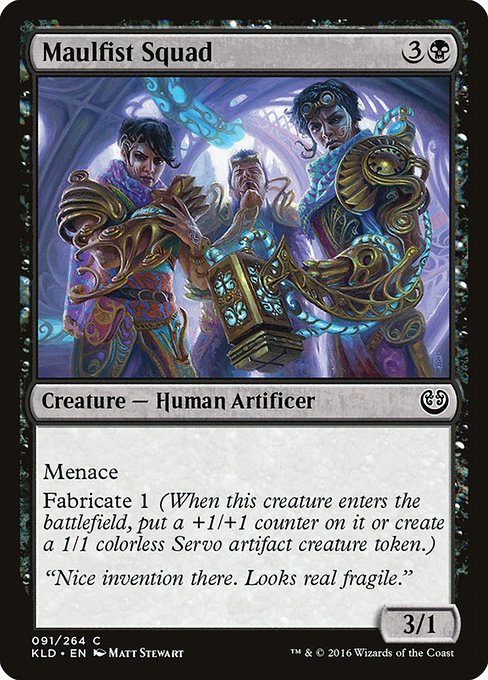 Maulfist SquadCreature — Human Artificer