
Obosh, the Preypiercer

 Legendary Creature — Hellion HorrorPower and toughness3/5
Card text
Companion — Your starting deck contains only cards with odd mana values and land cards. (If this card is your chosen companion, you may put it into your hand from outside the game for as a sorcery.)
If a source you control with an odd mana value would deal damage to a permanent or player, it deals double that damage to that permanent or player instead.
Showing Ikoria: Lair of Behemoths#228
Price
0.27 $
Foil 0.39 $
26 printings · up to 0.55 $
Daily estimate from Scryfall, not a shop quote.
Obosh, the Preypiercer rulings
Once you put your companion into your hand, it behaves like any other card you’ve brought into the game. For example, if it’s countered or destroyed, it’s put into your graveyard, remaining in the game.
Wizards of the Coast has issued functional errata for the Companion mechanic. Instead of casting companions from outside the game: Once per game, any time you could cast a sorcery (during your main phase when the stack is empty), you can pay
to put your companion from your sideboard into your hand. This is a special action, not an activated ability. It happens immediately and can’t be responded to. It can’t be countered or stopped by cards like Phyrexian Revoker. For more information please see https://magic.wizards.com/en/articles/archive/news/june-1-2020-banned-and-restricted-announcementThe damage is dealt by the same source as the original source of damage. The doubled damage isn't dealt by Obosh unless it was the original source of damage.
Paying
to put your companion into your hand is a special action. It doesn't use the stack and players can't respond to it. Once you take this action, you may cast that card if it's legal to do so before any other player can take actions.If you reveal a companion outside the game, for as long as it remains there, you may pay
any time you could cast a sorcery (that is, you have priority during your main phase and the stack is empty). Once you do, you put it into your hand and behaves like any other card you've brought into the game. For example, if it's discarded, countered, or destroyed, it's put into your graveyard, remaining in the game. This is a change from previous rules.For spells with
 in their mana costs, use the value chosen for X to determine the spell's mana value. If a permanent or card in any other zone has in its mana cost, X is considered to be 0.
If a creature with trample you control would deal combat damage to a blocking creature while you control Obosh, you must assign its unmodified damage. For example, a 3/3 creature with trample blocked by a 2/2 creature can have 1 damage assigned to the defending player. It will then deal 4 damage to the blocking creature and 2 damage to the defending player.
If an effect such as that of Ravenous Gigantotherium asks you to divide damage among targets, you must divide the unmodified damage before doubling it.
If multiple replacement or prevention effects try to modify damage that would be dealt to a permanent or player, the player or the controller of the permanent chooses the order in which they apply.
Your companion begins the game outside the game. In tournament play, this means your sideboard. In casual play, it's simply a card you own that's not in your starting deck.
Before shuffling your deck to become your library, you may reveal one card from outside the game to be your companion if your starting deck meets the requirements of the companion ability. You can't reveal more than one. It remains revealed outside the game as the game begins.
The requirements of the companion ability apply only to your starting deck. They do not apply to your sideboard.
If more than one player wishes to reveal a companion, the starting player does so first, and players proceed in turn order. Once a player has chosen not to reveal a companion, that player can't change their mind.
If you reveal a companion outside the game, for as long as it remains there, you may pay
any time you could cast a sorcery (that is, you have priority during your main phase and the stack is empty). Once you do, you put it into your hand and behaves like any other card you've brought into the game. For example, if it's discard, countered, or destroyed, it's put into your graveyard, remaining in the game. This is a change from previous rules.Paying
to put your companion into your hand is a special action. It doesn't use the stack and players can't respond to it. Once you take this action, you may cast that card if it's legal to do so before any other player can take actions.The companion's other abilities apply only if the creature is on the battlefield. They have no effect while the companion is outside the game.
The companion ability has no effect if the card is in your starting deck and creates no restriction on putting a card with a companion ability into your starting deck. For example, Zirda may be in your starting deck even if your other permanent cards don't all have activated abilities.
You may have one companion in the Commander variant. Your deck, including your commander, must meet its companion requirement. Your companion is not one of your one hundred cards.
If a card in a player's library has
in its mana cost, X is considered to be 0.
Obosh, the Preypiercer keyword rules
Companion Rule 702.139
Companion is a keyword ability that functions outside the game. It’s written as “Companion—[Condition].” Before the game begins, you may reveal one card you own from outside the game with a companion ability whose condition is fulfilled by your starting deck. (See rule .) Once during the game, any time you have priority and the stack is empty, but only during a main phase of your turn, you may pay {3} and put that card into your hand. This is a special action that doesn’t use the stack (see rule ). This is a change from previous rules.
If a companion ability refers to your starting deck, it refers to your deck after you’ve set aside any sideboard cards. In a Commander game, this is also before you’ve set aside your commander.
Once you take the special action and put the card with companion into your hand, it remains in the game until the game ends.
Double Rule 701.9
Doubling a creature’s power and/or toughness creates a continuous effect. This effect modifies that creature’s power and/or toughness but doesn’t set those characteristics to a specific value. See rule .
To double a creature’s power, that creature gets +X/+0, where X is that creature’s power as the spell or ability that doubles its power resolves. Similarly, an effect that doubles a creature’s toughness gives it +0/+X, where X is that creature’s toughness. Doubling a creature’s power and toughness gives it +X/+Y, where X is its power and Y is its toughness.
If a creature’s power is less than 0 when it’s doubled, doubling that creature’s power instead means that the creature gets -X/-0, where X is the difference between 0 and its power. Similarly, if its toughness is less than 0 when doubled, it gets -0/-X. If one characteristic’s value is negative but the other isn’t when both are doubled, it gets -X/+Y or +X/-Y, as appropriate.
To double a player’s life total, the player gains or loses an amount of life such that their new life total is twice its current value.
To double the number of a kind of counters on a player or permanent, give that player or permanent as many of those counters as that player or permanent already has.
To double the amount of a type of mana in a player’s mana pool, that player adds an amount of mana of that type equal to the amount they already have.
To double an amount of damage a source would deal, that source instead deals twice that much damage. This is a replacement effect.
Obosh, the Preypiercer format legality
Constructed
- StandardNot legal
- PioneerLegal
- ModernLegal
- Future StandardNot legal
Eternal
- LegacyLegal
- VintageLegal
- PauperNot legal
- PremodernNot legal
- Old SchoolNot legal
- Penny DreadfulLegal
Commander
- CommanderLegal
- OathbreakerLegal
- Pauper CommanderNot legal
- Duel CommanderLegal
- PreDHNot legal
Arena & online
- HistoricLegal
- TimelessLegal
- AlchemyNot legal
- GladiatorLegal
- BrawlLegal
- Standard BrawlNot legal
- Competitive BrawlLegal
Other
- TLRNot legal
All printings of Obosh, the Preypiercer 26
Cards similar to Obosh, the Preypiercer
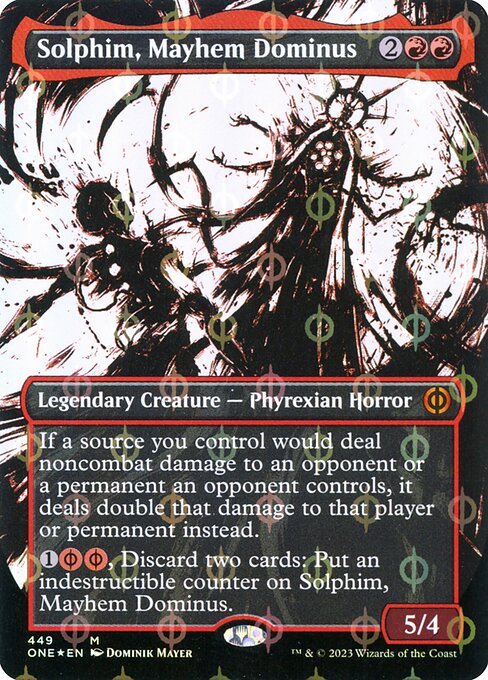 Solphim, Mayhem Dominus
 Legendary Creature — Phyrexian Horror
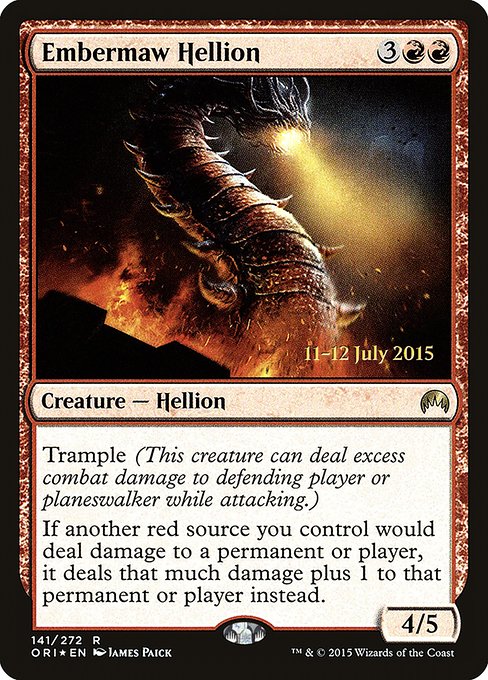 Embermaw HellionCreature — Hellion
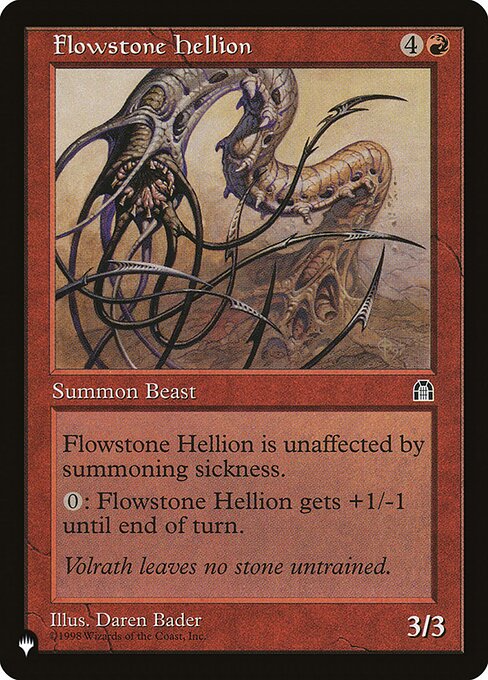 Flowstone Hellion
 Creature — Hellion Beast
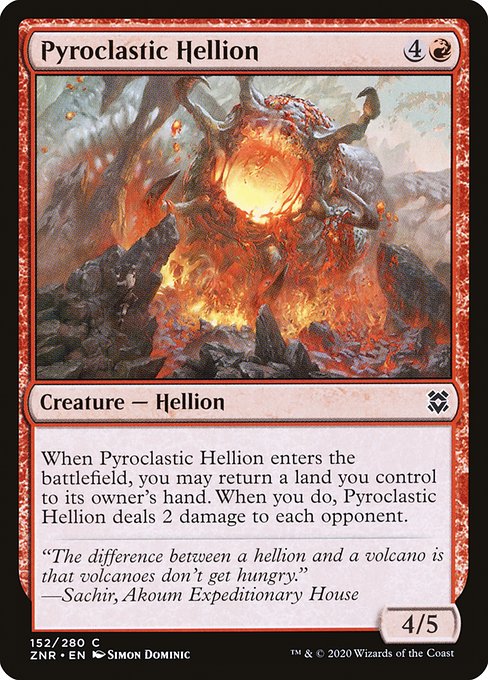 Pyroclastic HellionCreature — Hellion
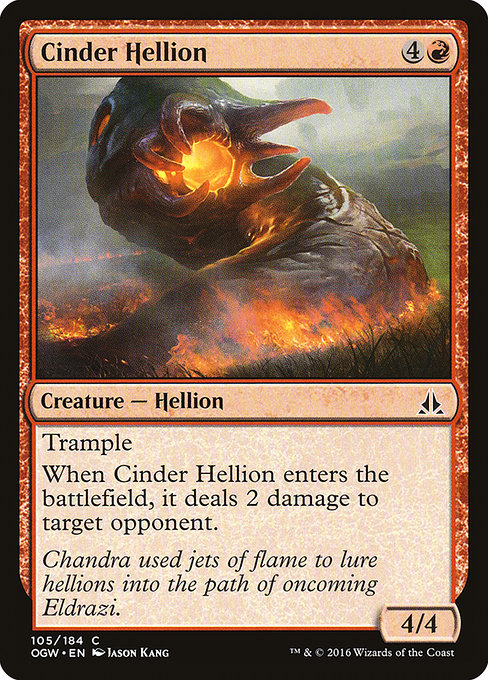 Cinder HellionCreature — Hellion
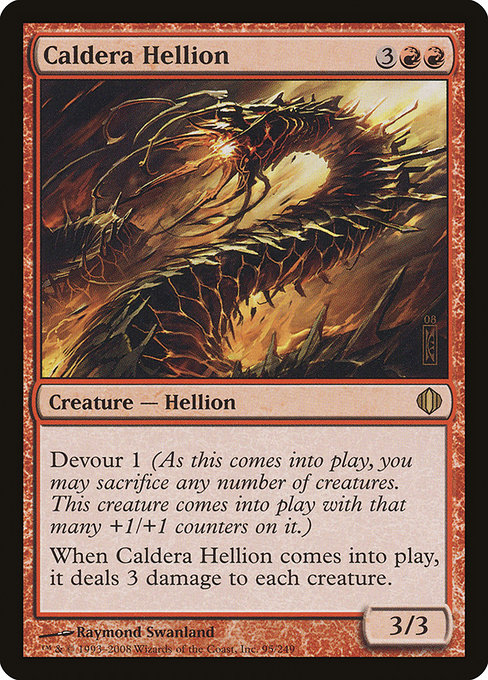 Caldera HellionCreature — Hellion
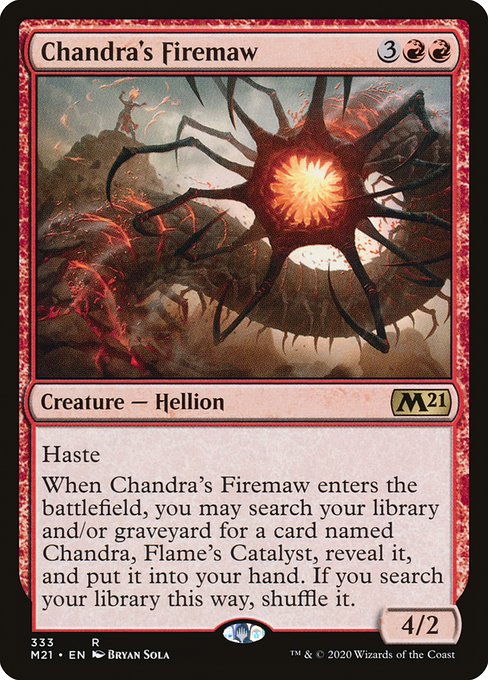 Chandra's FiremawCreature — Hellion
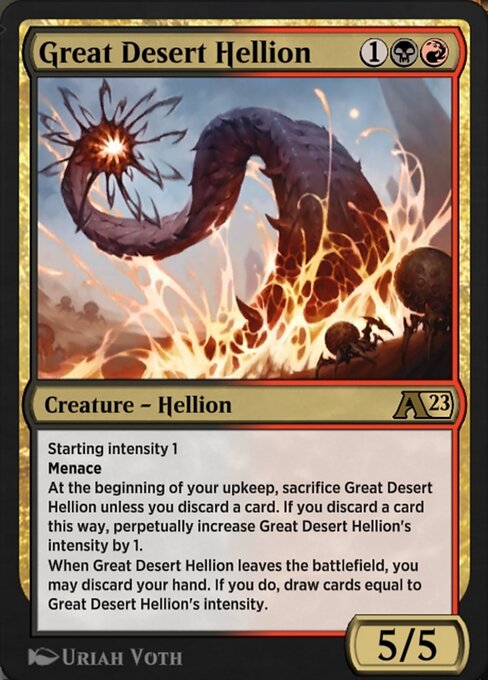 Great Desert Hellion
 Creature — Hellion
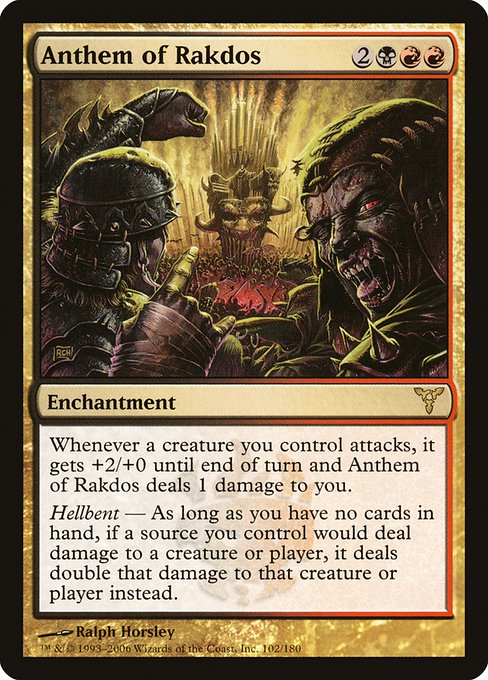 Anthem of RakdosEnchantment
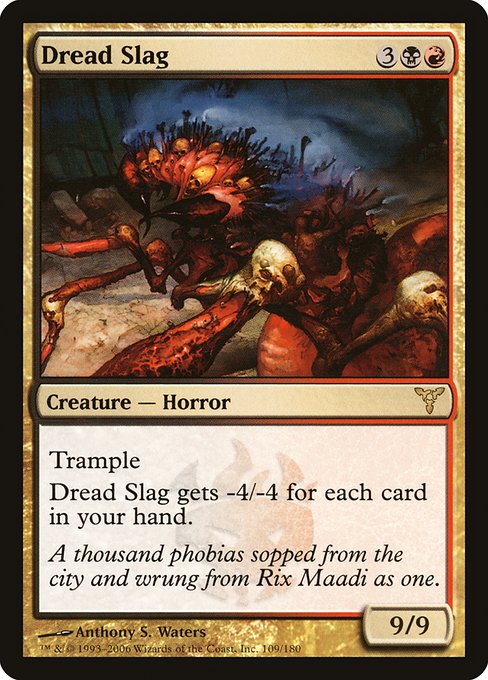 Dread SlagCreature — Horror
Show 20 more similar cards
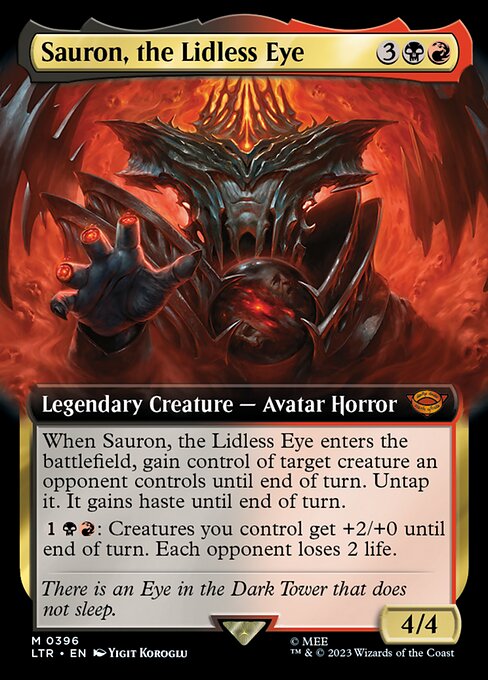 Sauron, the Lidless EyeLegendary Creature — Avatar Horror
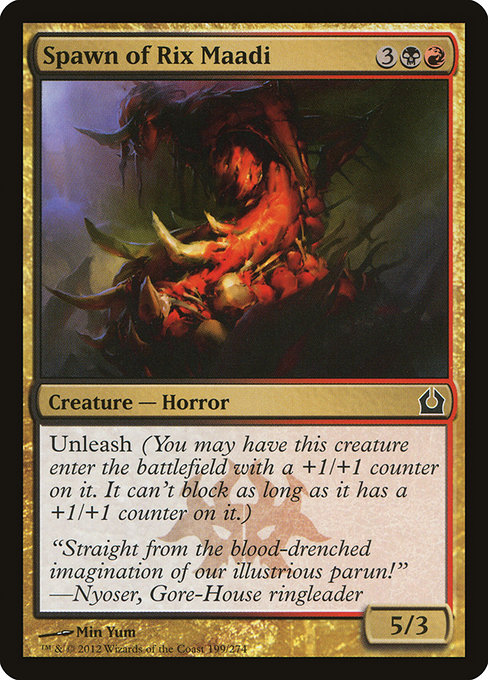 Spawn of Rix MaadiCreature — Horror
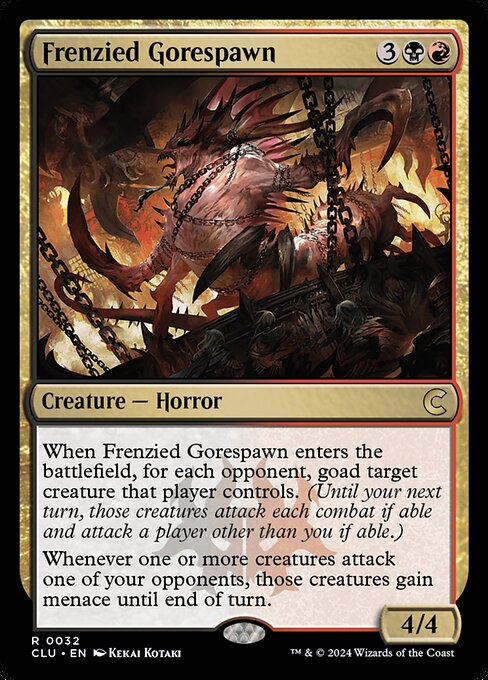 Frenzied GorespawnCreature — Horror
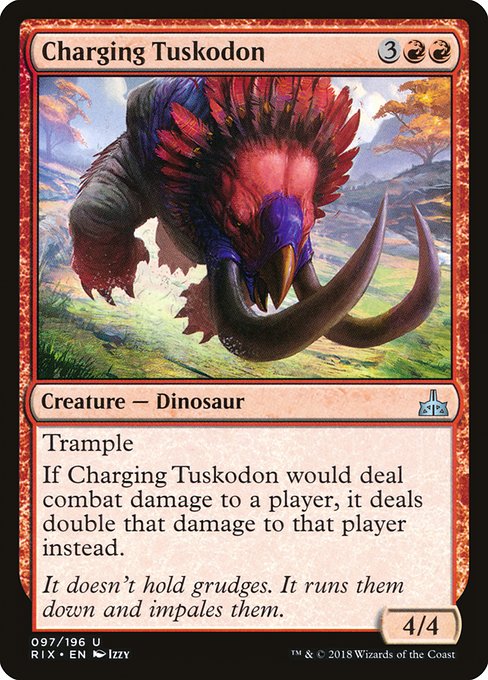 Charging TuskodonCreature — Dinosaur
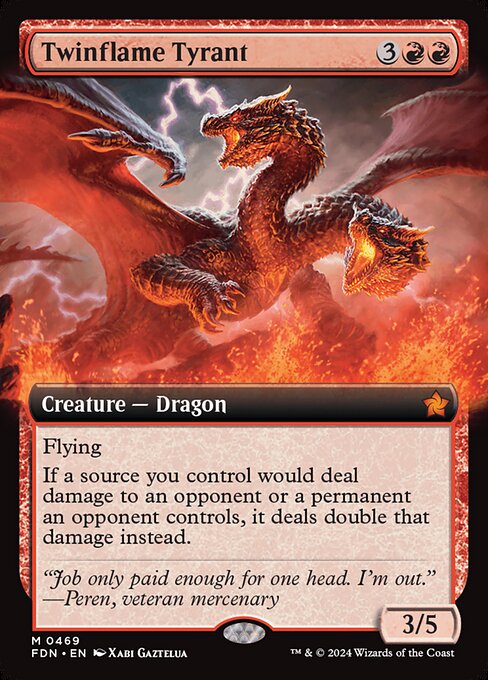 Twinflame TyrantCreature — Dragon
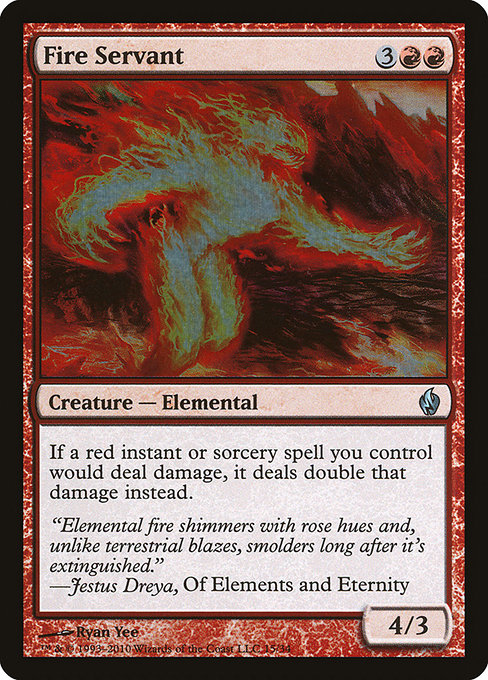 Fire ServantCreature — Elemental
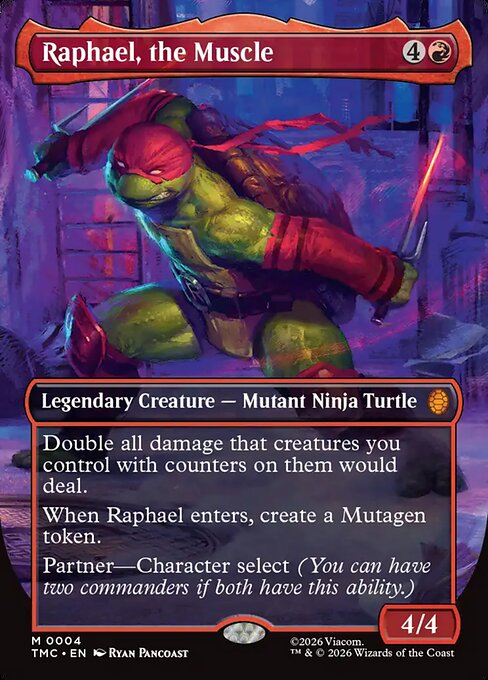 Raphael, the MuscleLegendary Creature — Mutant Ninja Turtle
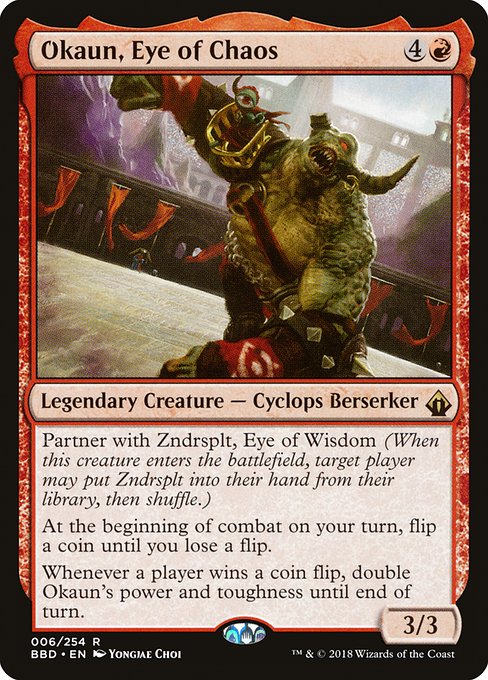 Okaun, Eye of ChaosLegendary Creature — Cyclops Berserker
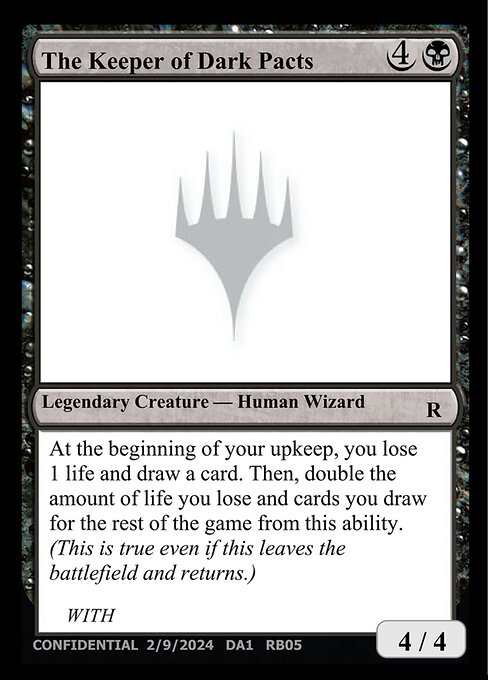 The Keeper of Dark PactsLegendary Creature — Human Wizard
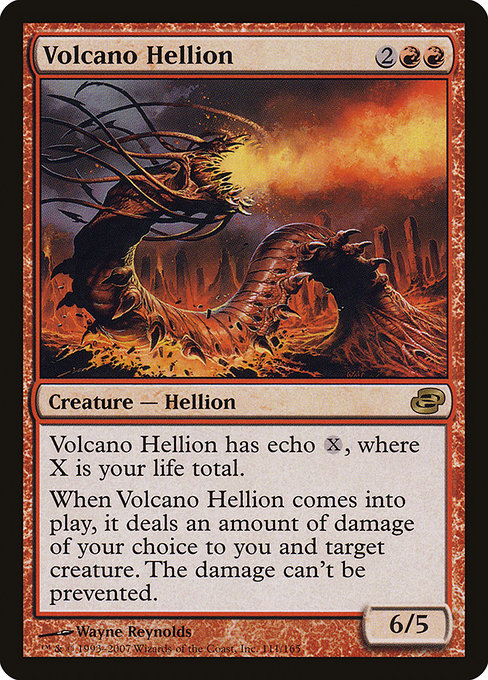 Volcano HellionCreature — Hellion
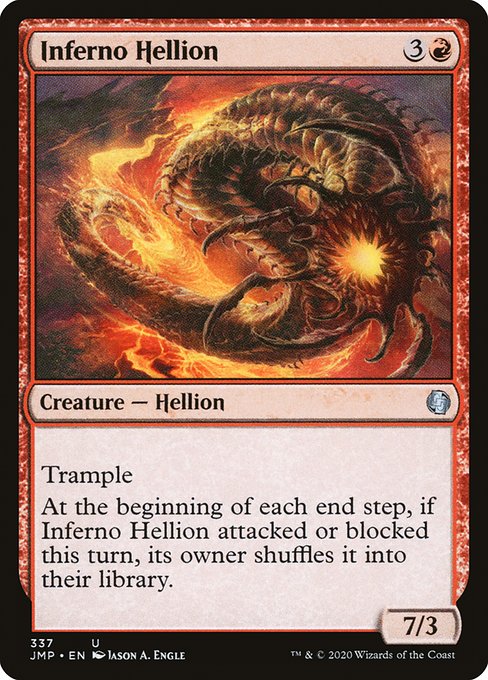 Inferno HellionCreature — Hellion
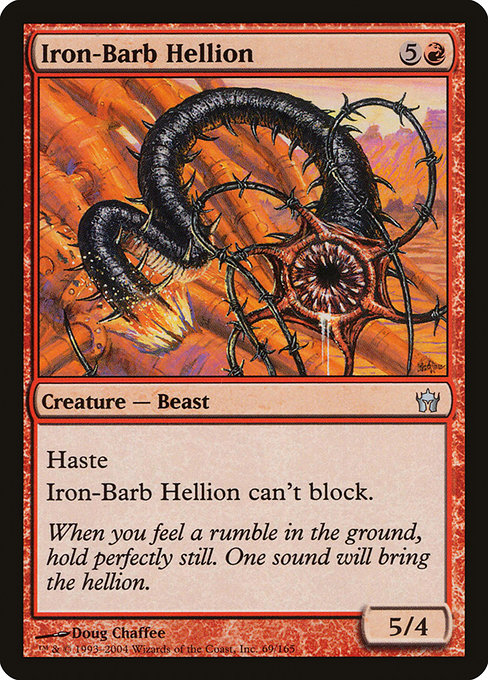 Iron-Barb Hellion
 Creature — Hellion Beast
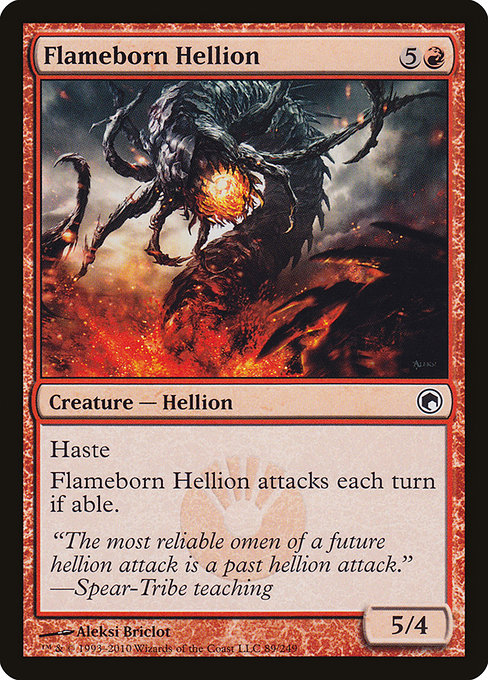 Flameborn HellionCreature — Hellion
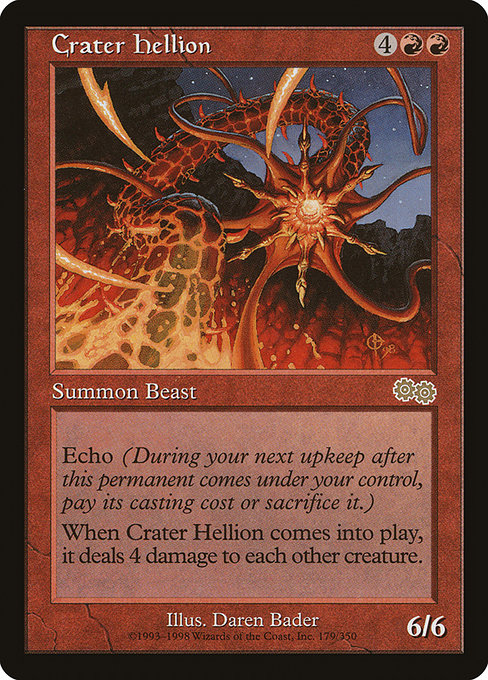 Crater HellionCreature — Hellion Beast
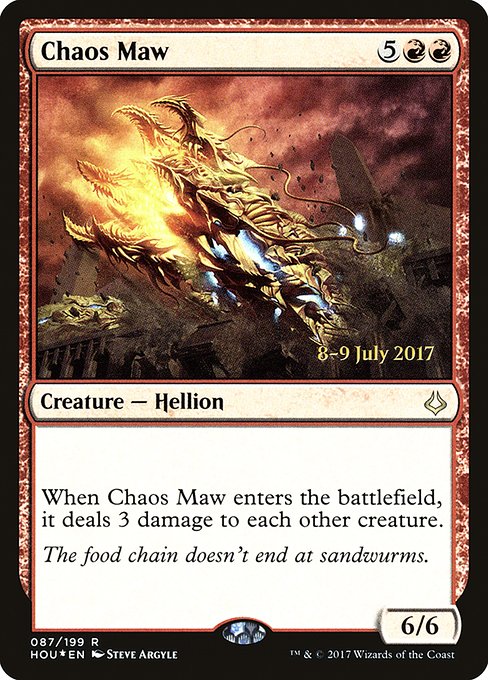 Chaos MawCreature — Hellion
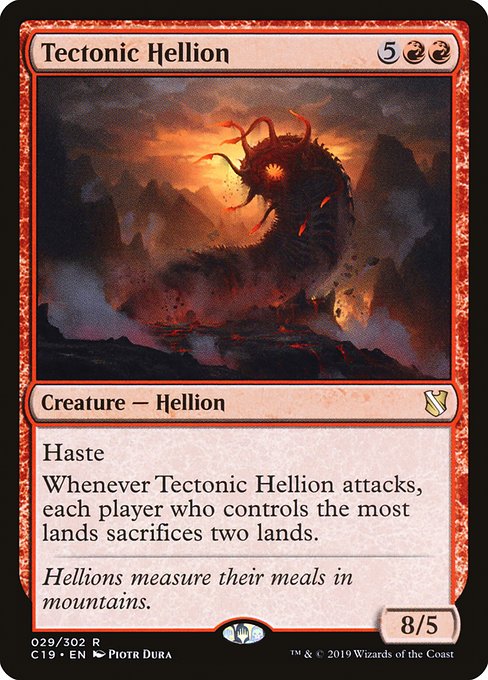 Tectonic HellionCreature — Hellion
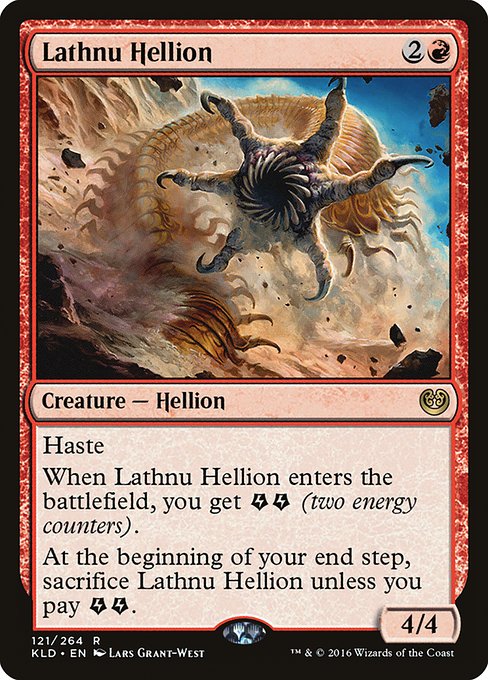 Lathnu HellionCreature — Hellion
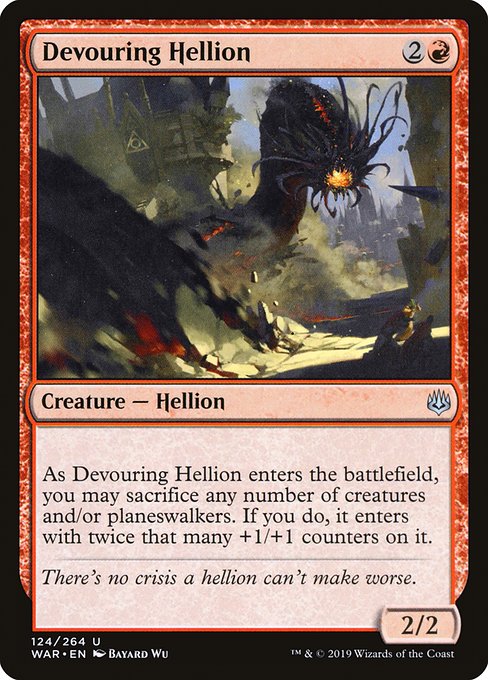 Devouring HellionCreature — Hellion
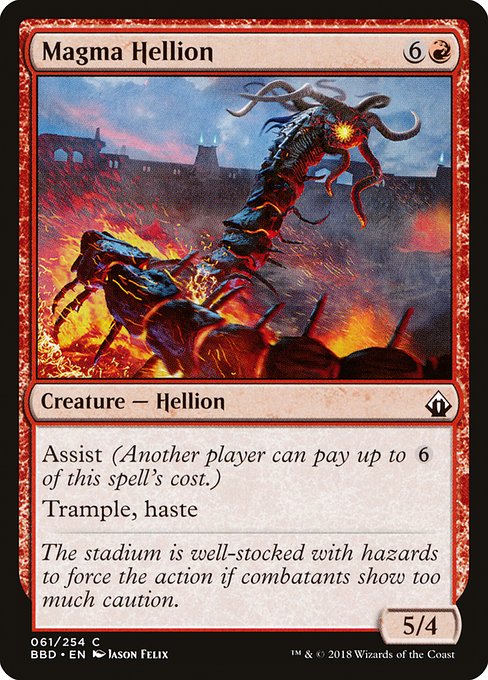 Magma Hellion
 Creature — Hellion
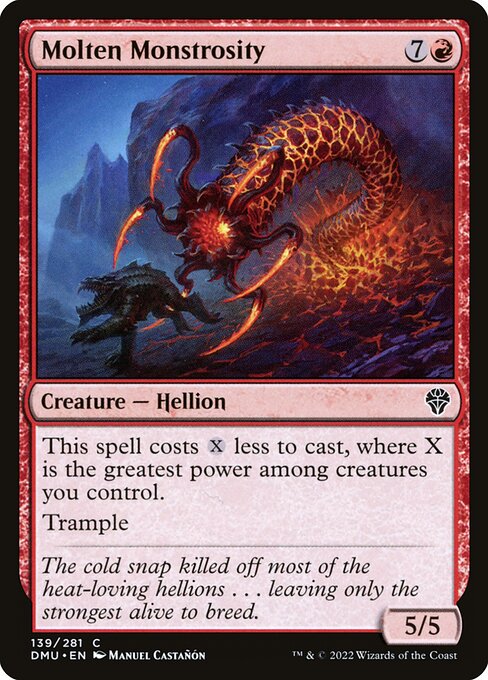 Molten Monstrosity
 Creature — Hellion