
Old Fogey
 Summon — DinosaurPower and toughness7/7
Card text
Phasing, cumulative upkeep  , echo , fading 3, bands with other Dinosaurs, protection from Homarids, snow-covered plainswalk, flanking, rampage 2
"These kids today with their collector numbers and their newfangled tap symbol. Twenty Black Lotuses and twenty Plague Rats. Now that's *real* Magic."
Showing The List (Unfinity Foil Edition)#39
Price
0.44 $ foil
4 printings · up to 0.86 $
Daily estimate from Scryfall, not a shop quote.
Old Fogey rulings
Due to changes in how echo and phasing work since Old Fogey was originally printed, echo mostly does nothing in this case. This is, as they say, a bit weird. Old Fogey is phased out when its echo ability would trigger, so that ability doesn’t trigger at the beginning of the upkeep after Old Fogey enters the battlefield. Phasing in doesn’t cause Old Fogey to enter the battlefield, so echo ends up not really doing much at all.
Old Fogey keyword rules
Landwalk Rule 702.14
Landwalk is a generic term that appears within an object’s rules text as “[type]walk,” where [type] is usually a land type, but it can also be the card type land plus any combination of land types, card types, and/or supertypes.
Landwalk is an evasion ability.
A creature with landwalk can’t be blocked as long as the defending player controls at least one land with the specified land type (as in “islandwalk”), with the specified type or supertype (as in “artifact landwalk”), without the specified type or supertype (as in “nonbasic landwalk”), or with both the specified type or supertype and the specified subtype (as in “snow swampwalk”). (See rule , “Declare Blockers Step.”)
Landwalk abilities don’t “cancel” one another.
Multiple instances of the same kind of landwalk on the same creature are redundant.
Flanking Rule 702.25
Flanking is a triggered ability that triggers during the declare blockers step. (See rule , “Declare Blockers Step.”) “Flanking” means “Whenever this creature becomes blocked by a creature without flanking, the blocking creature gets -1/-1 until end of turn.”
If a creature has multiple instances of flanking, each triggers separately.
Fading Rule 702.32
Fading is a keyword that represents two abilities. “Fading N” means “This permanent enters with N fade counters on it” and “At the beginning of your upkeep, remove a fade counter from this permanent. If you can’t, sacrifice the permanent.”
Protection Rule 702.16
Protection is a static ability, written “Protection from [quality].” This quality is usually a color (as in “protection from black”) but can be any characteristic value or information. If the quality happens to be a card name, it is treated as such only if the protection ability specifies that the quality is a name. If the quality is a card type, subtype, or supertype, the ability applies to sources that are permanents with that card type, subtype, or supertype and to any sources not on the battlefield that are of that card type, subtype, or supertype. This is an exception to rule .
A permanent or player with protection can’t be targeted by spells with the stated quality and can’t be targeted by abilities from a source with the stated quality.
A permanent or player with protection can’t be enchanted by Auras that have the stated quality. Such Auras attached to the permanent or player with protection will be put into their owners’ graveyards as a state-based action. (See rule , “State-Based Actions.”)
A permanent with protection can’t be equipped by Equipment that have the stated quality or fortified by Fortifications that have the stated quality. Such Equipment or Fortifications become unattached from that permanent as a state-based action, but remain on the battlefield. (See rule , “State-Based Actions.”)
Any damage that would be dealt by sources that have the stated quality to a permanent or player with protection is prevented.
Attacking creatures with protection can’t be blocked by creatures that have the stated quality.
“Protection from [quality A] and from [quality B]” is shorthand for “protection from [quality A]” and “protection from [quality B]”; it behaves as two separate protection abilities.
“Protection from each [characteristic]” is shorthand for “protection from [quality A],” “protection from [quality B],” and so on for each possible quality the listed characteristic could have; it behaves as multiple separate protection abilities.
“Protection from each [set of characteristics, qualities, or players]” is shorthand for “protection from [A],” “protection from [B],” and so on for each characteristic, quality, or player in the set. It behaves as multiple separate protection abilities.
“Protection from everything” is a variant of the protection ability. A permanent or player with protection from everything has protection from each object regardless of that object’s characteristic values. Such a permanent or player can’t be targeted by spells or abilities and can’t be enchanted by Auras. Such a permanent can’t be equipped by Equipment, fortified by Fortifications, or blocked by creatures. All damage that would be dealt to such a permanent or player is prevented.
“Protection from [a player]” is a variant of the protection ability. A permanent or player with protection from a specific player has protection from each object that player controls and protection from each object that player owns not controlled by another player, regardless of that object’s characteristic values. Such a permanent or player can’t be targeted by spells or abilities the specified player controls and can’t be enchanted by Auras that player controls. Such a permanent can’t be equipped by Equipment that player controls, fortified by Fortifications that player controls, or blocked by creatures that player controls. All damage that would be dealt to such a permanent or player by sources controlled by the specified player or owned by that player but not controlled by another player is prevented.
Multiple instances of protection from the same quality on the same permanent or player are redundant.
Some Auras both give the enchanted creature protection from a quality and say “this effect doesn’t remove” either that specific Aura or all Auras. This means that the specified Auras aren’t put into their owners’ graveyards as a state-based action. If the creature has other instances of protection from the same quality, those instances affect Auras as normal.
One Aura (Benevolent Blessing) gives the enchanted creature protection from a quality and says the effect doesn’t remove certain permanents that are “already attached to” that creature. This means that, when the protection effect starts to apply, any objects with the stated quality that are already attached to that creature (including the Aura giving that creature protection) will not be put into their owners’ graveyards as a state-based action. Other permanents with the stated quality can’t become attached to the creature. If the creature has other instances of protection from the same quality, those instances affect attached permanents as normal.
Banding Rule 702.22
Banding is a static ability that modifies the rules for combat.
“Bands with other” is a special form of banding. If an effect causes a permanent to lose banding, the permanent loses all “bands with other” abilities as well.
As a player declares attackers, they may declare that one or more attacking creatures with banding and up to one attacking creature without banding (even if it has “bands with other”) are all in a “band.” They may also declare that one or more attacking [quality] creatures with “bands with other [quality]” and any number of other attacking [quality] creatures are all in a band. A player may declare as many attacking bands as they want, but each creature may be a member of only one of them. (Defending players can’t declare bands but may use banding in a different way; see rule .)
All creatures in an attacking band must attack the same player, planeswalker, or battle.
Once an attacking band has been announced, it lasts for the rest of combat, even if something later removes banding or “bands with other” from one or more of the creatures in the band.
An attacking creature that’s removed from combat is also removed from the band it was in.
Banding doesn’t cause attacking creatures to share abilities, nor does it remove any abilities. The attacking creatures in a band are separate permanents.
If an attacking creature becomes blocked by a creature, each other creature in the same band as the attacking creature becomes blocked by that same blocking creature.
If one member of a band would become blocked due to an effect, the entire band becomes blocked.
During the combat damage step, if an attacking creature is being blocked by a creature with banding, or by both a [quality] creature with “bands with other [quality]” and another [quality] creature, the defending player (rather than the active player) chooses how the attacking creature’s damage is assigned. That player can divide that creature’s combat damage as they choose among any creatures blocking it. This is an exception to the procedure described in rule .
During the combat damage step, if a blocking creature is blocking a creature with banding, or both a [quality] creature with “bands with other [quality]” and another [quality] creature, the active player (rather than the defending player) chooses how the blocking creature’s damage is assigned. That player can divide that creature’s combat damage as they choose among any creatures it’s blocking. This is an exception to the procedure described in rule .
Multiple instances of banding on the same creature are redundant. Multiple instances of “bands with other” of the same kind on the same creature are redundant.
Rampage Rule 702.23
Rampage is a triggered ability. “Rampage N” means “Whenever this creature becomes blocked, it gets +N/+N until end of turn for each creature blocking it beyond the first.” (See rule , “Declare Blockers Step.”)
The rampage bonus is calculated only once per combat, when the triggered ability resolves. Adding or removing blockers later in combat won’t change the bonus.
If a creature has multiple instances of rampage, each triggers separately.
Phasing Rule 702.26
Phasing is a static ability that modifies the rules of the untap step. During each player’s untap step, before the active player untaps permanents, all phased-in permanents with phasing that player controls “phase out.” Simultaneously, all phased-out permanents that had phased out under that player’s control “phase in.”
If a permanent phases out, its status changes to “phased out.” Except for rules and effects that specifically mention phased-out permanents, a phased-out permanent is treated as though it does not exist. It can’t affect or be affected by anything else in the game. A permanent that phases out is removed from combat. (See rule .)
If a permanent phases in, its status changes to “phased in.” The game once again treats it as though it exists.
The phasing event doesn’t actually cause a permanent to change zones or control, even though it’s treated as though it’s not on the battlefield and not under its controller’s control while it’s phased out. Zone-change triggers don’t trigger when a permanent phases in or out. Tokens continue to exist on the battlefield while phased out. Counters and stickers remain on a permanent while it’s phased out. Effects that check a phased-in permanent’s history won’t treat the phasing event as having caused the permanent to leave or enter the battlefield or its controller’s control.
If a continuous effect generated by the resolution of a spell or ability modifies the characteristics or changes the controller of any objects, a phased-out permanent won’t be included in the set of affected objects. This includes continuous effects that reference the permanent specifically, unless they also specifically refer to the permanent as phased out.
Continuous effects that affect a phased-out permanent may expire while that permanent is phased out. If so, they will no longer affect that permanent once it’s phased in. In particular, effects with “for as long as” durations that track that permanent (see rule ) end when that permanent phases out because they can no longer see it.
When a permanent phases out, any Auras, Equipment, or Fortifications attached to that permanent phase out at the same time. This alternate way of phasing out is known as phasing out “indirectly.” An Aura, Equipment, or Fortification that phased out indirectly won’t phase in by itself, but instead phases in along with the permanent it’s attached to.
If an object would simultaneously phase out directly and indirectly, it just phases out indirectly.
An Aura, Equipment, or Fortification that phased out directly will phase in attached to the object or player it was attached to when it phased out, if that object is still in the same zone or that player is still in the game. If not, that Aura, Equipment, or Fortification phases in unattached. State-based actions apply as appropriate. (See rules and .)
Abilities that trigger when a permanent becomes attached or unattached from an object or player don’t trigger when that permanent phases in or out.
Phased-out permanents owned by a player who leaves the game also leave the game. This doesn’t cause zone-change abilities to trigger. See rule .
If an effect causes a player to skip their untap step, the phasing event simply doesn’t occur that turn.
In a multiplayer game, game rules may cause a phased-out permanent to leave the game or to be exiled once a player leaves the game. (See rules and .) If a phased-out permanent phased out under the control of a player who has left the game, that permanent phases in during the next untap step after that player’s next turn would have begun.
Multiple instances of phasing on the same permanent are redundant.
Echo Rule 702.30
Echo is a triggered ability. “Echo [cost]” means “At the beginning of your upkeep, if this permanent came under your control since the beginning of your last upkeep, sacrifice it unless you pay [cost].”
Urza block cards with the echo ability were printed without an echo cost. These cards have been given errata in the Oracle card reference; each one now has an echo cost equal to its mana cost.
Cumulative upkeep Rule 702.24
Cumulative upkeep is a triggered ability that imposes an increasing cost on a permanent. “Cumulative upkeep [cost]” means “At the beginning of your upkeep, if this permanent is on the battlefield, put an age counter on this permanent. Then you may pay [cost] for each age counter on it. If you don’t, sacrifice it.” If [cost] has choices associated with it, each choice is made separately for each age counter, then either the entire set of costs is paid, or none of them is paid. Partial payments aren’t allowed.
If a permanent has multiple instances of cumulative upkeep, each triggers separately. However, the age counters are not connected to any particular ability; each cumulative upkeep ability will count the total number of age counters on the permanent at the time that ability resolves.
Old Fogey format legality
Constructed
- StandardNot legal
- PioneerNot legal
- ModernNot legal
- Future StandardNot legal
Eternal
- LegacyNot legal
- VintageNot legal
- PauperNot legal
- PremodernNot legal
- Old SchoolNot legal
- Penny DreadfulNot legal
Commander
- CommanderNot legal
- OathbreakerNot legal
- Pauper CommanderNot legal
- Duel CommanderNot legal
- PreDHNot legal
Arena & online
- HistoricNot legal
- TimelessNot legal
- AlchemyNot legal
- GladiatorNot legal
- BrawlNot legal
- Standard BrawlNot legal
- Competitive BrawlNot legal
Other
- TLRNot legal
All printings of Old Fogey 4
Cards similar to Old Fogey
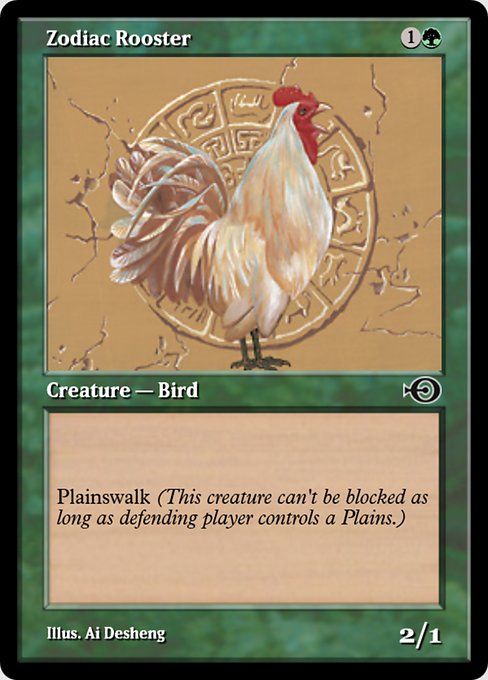 Zodiac RoosterCreature — Bird
 Aswan JaguarSummon Jaguar
 Faerie Dragon
 Summon Dragon
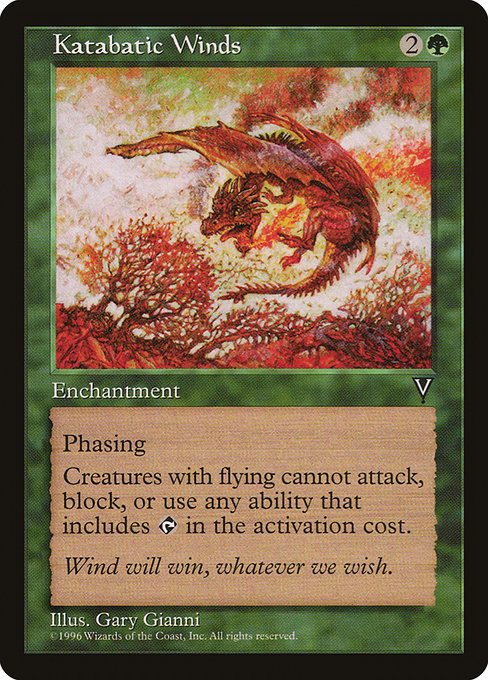 Katabatic WindsEnchantment
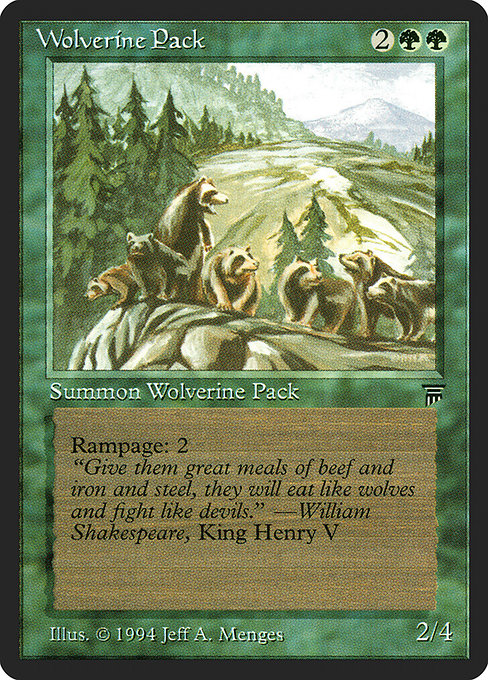 Wolverine PackCreature — Wolverine
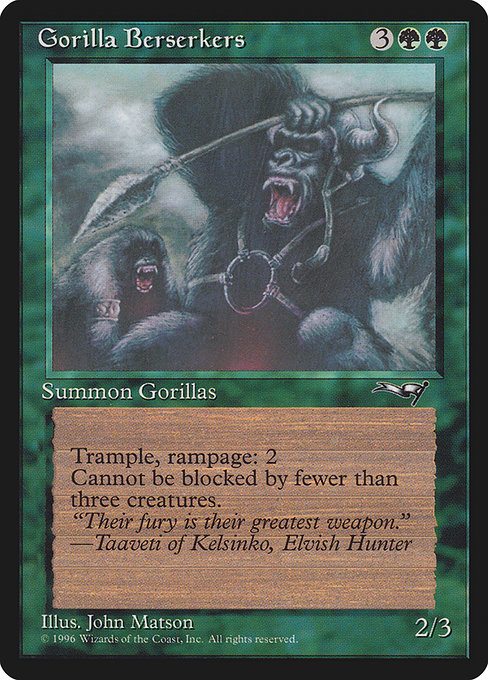 Gorilla Berserkers
 Creature — Ape Berserker
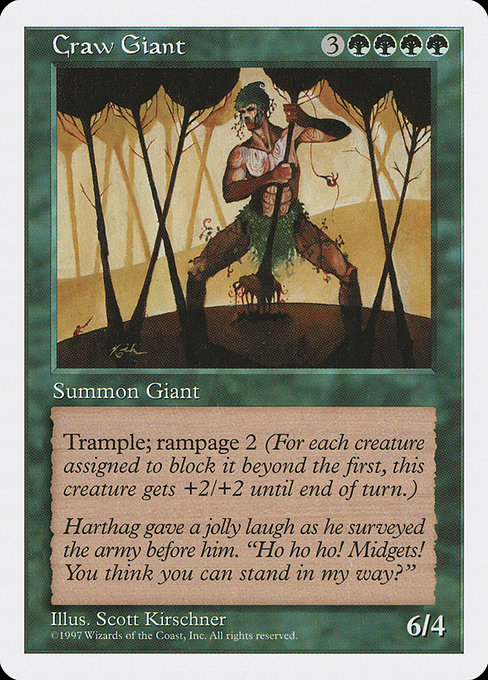 Craw GiantCreature — Giant
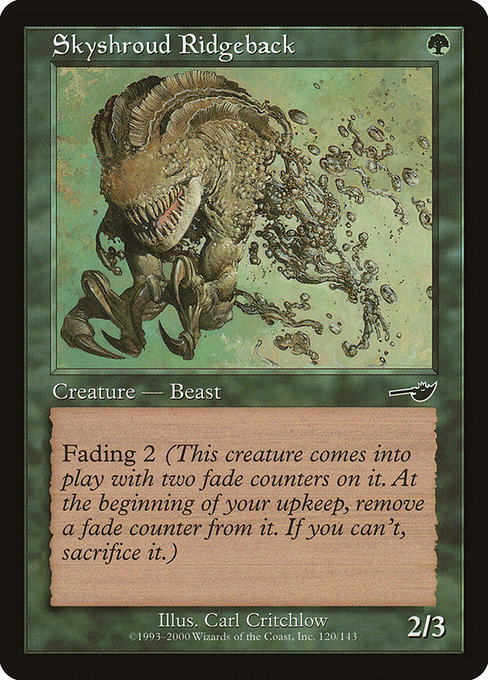 Skyshroud RidgebackCreature — Beast
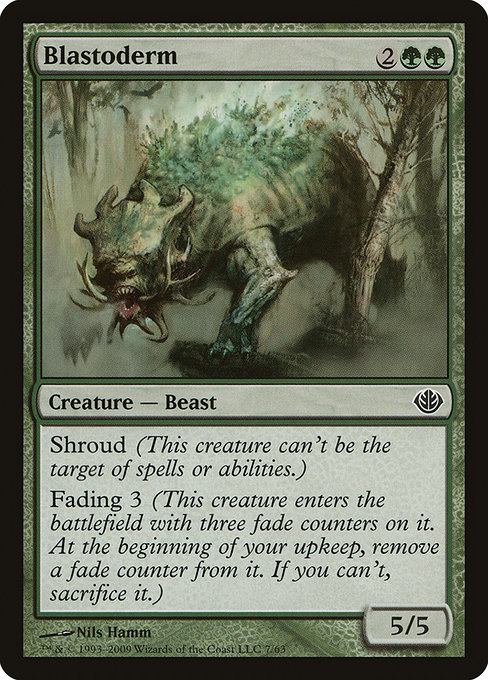 BlastodermCreature — Beast
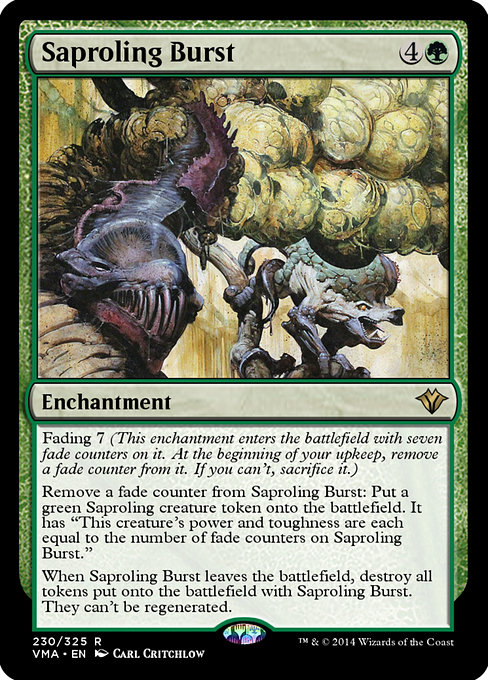 Saproling Burst
 Enchantment
Show 10 more similar cards
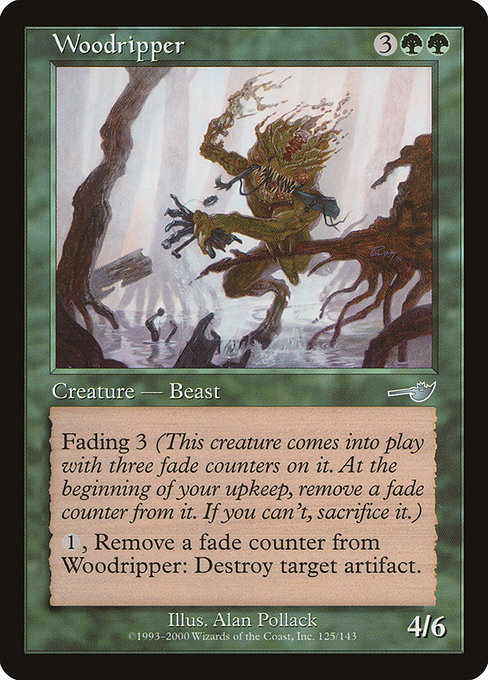 WoodripperCreature — Beast
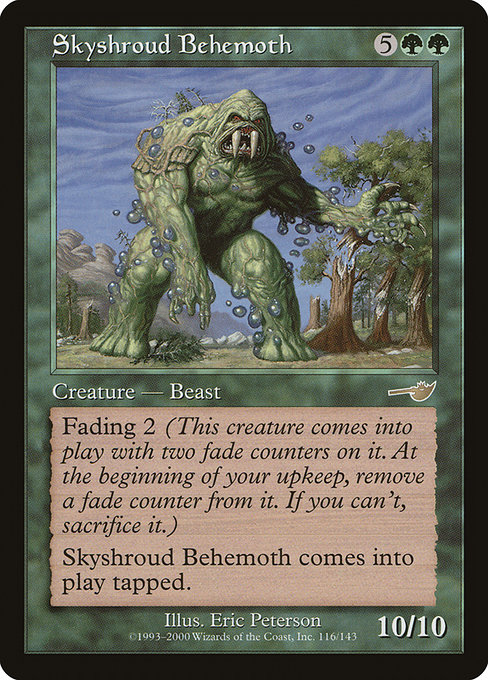 Skyshroud Behemoth
 Creature — Beast
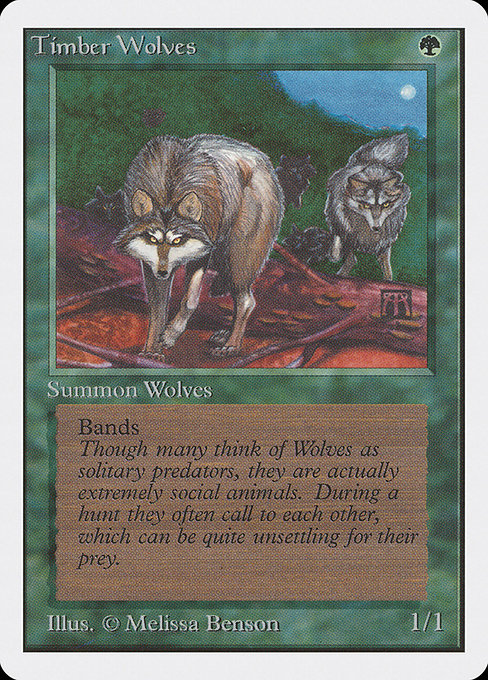 Timber WolvesCreature — Wolf
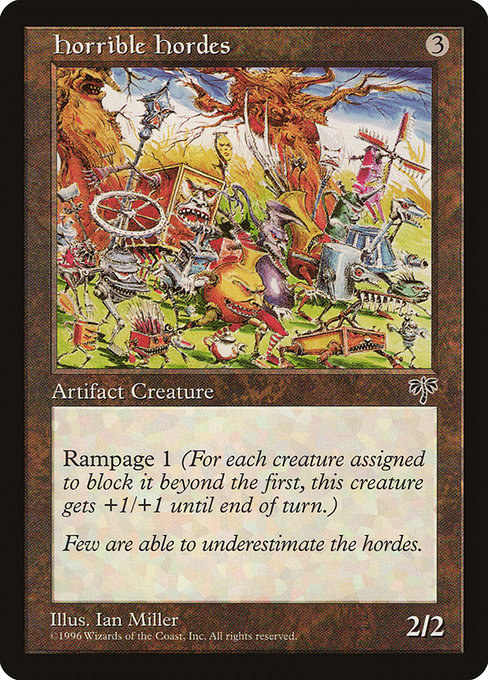 Horrible HordesArtifact Creature — Spirit
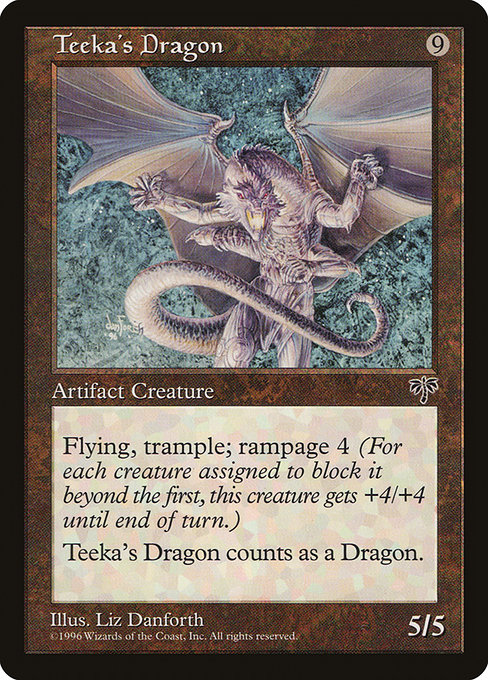 Teeka's Dragon
 Artifact Creature — Dragon
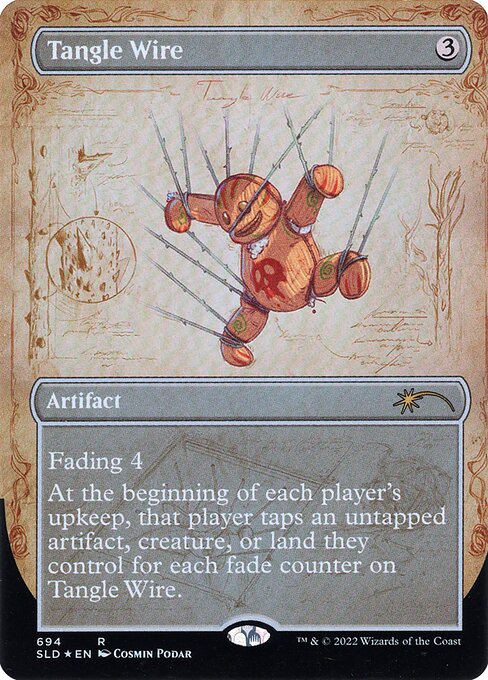 Tangle WireArtifact
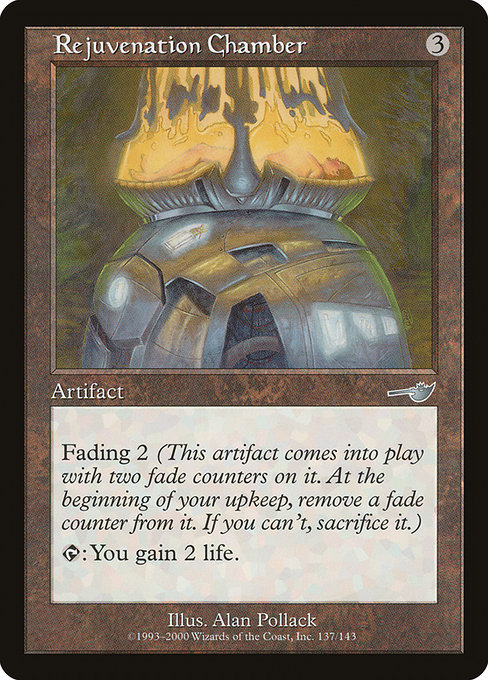 Rejuvenation ChamberArtifact
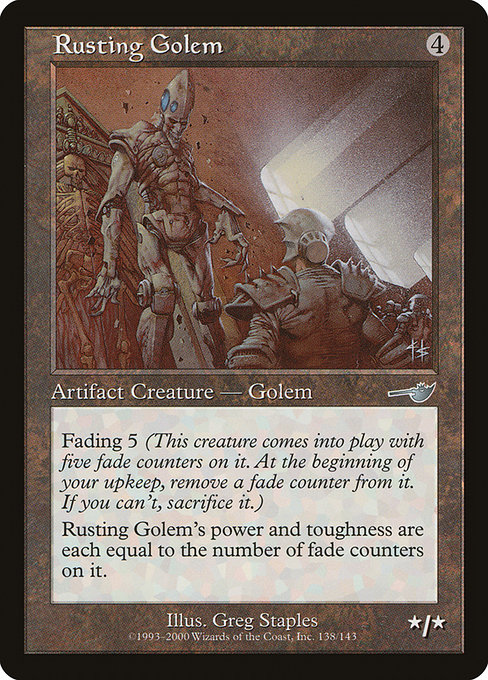 Rusting GolemArtifact Creature — Golem
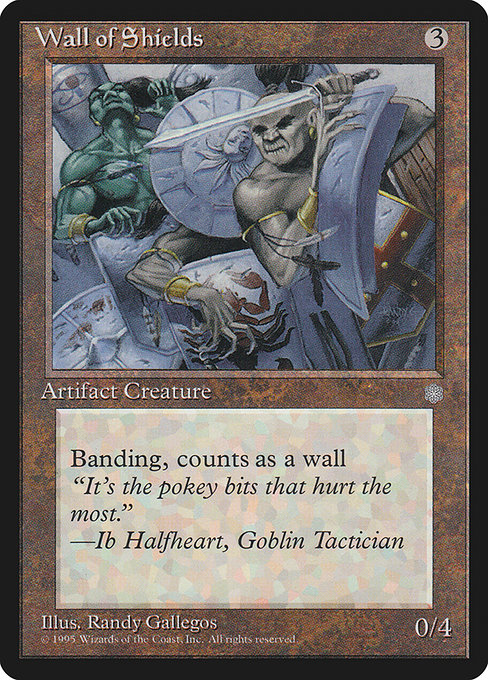 Wall of ShieldsArtifact Creature — Wall
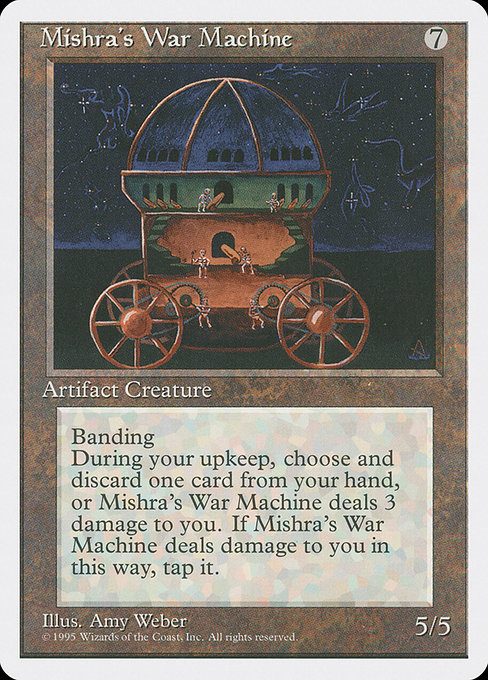 Mishra's War Machine
 Artifact Creature — Juggernaut