
Vincent Valentine // Galian Beast
Vincent Valentine

 Legendary Creature — AssassinPower and toughness2/2
Card text
Whenever a creature an opponent controls dies, put a number of +1/+1 counters on Vincent Valentine equal to that creature's power.
Whenever Vincent Valentine attacks, you may transform it.
Galian Beast
Legendary Creature — Werewolf BeastPower and toughness3/2
Card text
Trample, lifelink
When Galian Beast dies, return it to the battlefield tapped (front face up).
"This body is... the punishment that's been given to me..."
Showing Final Fantasy#125
Price
1.65 $
Foil 2.38 $
21 printings · up to 6.07 $
Daily estimate from Scryfall, not a shop quote.
Vincent Valentine // Galian Beast rulings
A nonmodal double-faced card enters with its front face up by default, unless a spell or ability instructs you to put it onto the battlefield transformed or allows you to cast it transformed, in which case it enters with its back face up.
The back face of a nonmodal double-faced card usually has a color indicator that defines its color.
If you are instructed to put a card that isn't a double-faced card onto the battlefield transformed, it will not enter at all. In that case, it stays in the zone it was previously in. For example, if a single-faced card is a copy of Crystal Fragments, it will be exiled during the resolution of its second ability and remain in exile.
Use the creature's power as it last existed on the battlefield to determine how many +1/+1 counters to put on Vincent Valentine.
A token that is created as a copy of a double-faced permanent or a double-faced card in another zone is a double-faced token. It will have both the front face and back face of whatever object it's copying. If it's copying a double-faced permanent whose back face is up, the token will enter with its back face up. It can transform if instructed to do so.
Each nonmodal double-faced card in this release is cast face up. In every zone other than the battlefield, consider only the characteristics of its front face. If it is on the battlefield, consider only the characteristics of the face that's up; the other face's characteristics are ignored.
Each face of a nonmodal double-faced card has its own set of characteristics: name, types, subtypes, abilities, and so on. While a nonmodal double-faced permanent is on the battlefield, consider only the characteristics of the face that's currently up. The other set of characteristics is ignored.
The mana value of a nonmodal double-faced card is the mana value of its front face, no matter which face is up.
In the Commander variant, a double-faced card's color identity is determined by the mana costs and mana symbols in the rules text of both faces combined. If either face has a color indicator or basic land type, those are also considered. For example, Cecil, Dark Knight's color identity is black and white, since its front face is black and its back face has a white color indicator.
Vincent Valentine // Galian Beast keyword rules
Lifelink Rule 702.15
Lifelink is a static ability.
Damage dealt by a source with lifelink causes that source’s controller, or its owner if it has no controller, to gain that much life (in addition to any other results that damage causes). See rule .
If an object changes zones before an effect causes it to deal damage, its last known information is used to determine whether it had lifelink.
The lifelink rules function no matter what zone an object with lifelink deals damage from.
If multiple sources with lifelink deal damage at the same time, they cause separate life gain events (see rules –10).
Multiple instances of lifelink on the same object are redundant.
Transform Rule 701.28
To transform a permanent, turn it over so that its other face is up. Only transforming tokens and permanents represented by transforming double-faced cards can transform. (See rule , “Double-Faced Cards.”)
Although transforming a permanent uses the same physical action as turning a permanent face up or face down, they are different game actions. Abilities that trigger when a permanent is turned face down won’t trigger when that permanent transforms, and so on.
If a spell or ability instructs a player to transform a permanent that isn’t represented by a transforming token or a transforming double-faced card, nothing happens.
If a spell or ability instructs a player to transform a permanent, and the face that permanent would transform into is represented by an instant or sorcery card face, or is a transforming token that was created with an instant or sorcery face, nothing happens.
Some triggered abilities trigger when an object “transforms into” an object with a specified characteristic. Such an ability triggers if the object either transforms or converts (see rule ) and has the specified characteristic immediately after it does so.
If an activated or triggered ability of a permanent that isn’t a delayed triggered ability of that permanent tries to transform it, the permanent does so only if it hasn’t transformed or converted since the ability was put onto the stack. If a delayed triggered ability of a permanent tries to transform that permanent, the permanent does so only if it hasn’t transformed or converted since that delayed triggered ability was created. In both cases, if the permanent has already transformed or converted, an instruction to do either is ignored.
Some spells and abilities refer to a “transformed permanent.” This phrase refers to a permanent on the battlefield with its back face up that’s also a transforming double-faced card or a transforming token. A permanent with its front face up is never considered a transformed permanent, even if it had its back face up previously.
Trample Rule 702.19
Trample is a static ability that modifies the rules for assigning an attacking creature’s combat damage. The ability has no effect when a creature with trample is blocking or is dealing noncombat damage. (See rule , “Combat Damage Step.”)
The controller of an attacking creature with trample first assigns damage to the creature(s) blocking it. Once all those blocking creatures are assigned lethal damage, any excess damage is assigned as its controller chooses among those blocking creatures and the player, planeswalker, or battle the creature is attacking. When checking for assigned lethal damage, take into account damage already marked on the creature and damage from other creatures that’s being assigned during the same combat damage step, but not any abilities or effects that might change the amount of damage that’s actually dealt. The attacking creature’s controller need not assign lethal damage to all those blocking creatures but in that case can’t assign any damage to the player or planeswalker it’s attacking.
Trample over planeswalkers is a variant of trample that modifies the rules for assigning combat damage to planeswalkers. The controller of a creature with trample over planeswalkers assigns that creature’s combat damage as described in rule , with one exception. If that creature is attacking a planeswalker, after lethal damage is assigned to all blocking creatures and damage at least equal to the loyalty of the planeswalker the creature is attacking is assigned to that planeswalker, further excess damage may be assigned as the attacking creature’s controller chooses among those blocking creatures, that planeswalker, and that planeswalker’s controller. When checking for assigned damage equal to a planeswalker’s loyalty, take into account damage from other creatures that’s being assigned during the same combat damage step, but not any abilities or effects that might change the amount of damage that’s actually dealt.
If an attacking creature with trample or trample over planeswalkers is blocked, but there are no creatures blocking it when damage is assigned, its damage is assigned to the defending player and/or planeswalker as though all blocking creatures have been assigned lethal damage.
If a creature with trample over planeswalkers is attacking a planeswalker and that planeswalker is removed from combat, the creature’s damage may be assigned to the defending player once all blocking creatures have been dealt lethal damage or, if there are no blocking creatures when damage is assigned, all its damage is assigned to the defending player. This is an exception to rule , and it does not cause the creature to be attacking that player.
If a creature without trample over planeswalkers is attacking a planeswalker, none of its combat damage can be assigned to the defending player, even if that planeswalker has been removed from combat or the damage the attacking creature could assign is greater than the planeswalker’s loyalty.
Multiple instances of trample on the same creature are redundant. Multiple instances of trample over planeswalkers on the same creature are redundant.
Vincent Valentine // Galian Beast format legality
Constructed
- StandardLegal
- PioneerLegal
- ModernLegal
- Future StandardLegal
Eternal
- LegacyLegal
- VintageLegal
- PauperNot legal
- PremodernNot legal
- Old SchoolNot legal
- Penny DreadfulLegal
Commander
- CommanderLegal
- OathbreakerLegal
- Pauper CommanderNot legal
- Duel CommanderLegal
- PreDHNot legal
Arena & online
- HistoricLegal
- TimelessLegal
- AlchemyLegal
- GladiatorLegal
- BrawlLegal
- Standard BrawlLegal
- Competitive BrawlLegal
Other
- TLRNot legal
All printings of Vincent Valentine // Galian Beast 21
Cards similar to Vincent Valentine // Galian Beast
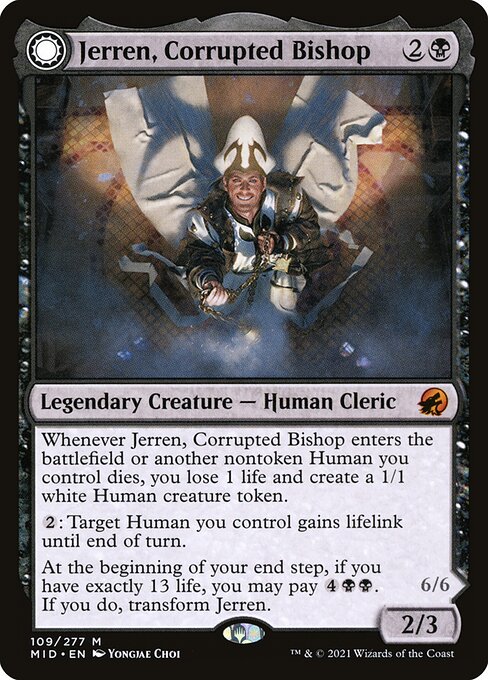 Jerren, Corrupted Bishop // Ormendahl, the CorrupterLegendary Creature — Human Cleric // Legendary Creature — Demon
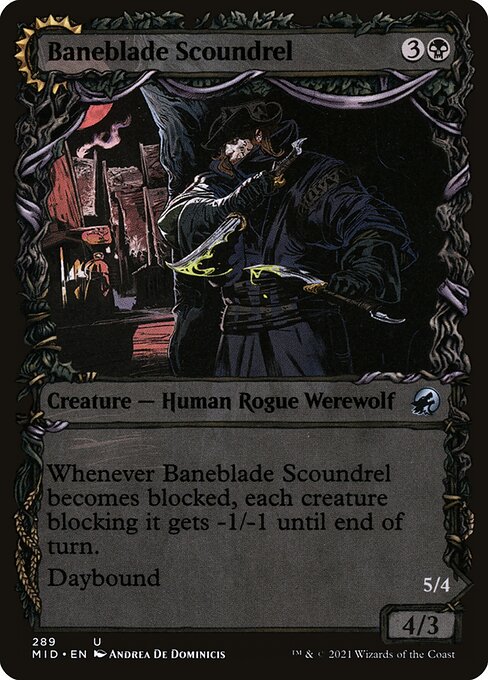 Baneblade Scoundrel // Baneclaw MarauderCreature — Human Rogue Werewolf // Creature — Werewolf
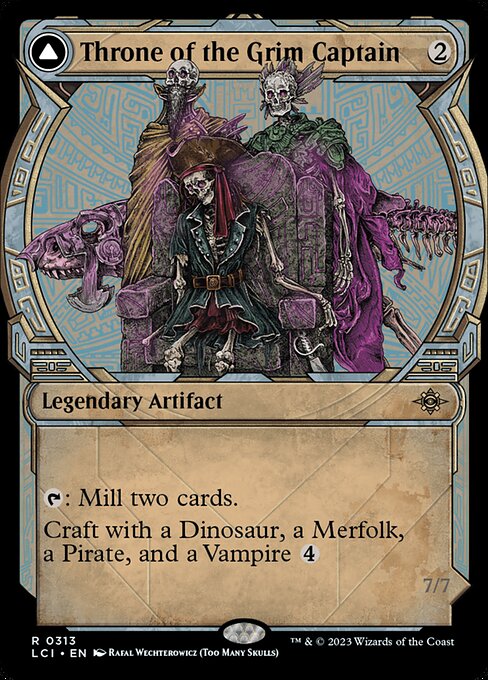 Throne of the Grim Captain // The Grim CaptainLegendary Artifact // Legendary Creature — Skeleton Spirit Pirate
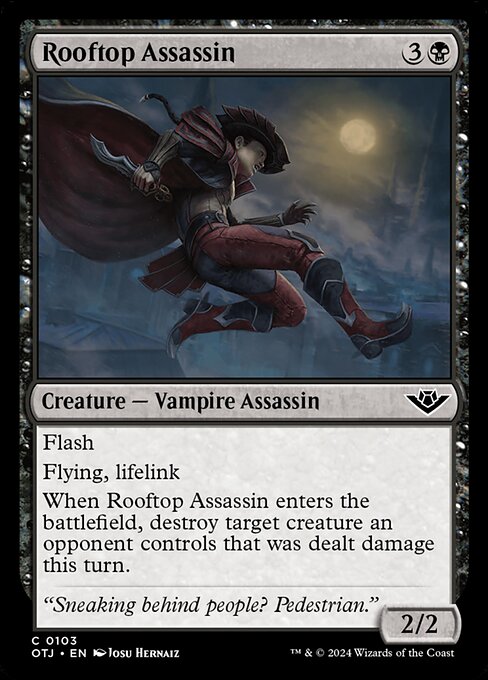 Rooftop Assassin
 Creature — Vampire Assassin
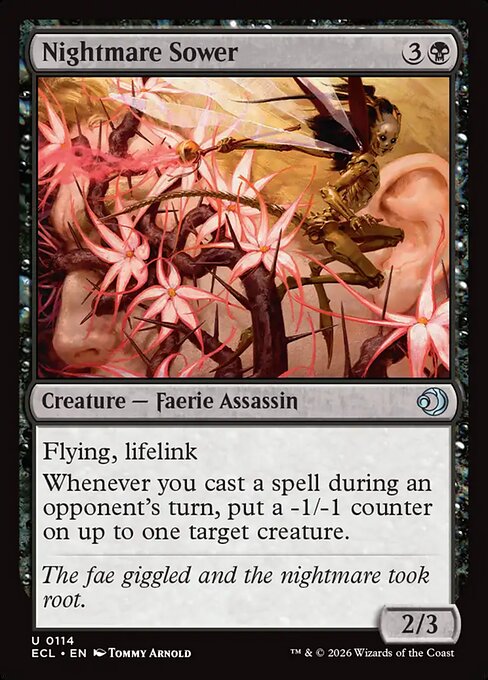 Nightmare SowerCreature — Faerie Assassin
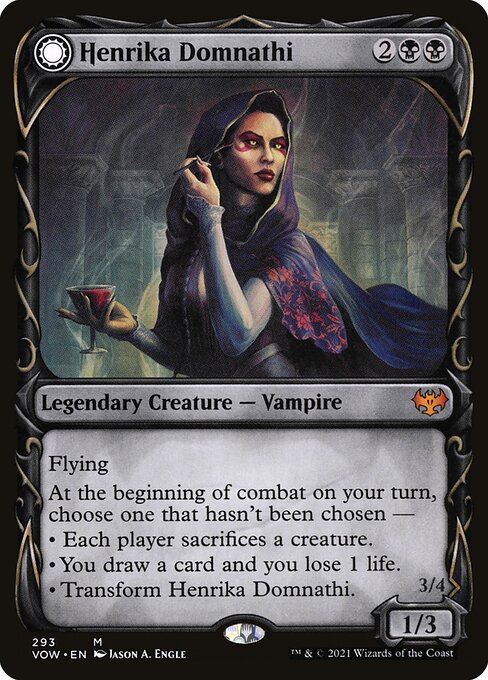 Henrika Domnathi // Henrika, Infernal SeerLegendary Creature — Vampire // Legendary Creature — Vampire
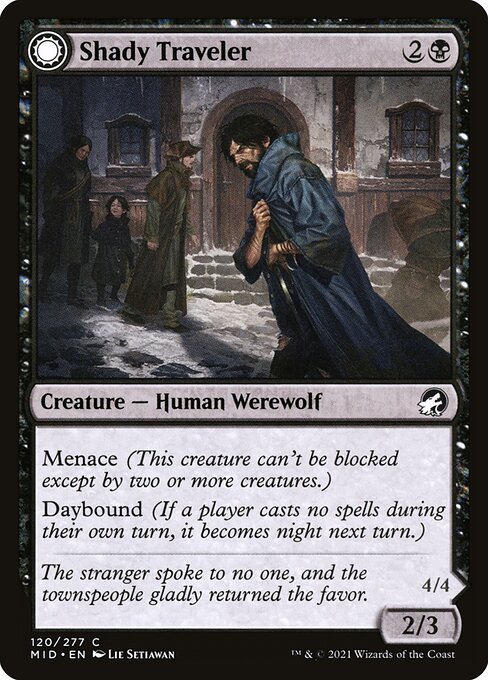 Shady Traveler // Stalking PredatorCreature — Human Werewolf // Creature — Werewolf
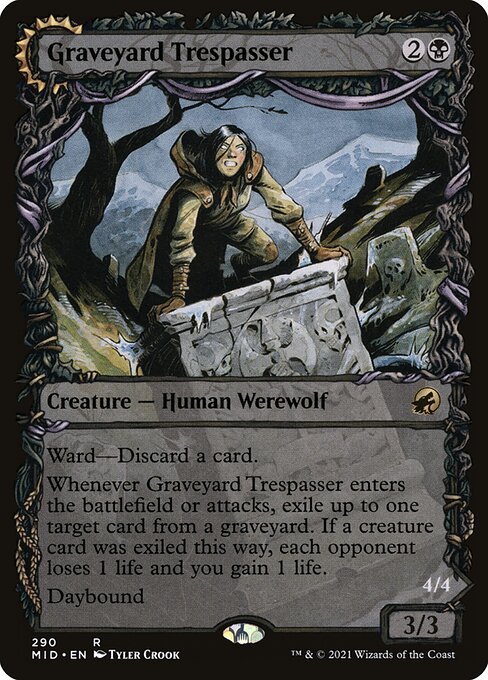 Graveyard Trespasser // Graveyard GluttonCreature — Human Werewolf // Creature — Werewolf
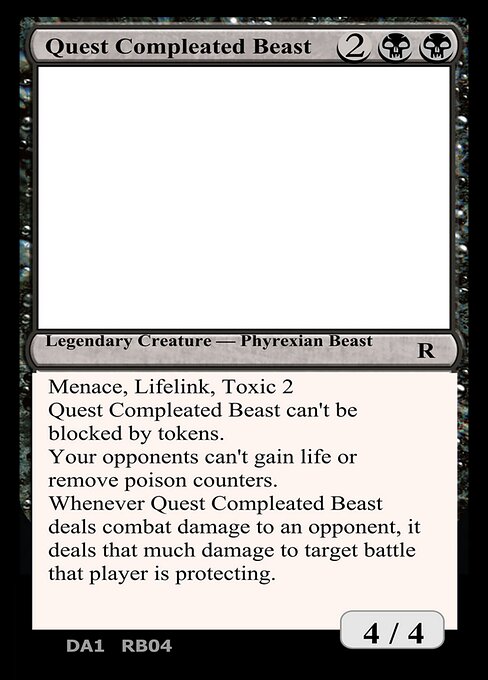 Quest Compleated BeastLegendary Creature — Phyrexian Beast
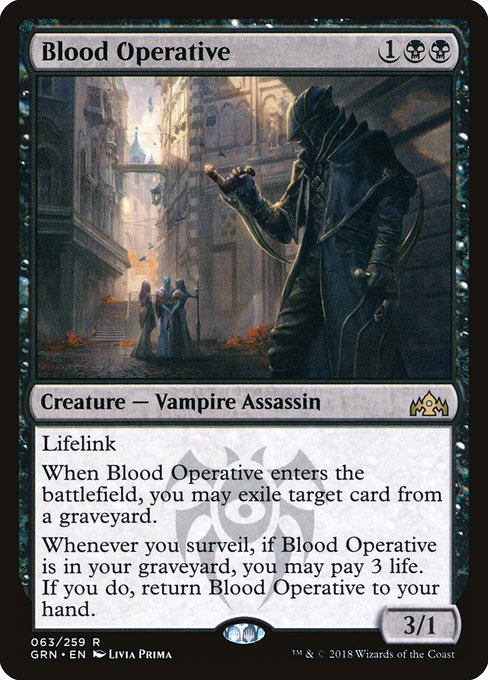 Blood Operative
 Creature — Vampire Assassin
Show 20 more similar cards
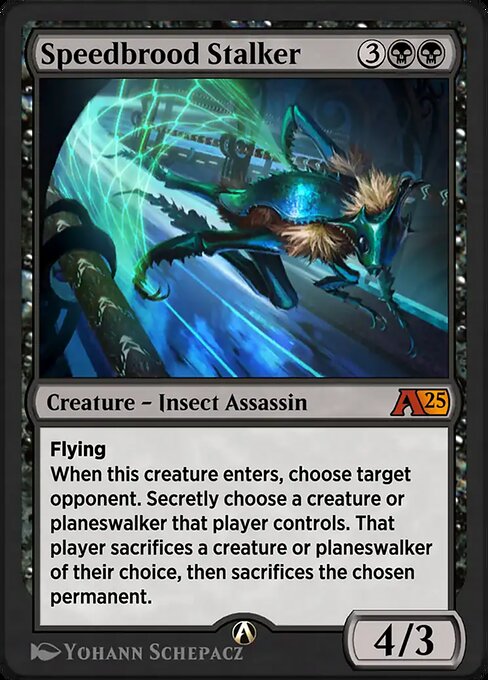 Speedbrood StalkerCreature — Insect Assassin
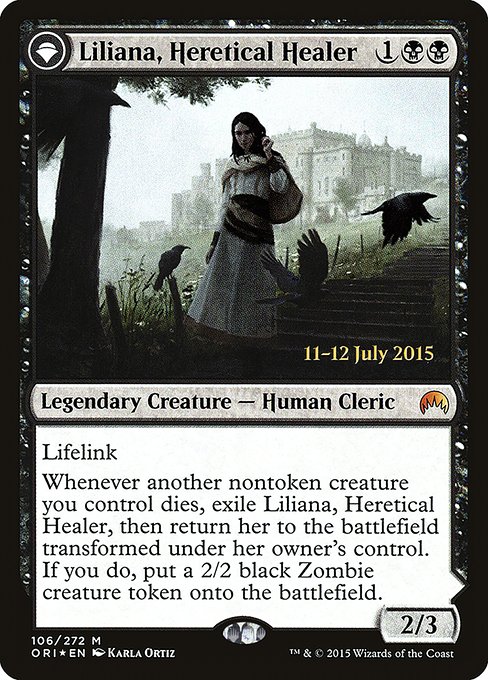 Liliana, Heretical Healer // Liliana, Defiant NecromancerLegendary Creature — Human Cleric // Legendary Planeswalker — Liliana
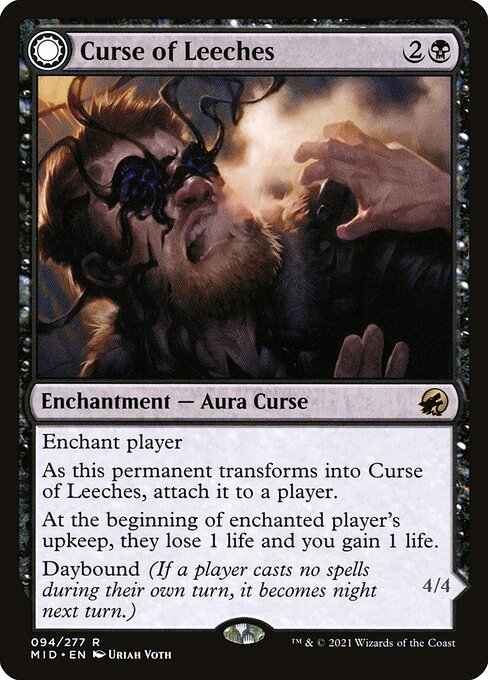 Curse of Leeches // Leeching LurkerEnchantment — Aura Curse // Creature — Leech Horror
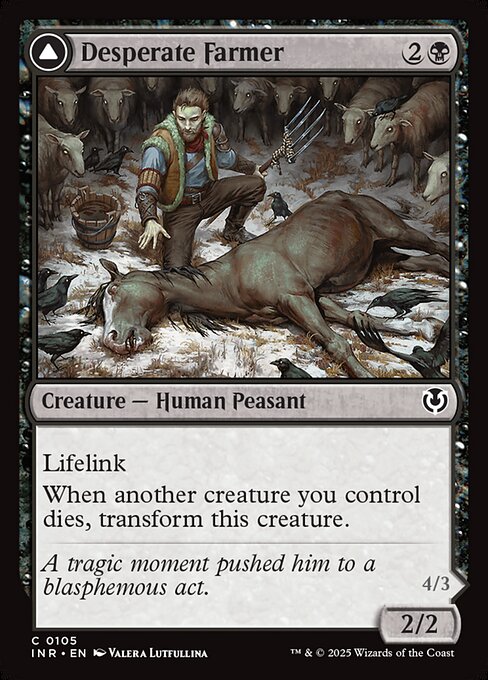 Desperate Farmer // Depraved HarvesterCreature — Human Peasant // Creature — Human Knight
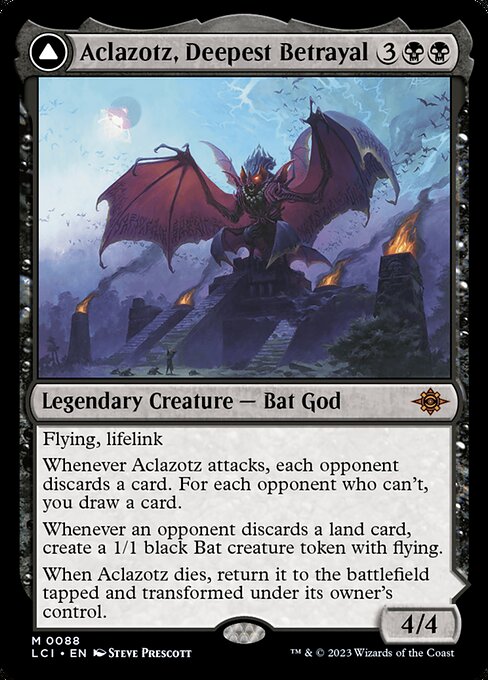 Aclazotz, Deepest Betrayal // Temple of the DeadLegendary Creature — Bat God // Land
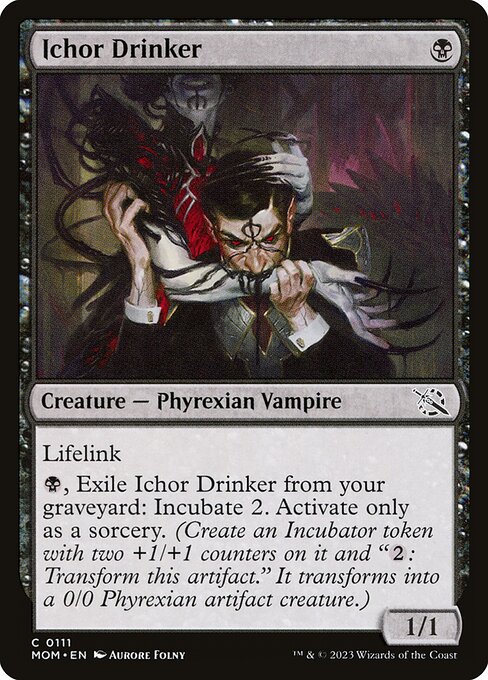 Ichor DrinkerCreature — Phyrexian Vampire
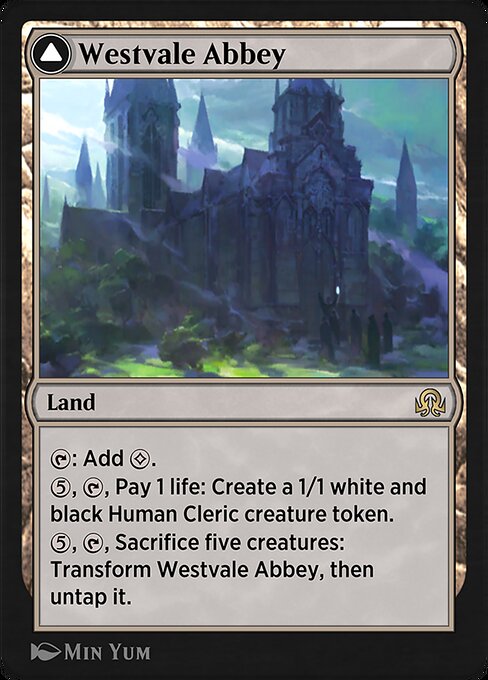 Westvale Abbey // Ormendahl, Profane PrinceLand // Legendary Creature — Demon
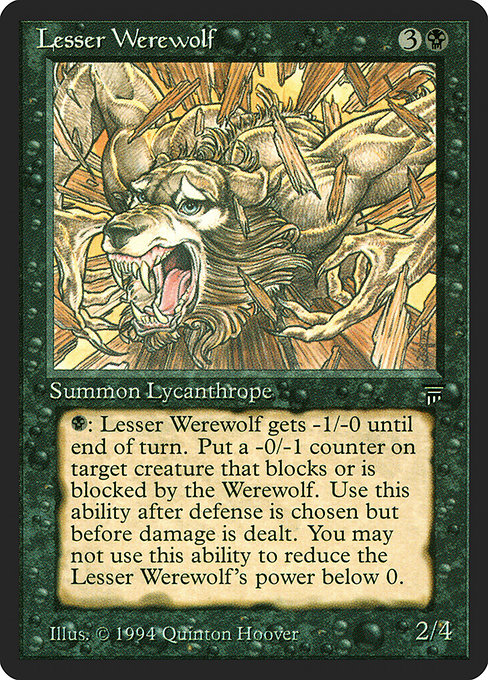 Lesser WerewolfCreature — Werewolf
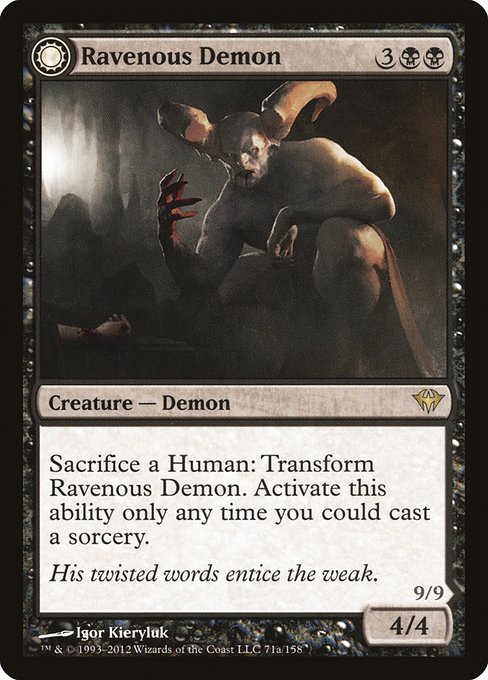 Ravenous Demon // Archdemon of GreedCreature — Demon // Creature — Demon
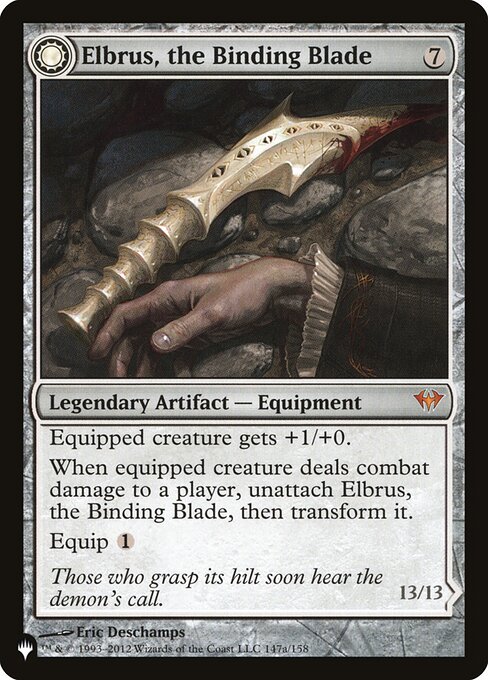 Elbrus, the Binding Blade // Withengar UnboundLegendary Artifact — Equipment // Legendary Creature — Demon
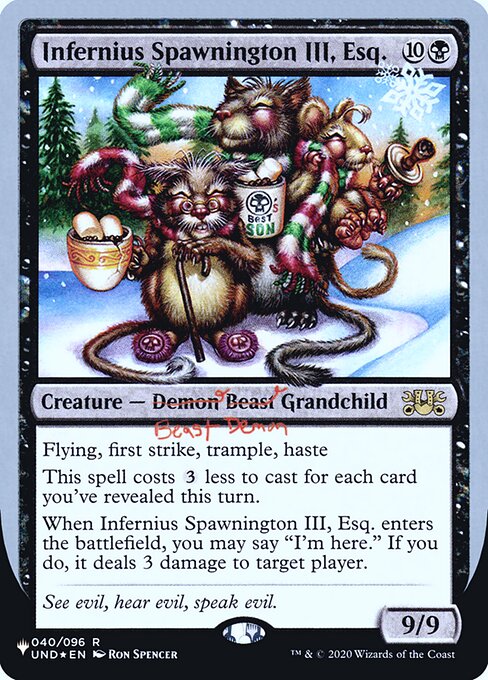 Infernius Spawnington III, Esq.
 Creature — Demon Beast Grandchild
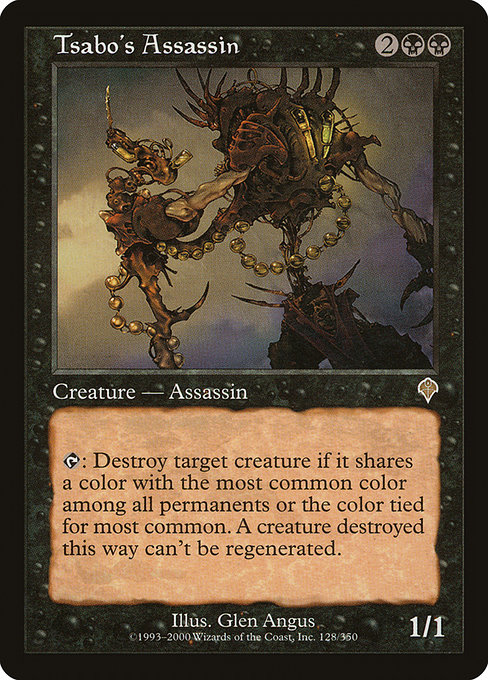 Tsabo's AssassinCreature — Phyrexian Zombie Assassin
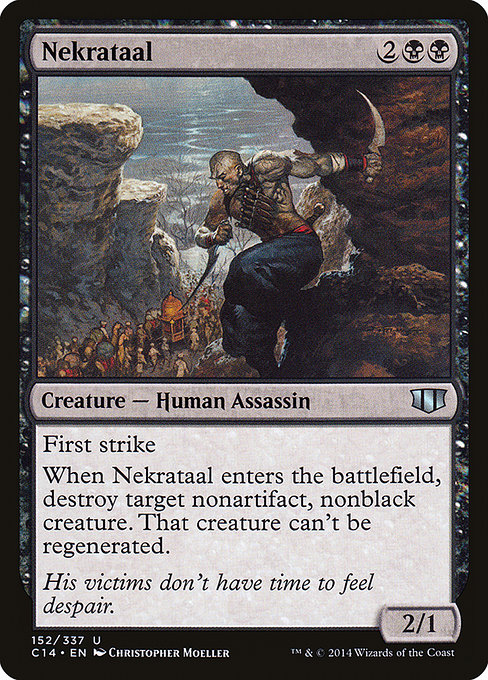 NekrataalCreature — Human Assassin
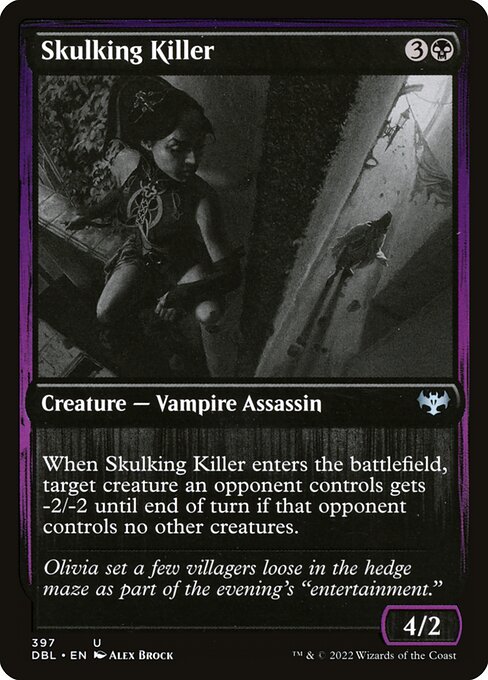 Skulking KillerCreature — Vampire Assassin
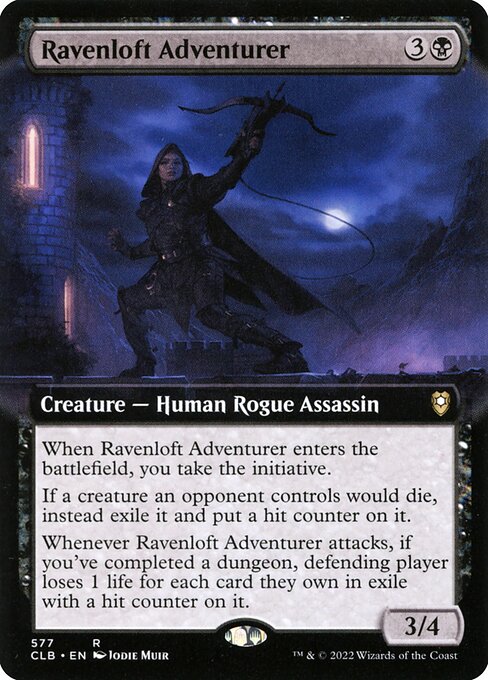 Ravenloft AdventurerCreature — Human Rogue Assassin
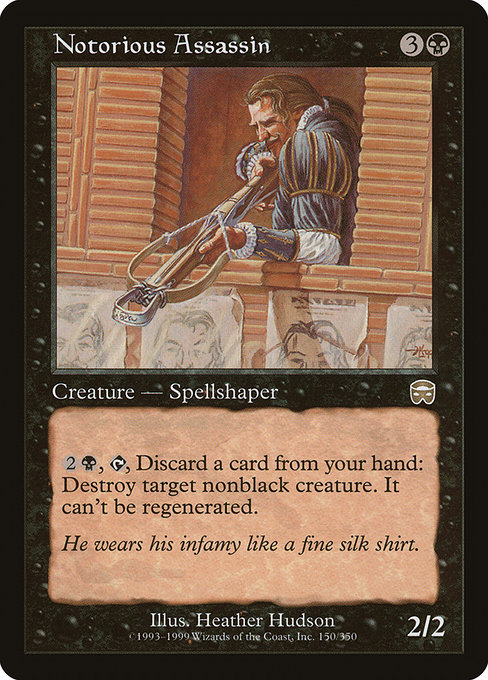 Notorious AssassinCreature — Human Spellshaper Assassin
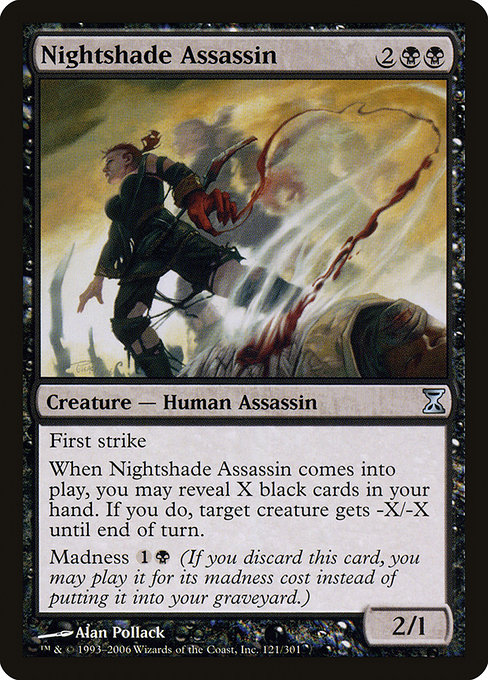 Nightshade AssassinCreature — Human Assassin
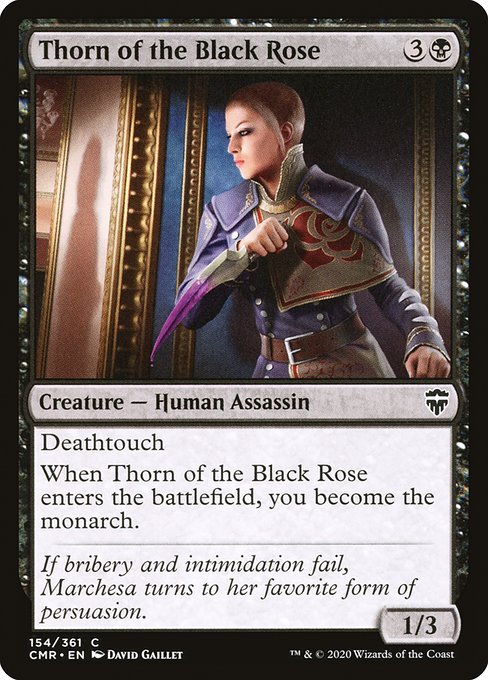 Thorn of the Black RoseCreature — Human Assassin
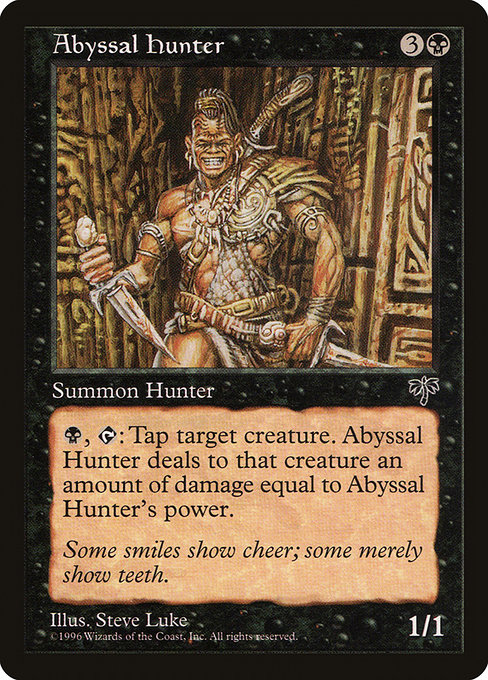 Abyssal HunterCreature — Human Assassin
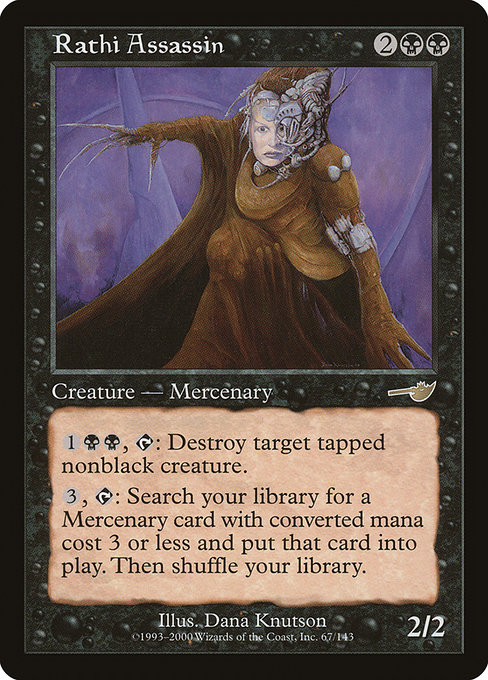 Rathi AssassinCreature — Phyrexian Zombie Mercenary Assassin