
Autumnal Gloom // Ancient of the Equinox
Autumnal Gloom

 Enchantment
Card text
 : Mill a card.
Delirium — At the beginning of your end step, if there are four or more card types among cards in your graveyard, transform this enchantment.
Ancient of the Equinox
Creature — TreefolkPower and toughness4/4
Card text
Trample, hexproof
"When the leaves fall and the nights grow cold, look elsewhere for firewood." —Ola of Lambholt
Showing Shadows over Innistrad#194
Price
0.10 $
Foil 0.35 $
11 printings
Daily estimate from Scryfall, not a shop quote.
Autumnal Gloom // Ancient of the Equinox rulings
The card types in Magic are artifact, battle, creature, enchantment, instant, kindred, land, planeswalker, and sorcery. Supertypes (such as legendary and basic) and subtypes (such as Human and Equipment) are not counted.
The number of card types matters, not the number of cards. For example, Wicker Witch (an artifact creature) along with Catalog (an instant) and Chaplain's Blessing (a sorcery) will enable delirium.
Because you consider only the characteristics of a double-faced card's front face while it's not on the battlefield, the types of its back face won't be counted for delirium.
In some rare cases, you can have a token or a copy of a spell in your graveyard at the moment that an object's delirium ability counts the card types among cards in your graveyard, before that token or copy ceases to exist. Because tokens and copies of spells are not cards, even if they are copies of cards, their types will never be counted.
Most triggered delirium abilities use an intervening "if" clause. There must be four or more card types among cards in your graveyard in order for these abilities to trigger, otherwise they never trigger at all. There's no way to have the ability trigger if there aren't enough card types, even if you intend to raise that number in response to the triggered ability. The number of card types is checked again as the trigger resolves, and if it has become too low somehow, the ability does nothing. If which card types are in your graveyard changes but the quantity of card types stays the same (or increases), then the delirium triggered ability will still resolve.
Autumnal Gloom // Ancient of the Equinox keyword rules
Transform Rule 701.28
To transform a permanent, turn it over so that its other face is up. Only transforming tokens and permanents represented by transforming double-faced cards can transform. (See rule , “Double-Faced Cards.”)
Although transforming a permanent uses the same physical action as turning a permanent face up or face down, they are different game actions. Abilities that trigger when a permanent is turned face down won’t trigger when that permanent transforms, and so on.
If a spell or ability instructs a player to transform a permanent that isn’t represented by a transforming token or a transforming double-faced card, nothing happens.
If a spell or ability instructs a player to transform a permanent, and the face that permanent would transform into is represented by an instant or sorcery card face, or is a transforming token that was created with an instant or sorcery face, nothing happens.
Some triggered abilities trigger when an object “transforms into” an object with a specified characteristic. Such an ability triggers if the object either transforms or converts (see rule ) and has the specified characteristic immediately after it does so.
If an activated or triggered ability of a permanent that isn’t a delayed triggered ability of that permanent tries to transform it, the permanent does so only if it hasn’t transformed or converted since the ability was put onto the stack. If a delayed triggered ability of a permanent tries to transform that permanent, the permanent does so only if it hasn’t transformed or converted since that delayed triggered ability was created. In both cases, if the permanent has already transformed or converted, an instruction to do either is ignored.
Some spells and abilities refer to a “transformed permanent.” This phrase refers to a permanent on the battlefield with its back face up that’s also a transforming double-faced card or a transforming token. A permanent with its front face up is never considered a transformed permanent, even if it had its back face up previously.
Hexproof Rule 702.11
Hexproof is a static ability.
“Hexproof” on a permanent means “This permanent can’t be the target of spells or abilities your opponents control.”
“Hexproof” on a player means “You can’t be the target of spells or abilities your opponents control.”
“Hexproof from [quality]” is a variant of the hexproof ability. “Hexproof from [quality]” on a permanent means “This permanent can’t be the target of [quality] spells your opponents control or abilities your opponents control from [quality] sources.” A “hexproof from [quality]” ability is a hexproof ability.
Any effect that causes an object to lose hexproof will cause an object to lose all “hexproof from [quality]” abilities. Any effect that allows a player to choose a creature with hexproof as a target as though it didn’t have hexproof will allow a player to choose a creature with a “hexproof from [quality]” ability. Any effect that looks for a card with hexproof will find a card with a “hexproof from [quality]” ability.
“Hexproof from [quality A] and from [quality B]” is shorthand for “hexproof from [quality A]” and “hexproof from [quality B]”; it behaves as two separate hexproof abilities.
“Hexproof from each [characteristic]” is shorthand for “hexproof from [quality A],” “hexproof from [quality B],” and so on for each possible quality the listed characteristic could have; it behaves as multiple separate hexproof abilities.
Multiple instances of the same hexproof ability on the same permanent or player are redundant.
Trample Rule 702.19
Trample is a static ability that modifies the rules for assigning an attacking creature’s combat damage. The ability has no effect when a creature with trample is blocking or is dealing noncombat damage. (See rule , “Combat Damage Step.”)
The controller of an attacking creature with trample first assigns damage to the creature(s) blocking it. Once all those blocking creatures are assigned lethal damage, any excess damage is assigned as its controller chooses among those blocking creatures and the player, planeswalker, or battle the creature is attacking. When checking for assigned lethal damage, take into account damage already marked on the creature and damage from other creatures that’s being assigned during the same combat damage step, but not any abilities or effects that might change the amount of damage that’s actually dealt. The attacking creature’s controller need not assign lethal damage to all those blocking creatures but in that case can’t assign any damage to the player or planeswalker it’s attacking.
Trample over planeswalkers is a variant of trample that modifies the rules for assigning combat damage to planeswalkers. The controller of a creature with trample over planeswalkers assigns that creature’s combat damage as described in rule , with one exception. If that creature is attacking a planeswalker, after lethal damage is assigned to all blocking creatures and damage at least equal to the loyalty of the planeswalker the creature is attacking is assigned to that planeswalker, further excess damage may be assigned as the attacking creature’s controller chooses among those blocking creatures, that planeswalker, and that planeswalker’s controller. When checking for assigned damage equal to a planeswalker’s loyalty, take into account damage from other creatures that’s being assigned during the same combat damage step, but not any abilities or effects that might change the amount of damage that’s actually dealt.
If an attacking creature with trample or trample over planeswalkers is blocked, but there are no creatures blocking it when damage is assigned, its damage is assigned to the defending player and/or planeswalker as though all blocking creatures have been assigned lethal damage.
If a creature with trample over planeswalkers is attacking a planeswalker and that planeswalker is removed from combat, the creature’s damage may be assigned to the defending player once all blocking creatures have been dealt lethal damage or, if there are no blocking creatures when damage is assigned, all its damage is assigned to the defending player. This is an exception to rule , and it does not cause the creature to be attacking that player.
If a creature without trample over planeswalkers is attacking a planeswalker, none of its combat damage can be assigned to the defending player, even if that planeswalker has been removed from combat or the damage the attacking creature could assign is greater than the planeswalker’s loyalty.
Multiple instances of trample on the same creature are redundant. Multiple instances of trample over planeswalkers on the same creature are redundant.
Mill Rule 701.13
For a player to mill a number of cards, that player puts that many cards from the top of their library into their graveyard.
A player can’t mill a number of cards greater than the number of cards in their library. If given the choice to do so, they can’t choose to take that action. If instructed to do so, they mill as many as possible. Similarly, the player can’t pay a cost that includes milling a number of cards greater than the number of cards in their library.
An effect that refers to a milled card can find that card in the zone it moved to from the library, as long as that zone is a public zone.
If an ability checks information about a single milled card but more than one card was milled, that ability refers to each of the milled cards. If that ability asks for any information about the milled card, such as a characteristic or mana value, it gets multiple answers. If these answers are used to determine the value of a variable, the sum of the answers is used. If that ability performs any actions on “the” card, it performs that action on each milled card. If that ability performs any actions on “a” card, the controller of the ability chooses which card is affected.
Autumnal Gloom // Ancient of the Equinox format legality
Constructed
- StandardNot legal
- PioneerLegal
- ModernLegal
- Future StandardNot legal
Eternal
- LegacyLegal
- VintageLegal
- PauperNot legal
- PremodernNot legal
- Old SchoolNot legal
- Penny DreadfulNot legal
Commander
- CommanderLegal
- OathbreakerLegal
- Pauper CommanderNot legal
- Duel CommanderLegal
- PreDHNot legal
Arena & online
- HistoricNot legal
- TimelessNot legal
- AlchemyNot legal
- GladiatorNot legal
- BrawlNot legal
- Standard BrawlNot legal
- Competitive BrawlNot legal
Other
- TLRLegal
All printings of Autumnal Gloom // Ancient of the Equinox 11
Cards similar to Autumnal Gloom // Ancient of the Equinox
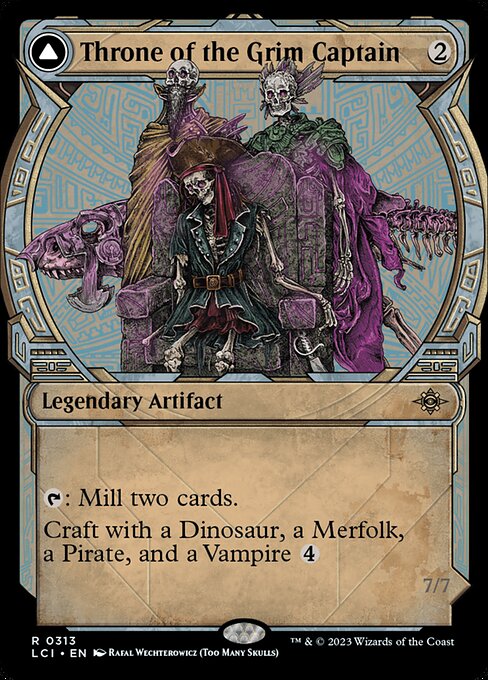 Throne of the Grim Captain // The Grim CaptainLegendary Artifact // Legendary Creature — Skeleton Spirit Pirate
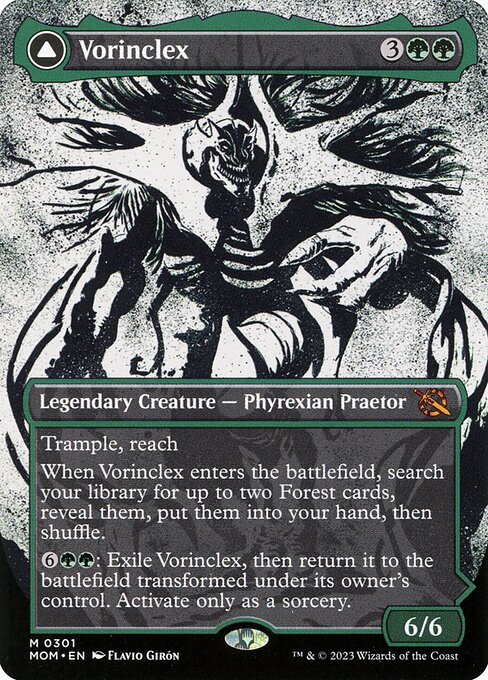 Vorinclex // The Grand EvolutionLegendary Creature — Phyrexian Praetor // Enchantment — Saga
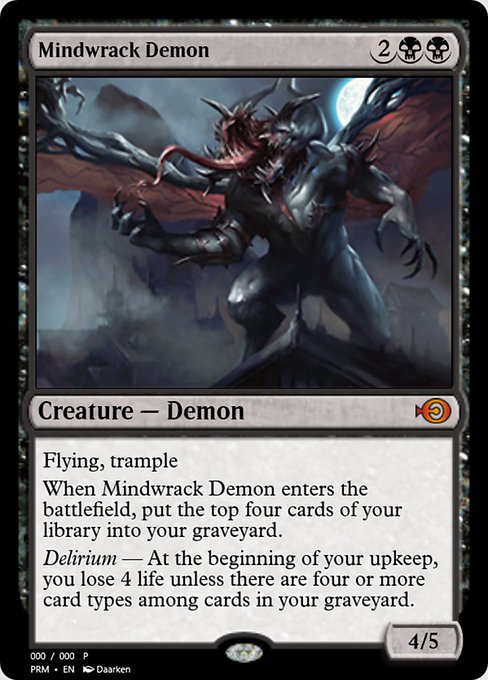 Mindwrack DemonCreature — Demon
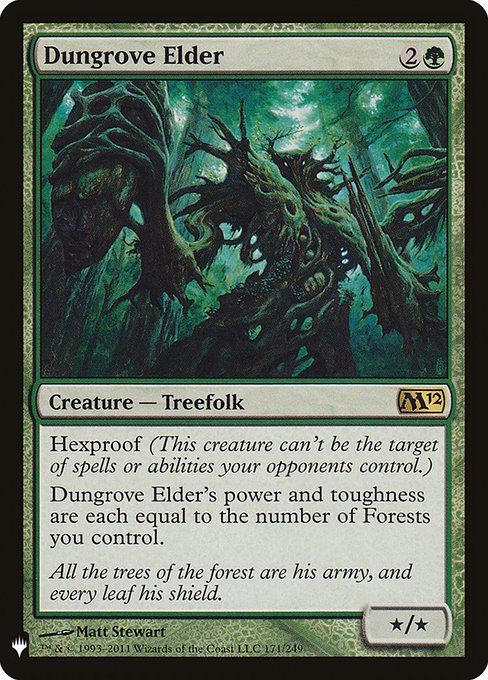 Dungrove ElderCreature — Treefolk
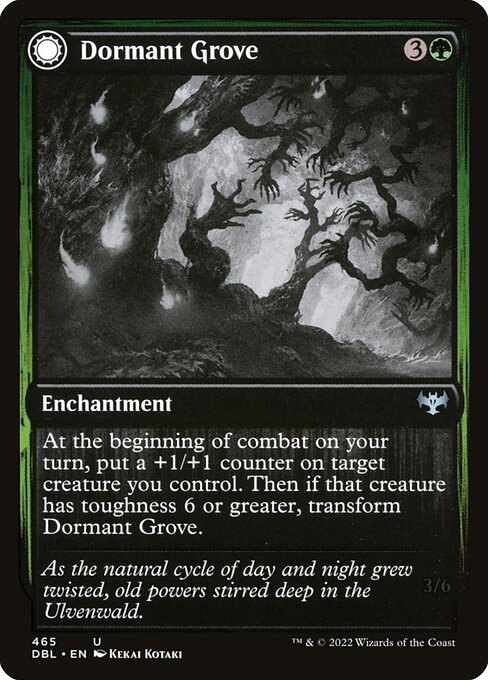 Dormant Grove // Gnarled GrovestriderEnchantment // Creature — Treefolk
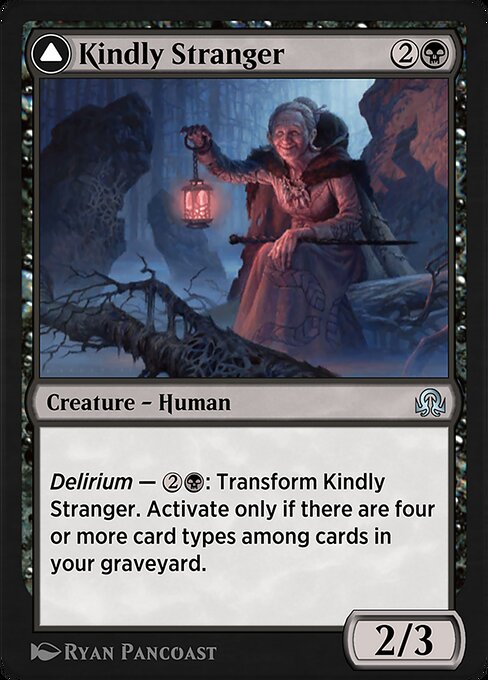 Kindly Stranger // Demon-Possessed WitchCreature — Human // Creature — Human Shaman
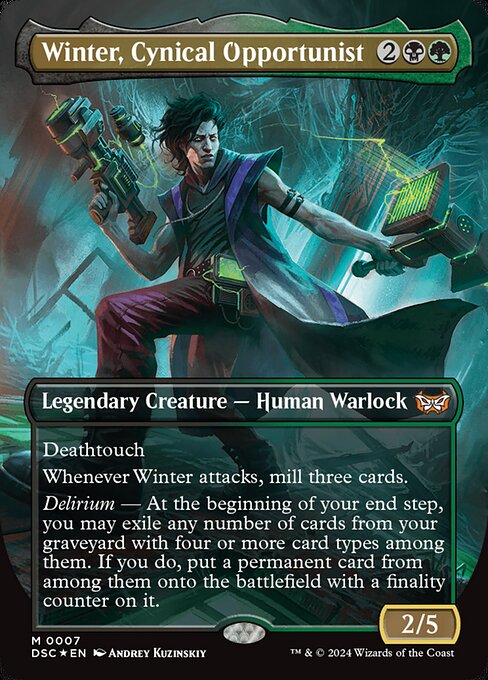 Winter, Cynical OpportunistLegendary Creature — Human Warlock
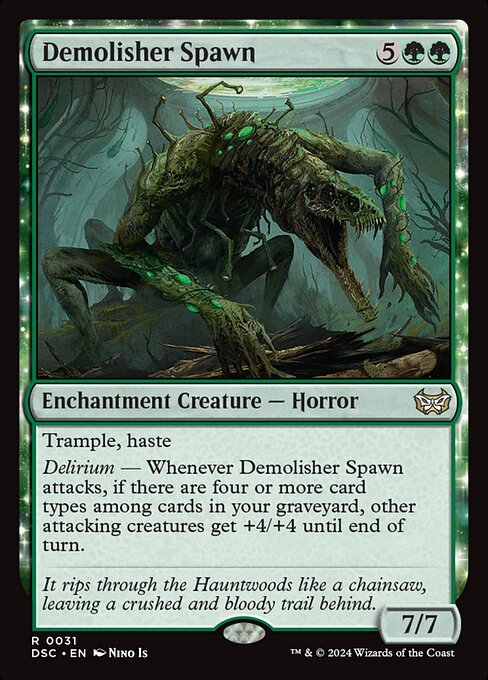 Demolisher Spawn
 Enchantment Creature — Horror
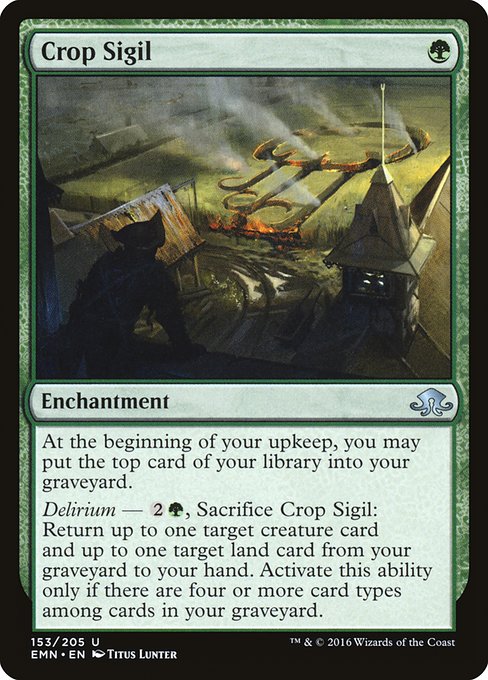 Crop SigilEnchantment
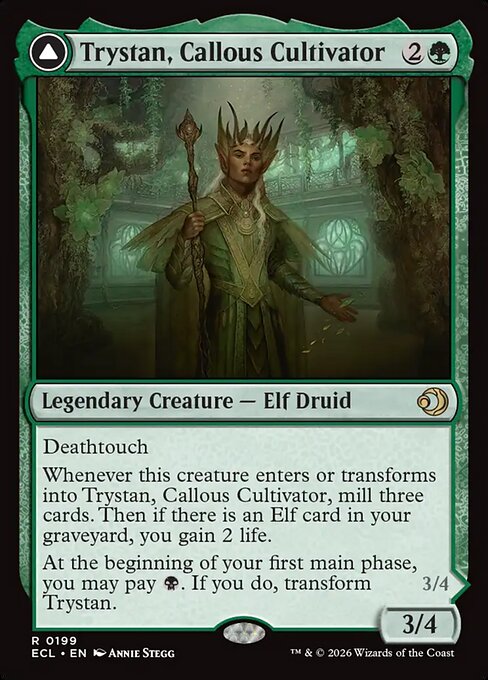 Trystan, Callous Cultivator // Trystan, Penitent CullerLegendary Creature — Elf Druid // Legendary Creature — Elf Warlock
Show 20 more similar cards
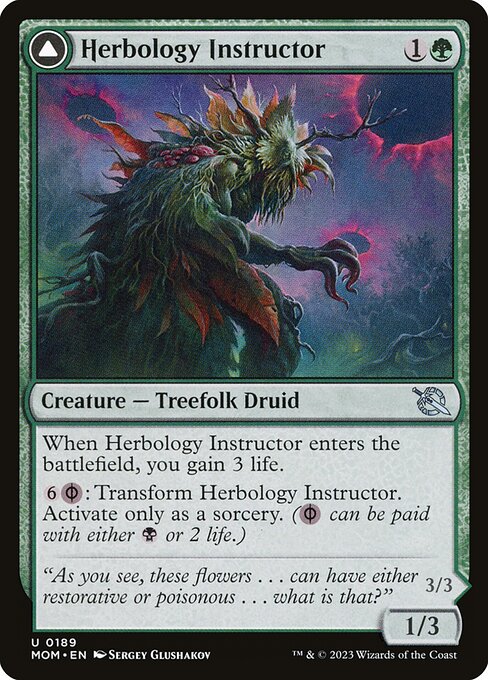 Herbology Instructor // Malady InvokerCreature — Treefolk Druid // Creature — Phyrexian Treefolk
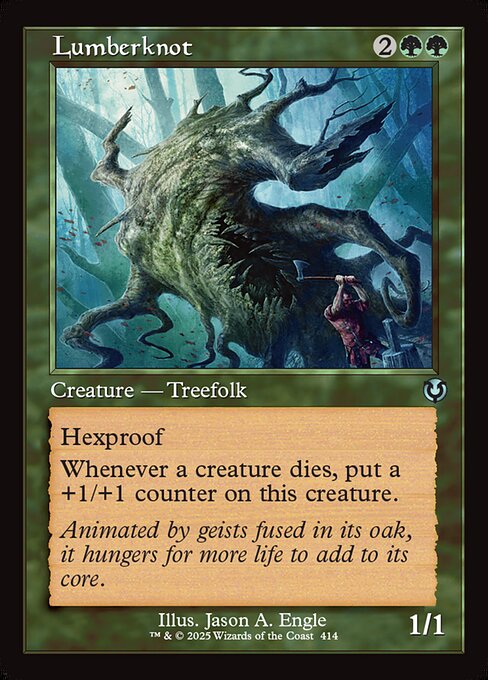 LumberknotCreature — Treefolk
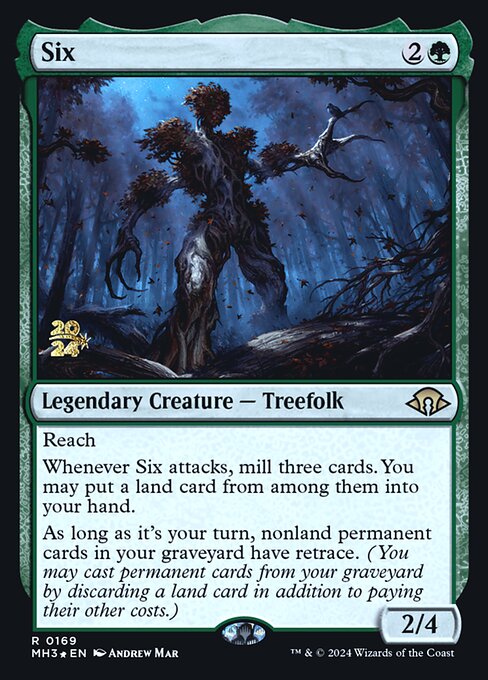 SixLegendary Creature — Treefolk
 Flora ColossusCreature — Treefolk
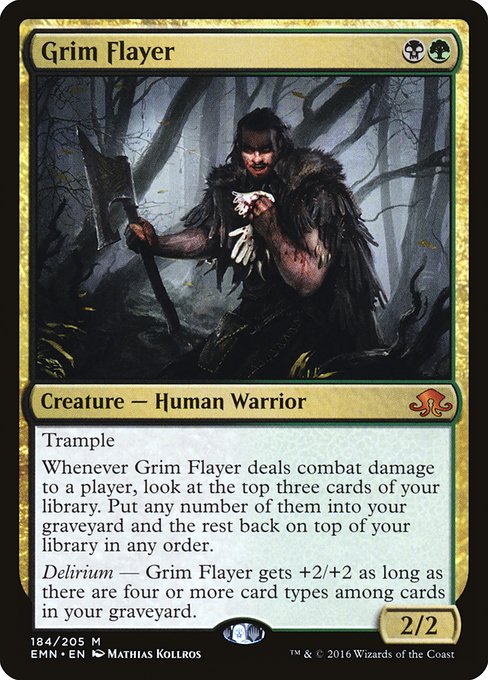 Grim FlayerCreature — Human Warrior
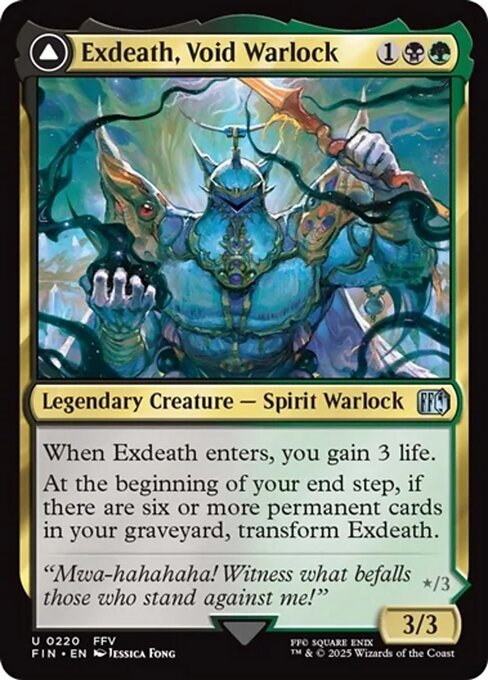 Exdeath, Void Warlock // Neo Exdeath, Dimension's EndLegendary Creature — Spirit Warlock // Legendary Creature — Spirit Avatar
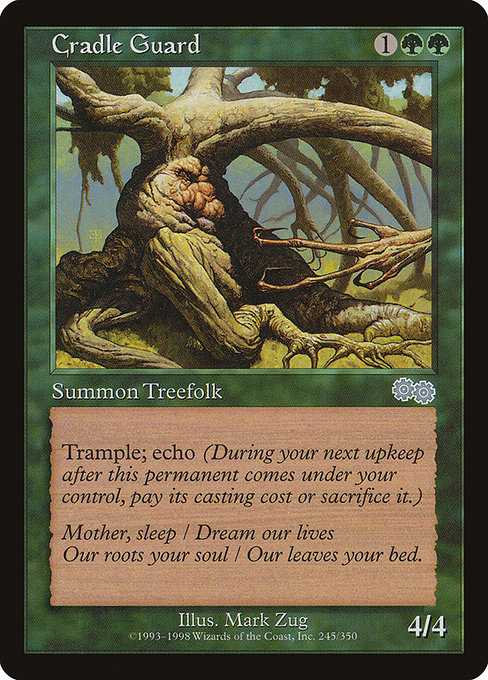 Cradle Guard
 Creature — Treefolk
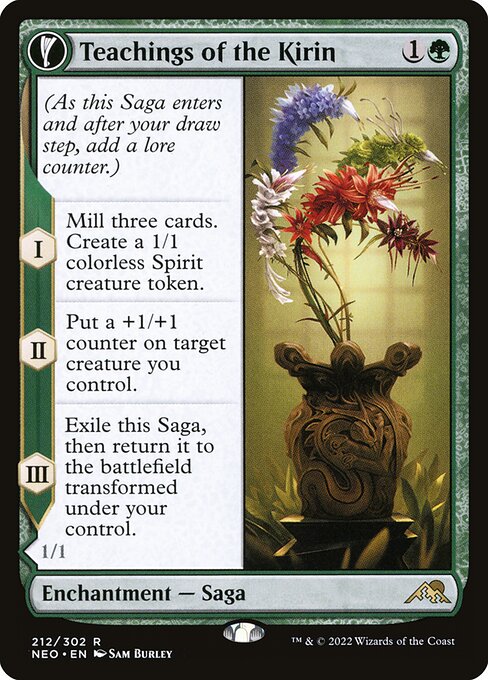 Teachings of the Kirin // Kirin-Touched OrochiEnchantment — Saga // Enchantment Creature — Snake Monk
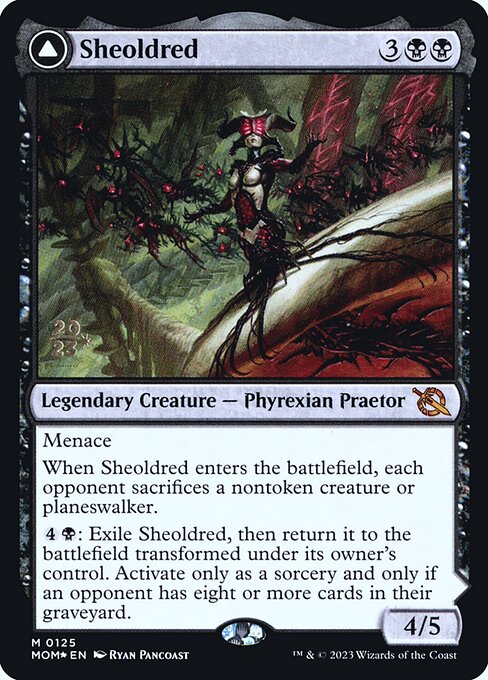 Sheoldred // The True ScripturesLegendary Creature — Phyrexian Praetor // Enchantment — Saga
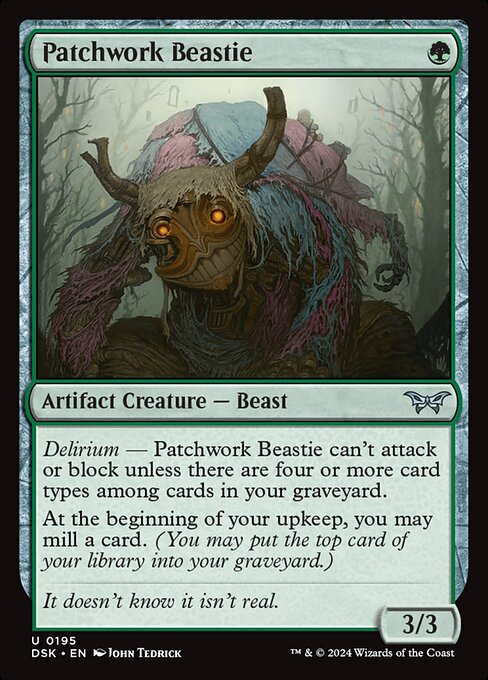 Patchwork BeastieArtifact Creature — Beast
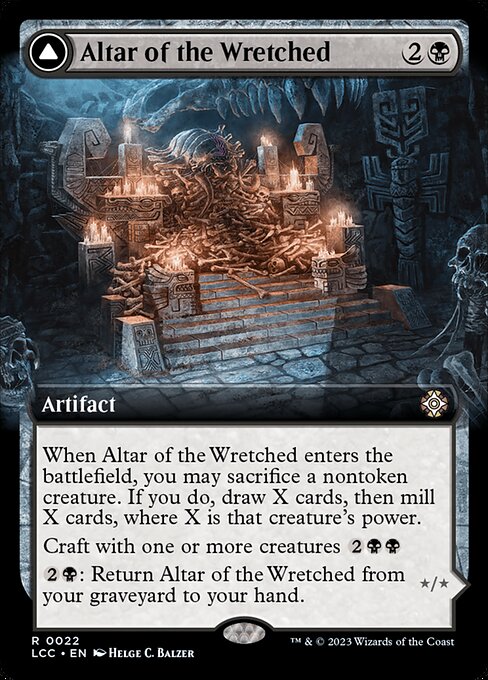 Altar of the Wretched // Wretched BonemassArtifact // Creature — Skeleton Horror
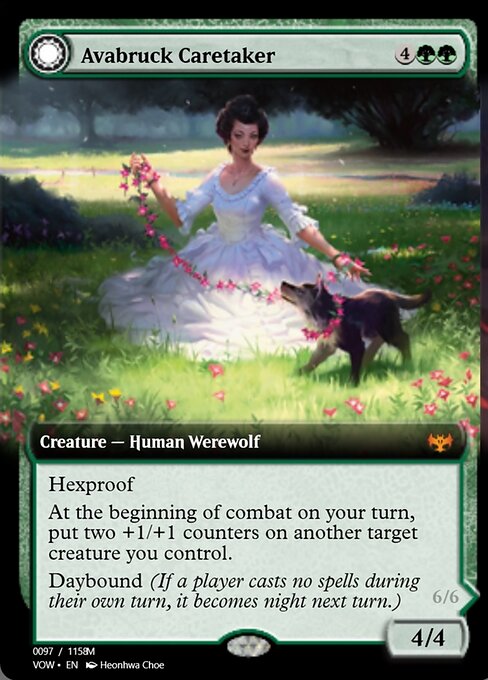 Avabruck Caretaker // Hollowhenge HuntmasterCreature — Human Werewolf // Creature — Werewolf
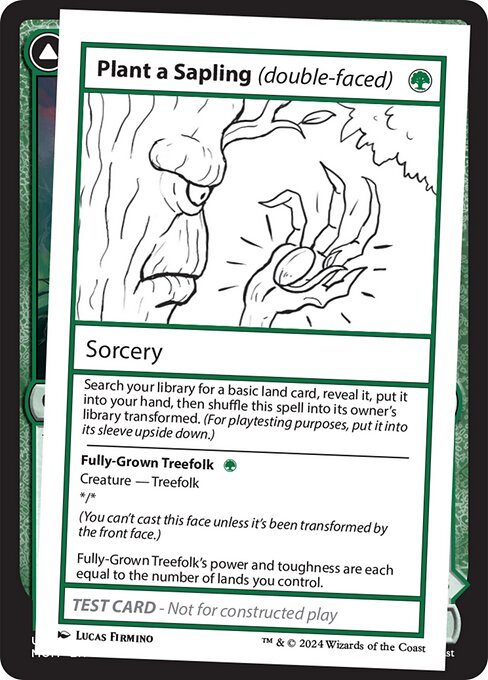 Plant a Sapling // Fully-Grown TreefolkSorcery // Creature — Treefolk
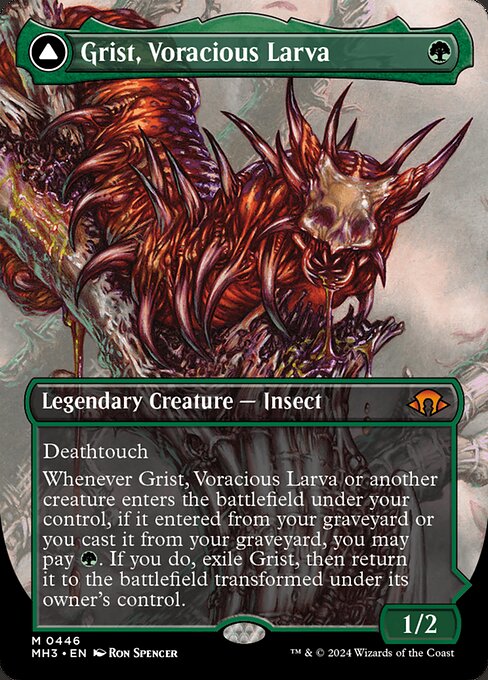 Grist, Voracious Larva // Grist, the Plague SwarmLegendary Creature — Insect // Legendary Planeswalker — Grist
 Summon: Titan
 Enchantment Creature — Saga Giant
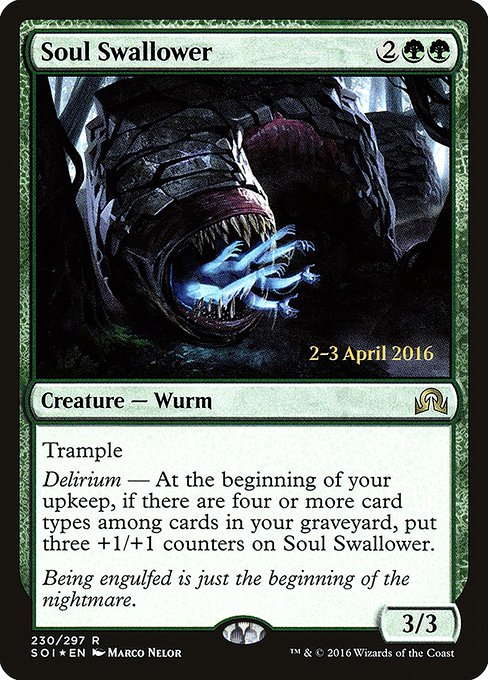 Soul SwallowerCreature — Wurm
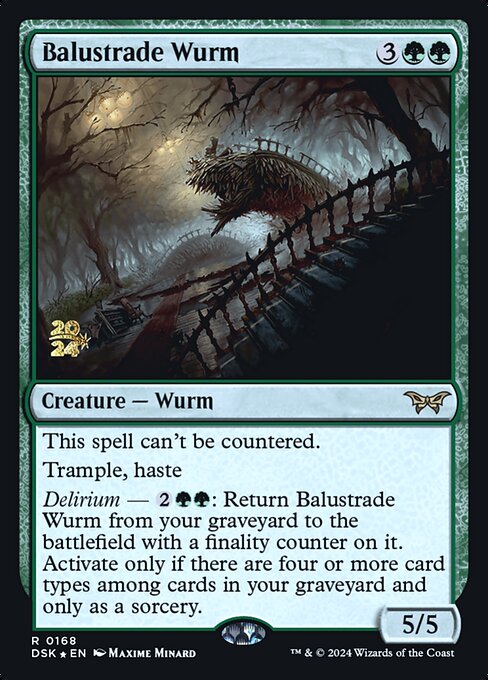 Balustrade WurmCreature — Wurm
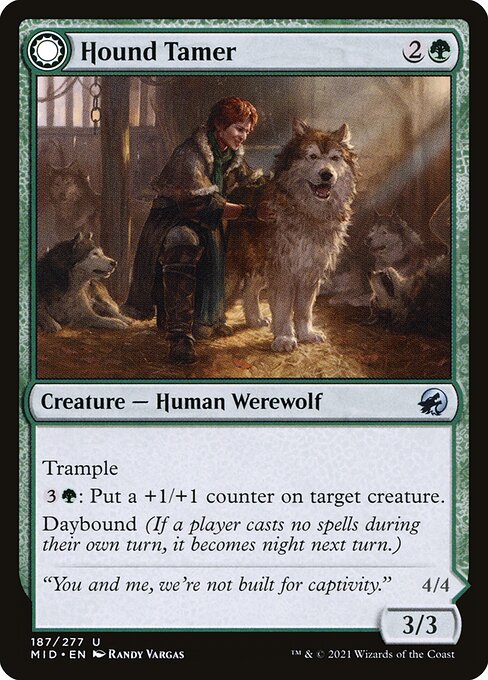 Hound Tamer // Untamed PupCreature — Human Werewolf // Creature — Werewolf
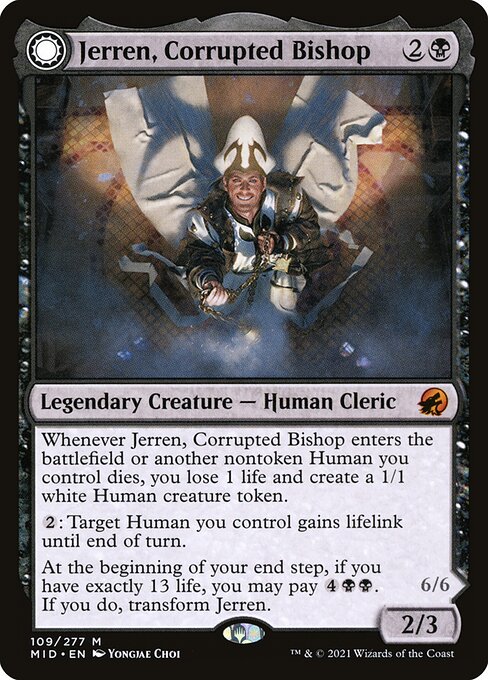 Jerren, Corrupted Bishop // Ormendahl, the CorrupterLegendary Creature — Human Cleric // Legendary Creature — Demon
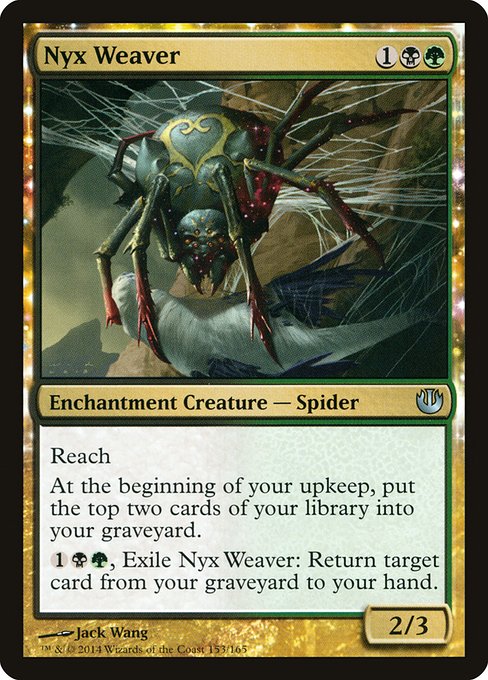 Nyx WeaverEnchantment Creature — Spider