
Kitchen Imp

 Creature — ImpPower and toughness2/2
Card text
Flying, haste
Madness (If you discard this card, discard it into exile. When you do, cast it for its madness cost or put it into your graveyard.)
"Order up! Ooze aspic and jellied anurid eyes!"
Showing Modern Horizons 2#89
Price
0.31 $
Foil 0.33 $
23 printings
Daily estimate from Scryfall, not a shop quote.
Kitchen Imp rulings
Cards are discarded in a Magic game only from a player's hand. Effects that put cards into a player's graveyard from anywhere else do not cause those cards to be discarded.
Madness works independently of why you're discarding the card. You could discard it to pay a cost, because a spell or ability tells you to, or because you have too many cards in your hand during your cleanup step. You can't discard a card with madness just because you want to, though.
A card with madness that's discarded counts as having been discarded even though it's put into exile rather than a graveyard. If it was discarded to pay a cost, that cost is still paid. Abilities that trigger when a card is discarded will still trigger.
A spell cast for its madness cost is put onto the stack like any other spell. It can be countered, copied, and so on. As it resolves, it's put onto the battlefield if it's a permanent card or into its owner's graveyard if it's an instant or sorcery card.
Casting a spell with madness ignores the timing rules based on the card's card type. For example, you can cast a sorcery with madness if you discard it during an opponent's turn.
To determine the total cost of a spell, start with the mana cost or alternative cost (such as a madness cost) you're paying, add any cost increases, then apply any cost reductions. The mana value of the spell is determined by only its mana cost, no matter what the total cost to cast that spell was.
If you choose not to cast a card with madness when the madness triggered ability resolves, it's put into your graveyard. Madness doesn't give you another chance to cast it later.
If you discard a card with madness to pay the cost of a spell or activated ability, that card's madness triggered ability (and the spell that card becomes, if you choose to cast it) will resolve before the spell or ability the discard paid for.
If you discard a card with madness while a spell or ability is resolving, it moves immediately to exile. Continue resolving that spell or ability, noting that the card you discarded is not in your graveyard at this time. Its madness triggered ability will be placed onto the stack once that spell or ability has completely resolved.
Kitchen Imp keyword rules
Flying Rule 702.9
Flying is an evasion ability.
A creature with flying can’t be blocked except by creatures with flying and/or reach. A creature with flying can block a creature with or without flying. (See rule , “Declare Blockers Step,” and rule , “Reach.”)
Multiple instances of flying on the same creature are redundant.
Madness Rule 702.35
Madness is a keyword that represents two abilities. The first is a static ability that functions while the card with madness is in a player’s hand. The second is a triggered ability that functions when the first ability is applied. “Madness [cost]” means “If a player would discard this card, that player discards it, but exiles it instead of putting it into their graveyard” and “When this card is exiled this way, its owner may cast it by paying [cost] rather than paying its mana cost. If that player doesn’t, they put this card into their graveyard.”
Casting a spell using its madness ability follows the rules for paying alternative costs in rules and –h.
After resolving a madness triggered ability, if the exiled card wasn’t cast and was moved to a public zone, effects referencing the discarded card can find that card. See rule .
Haste Rule 702.10
Haste is a static ability.
If a creature has haste, it can attack even if it hasn’t been controlled by its controller continuously since their most recent turn began. (See rule .)
If a creature has haste, its controller can activate its activated abilities whose cost includes the tap symbol or the untap symbol even if that creature hasn’t been controlled by that player continuously since their most recent turn began. (See rule .)
Multiple instances of haste on the same creature are redundant.
Kitchen Imp format legality
Constructed
- StandardNot legal
- PioneerNot legal
- ModernLegal
- Future StandardNot legal
Eternal
- LegacyLegal
- VintageLegal
- PauperLegal
- PremodernNot legal
- Old SchoolNot legal
- Penny DreadfulNot legal
Commander
- CommanderLegal
- OathbreakerLegal
- Pauper CommanderLegal
- Duel CommanderLegal
- PreDHNot legal
Arena & online
- HistoricLegal
- TimelessLegal
- AlchemyNot legal
- GladiatorLegal
- BrawlLegal
- Standard BrawlNot legal
- Competitive BrawlLegal
Other
- TLRNot legal
All printings of Kitchen Imp 23
Cards similar to Kitchen Imp
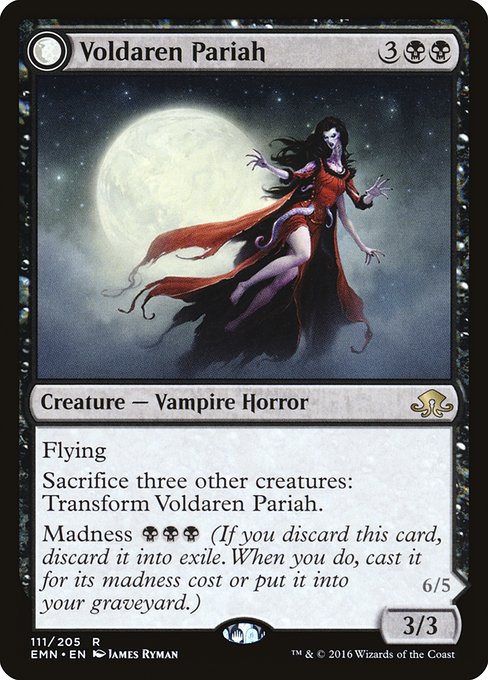 Voldaren Pariah // Abolisher of BloodlinesCreature — Vampire Horror // Creature — Eldrazi Vampire
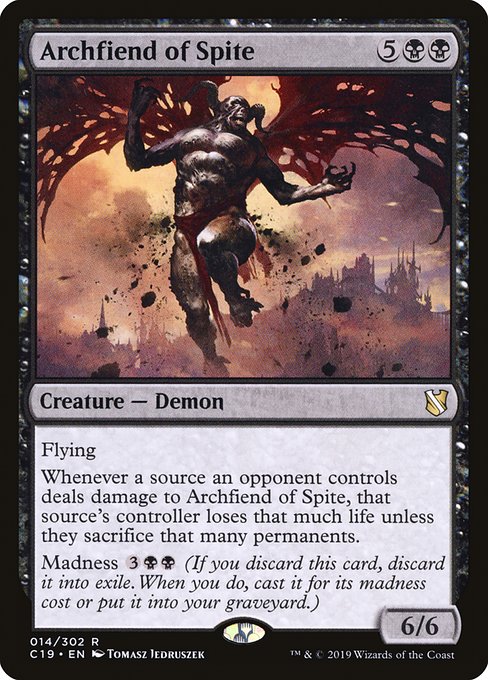 Archfiend of Spite
 Creature — Demon
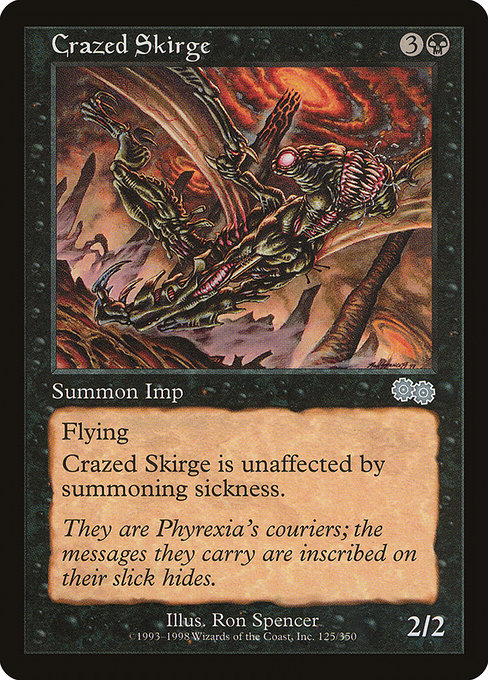 Crazed SkirgeCreature — Phyrexian Imp
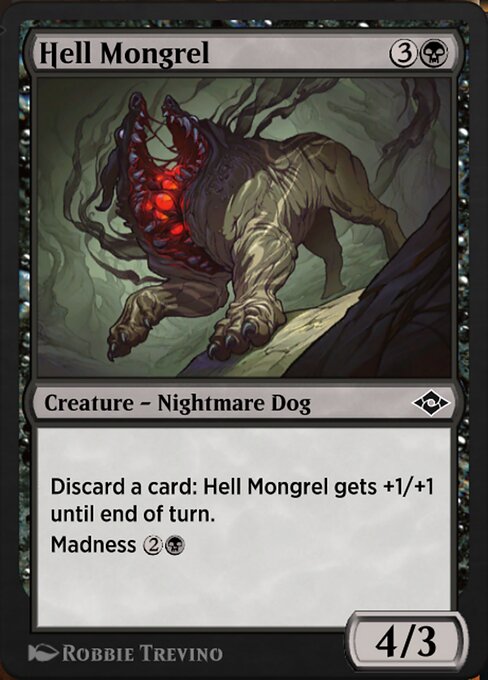 Hell MongrelCreature — Nightmare Dog
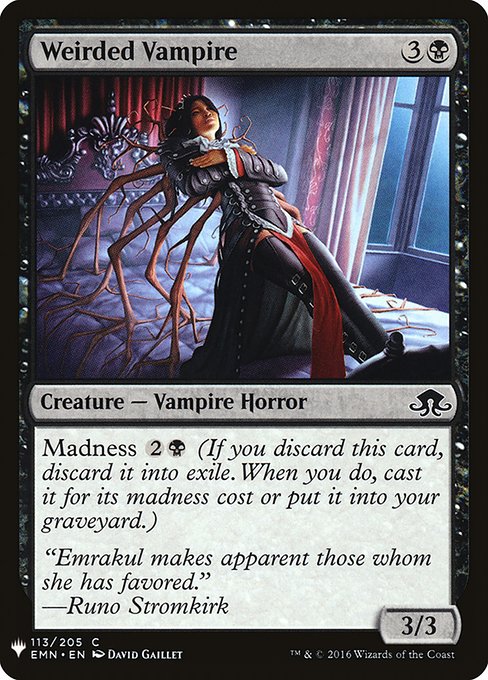 Weirded VampireCreature — Vampire Horror
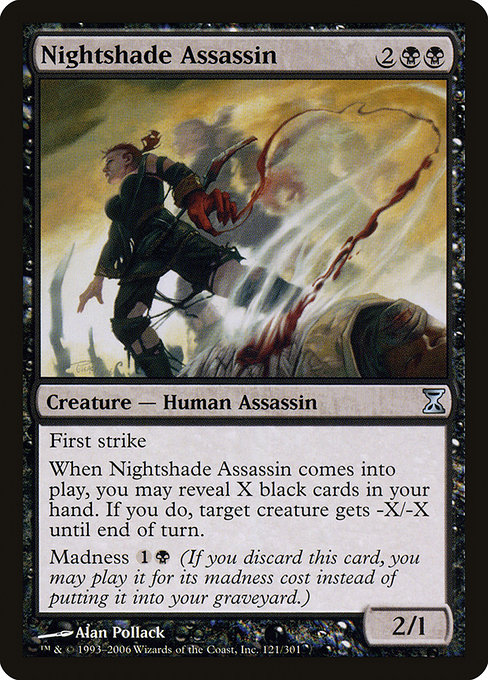 Nightshade Assassin
 Creature — Human Assassin
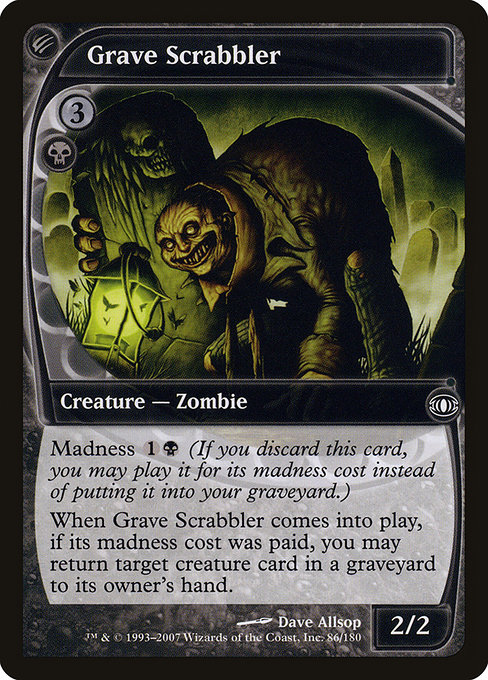 Grave ScrabblerCreature — Zombie
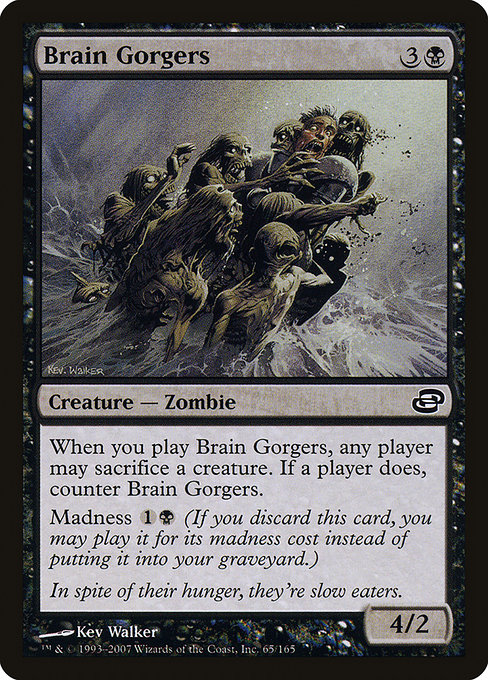 Brain GorgersCreature — Zombie
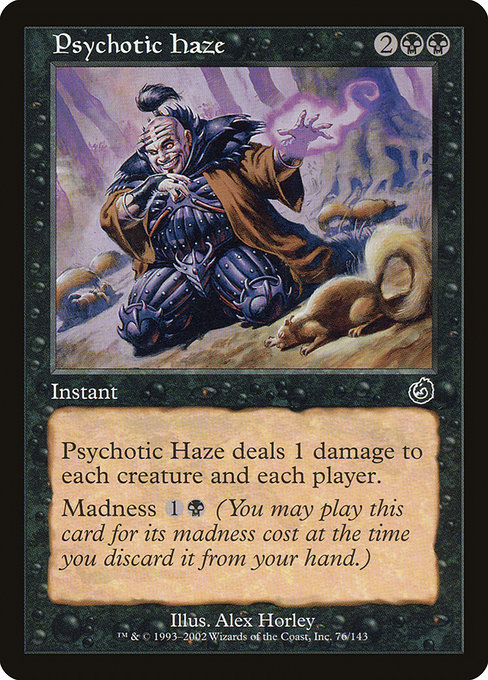 Psychotic HazeInstant
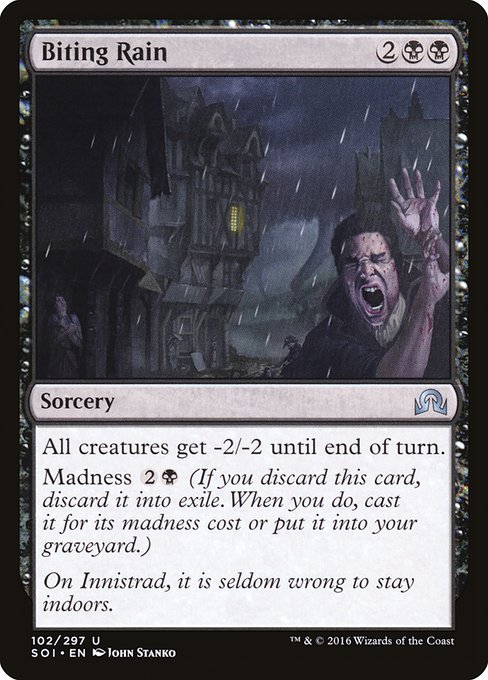 Biting RainSorcery
Show 20 more similar cards
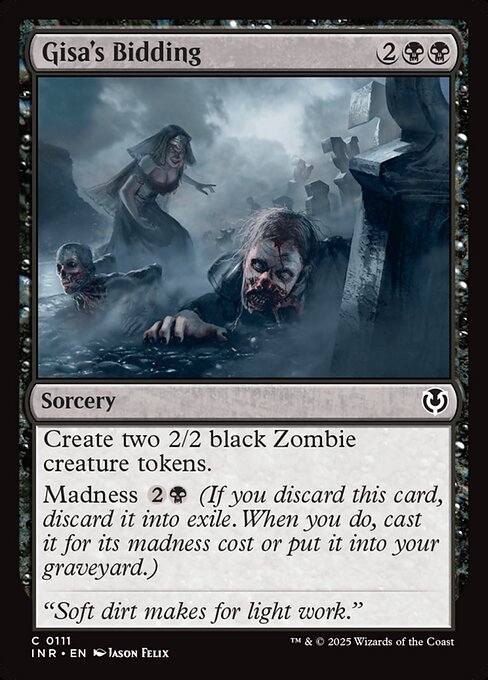 Gisa's BiddingSorcery
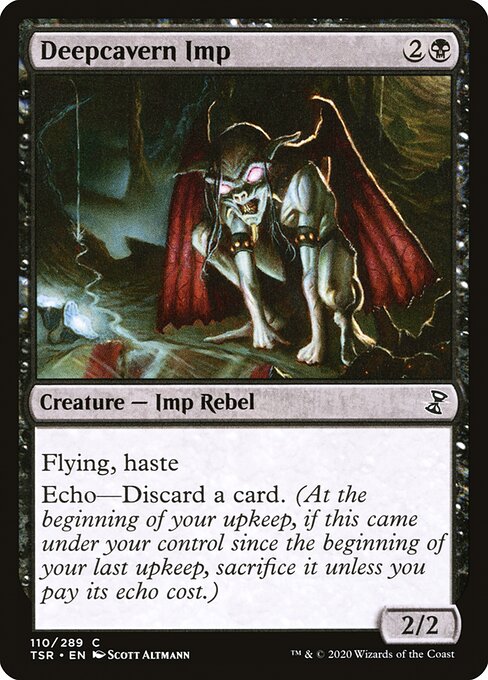 Deepcavern ImpCreature — Imp Rebel
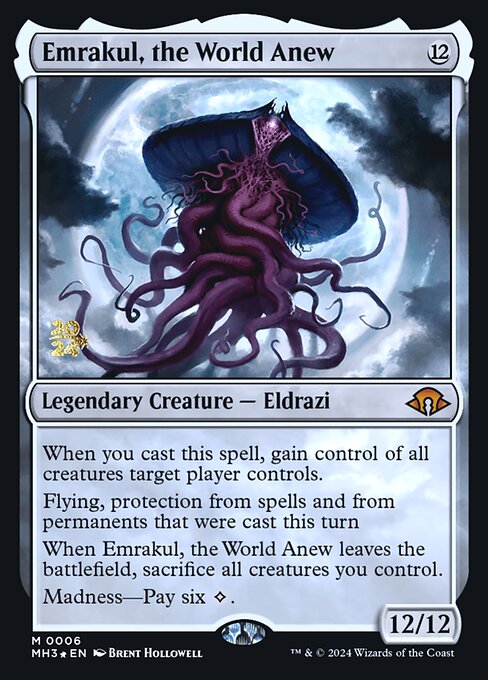 Emrakul, the World Anew
 Legendary Creature — Eldrazi
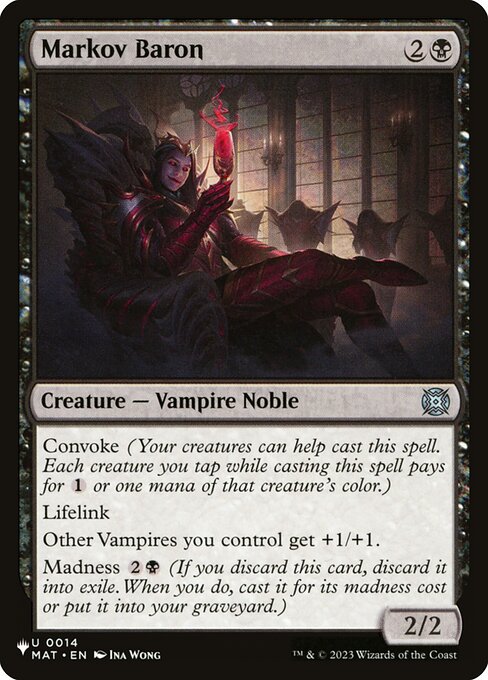 Markov BaronCreature — Vampire Noble
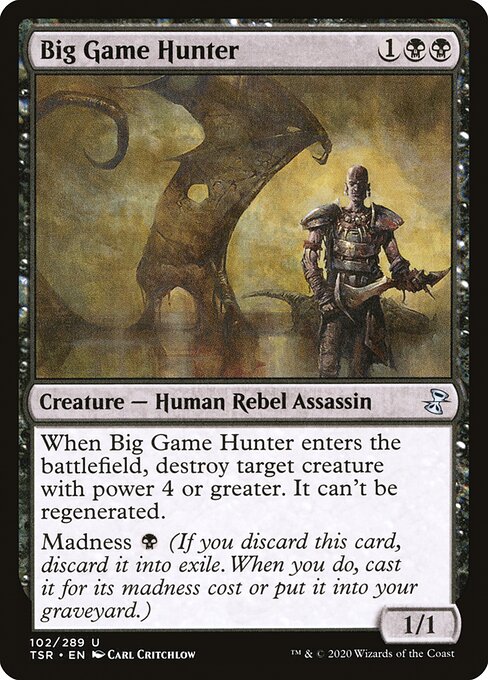 Big Game Hunter
 Creature — Human Rebel Assassin
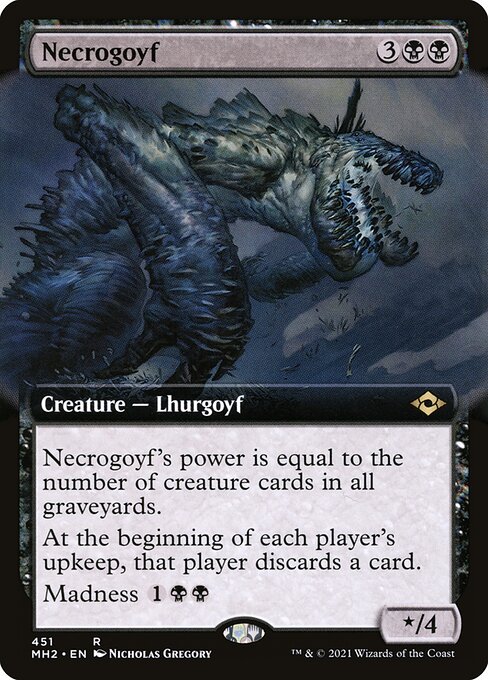 NecrogoyfCreature — Lhurgoyf
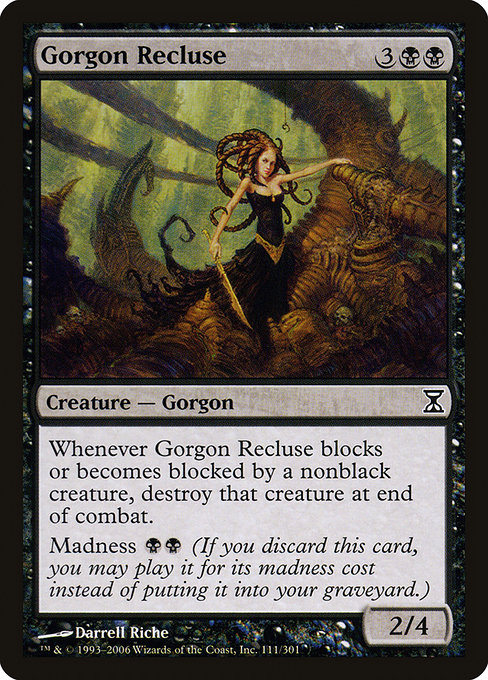 Gorgon RecluseCreature — Gorgon
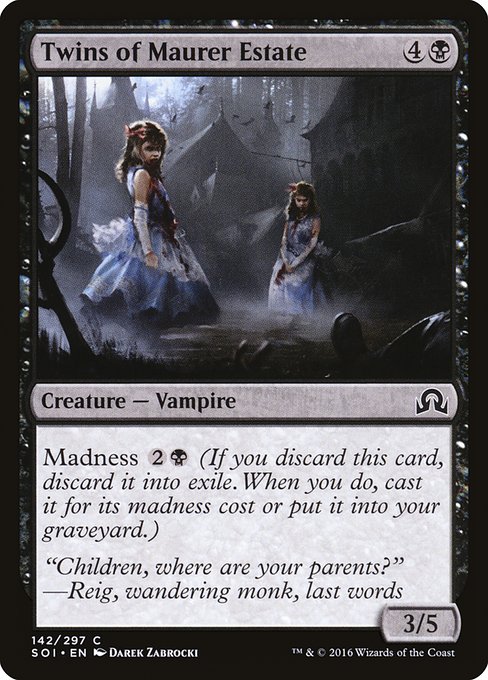 Twins of Maurer Estate
 Creature — Vampire
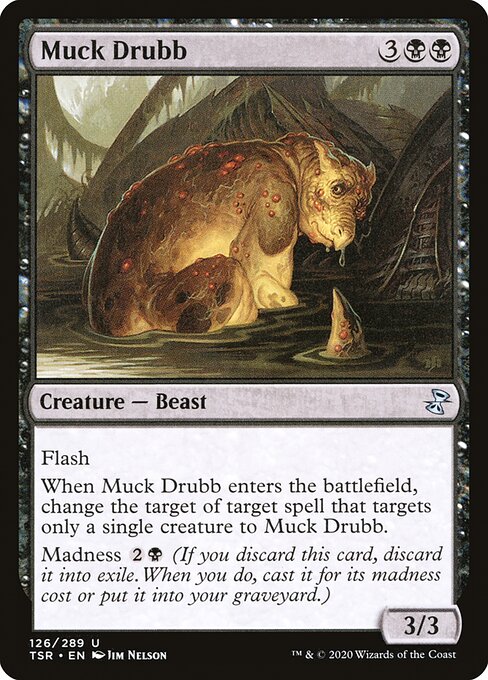 Muck DrubbCreature — Beast
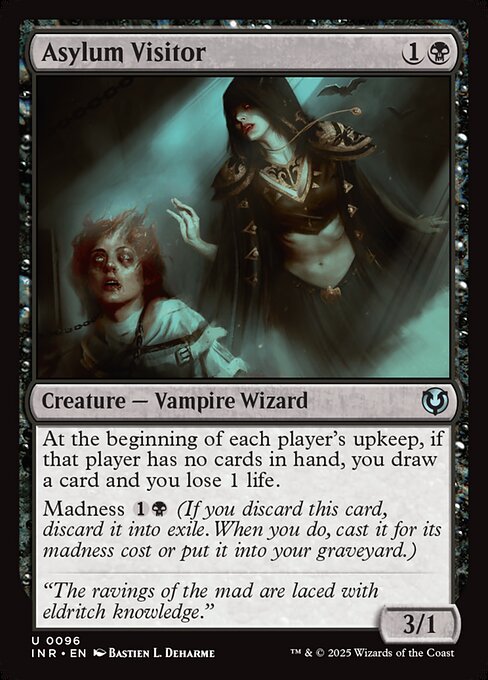 Asylum VisitorCreature — Vampire Wizard
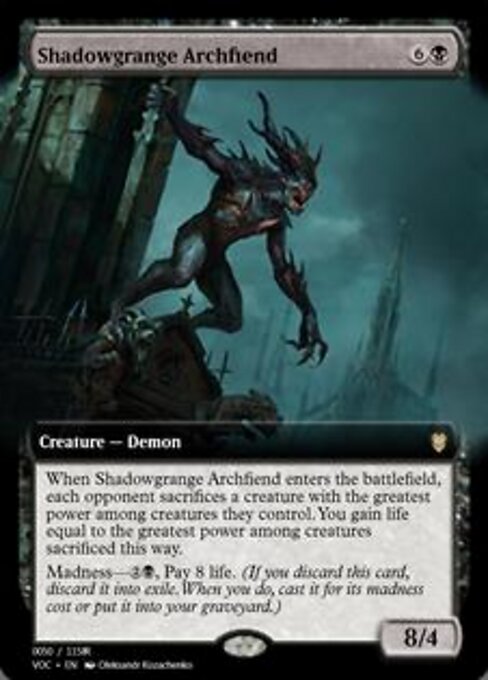 Shadowgrange Archfiend
 Creature — Demon
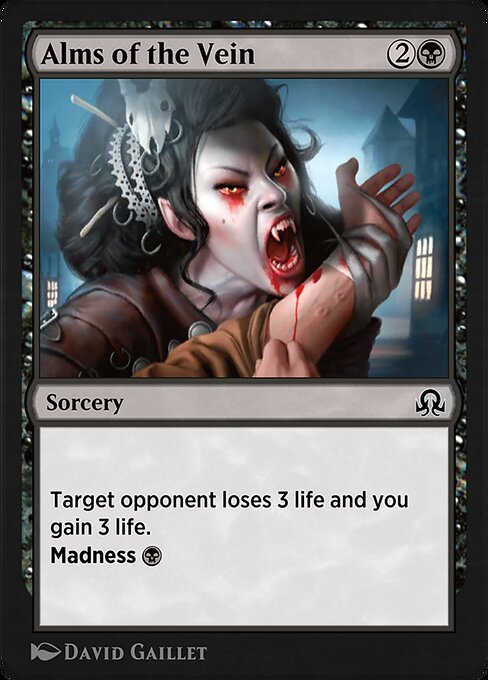 Alms of the VeinSorcery
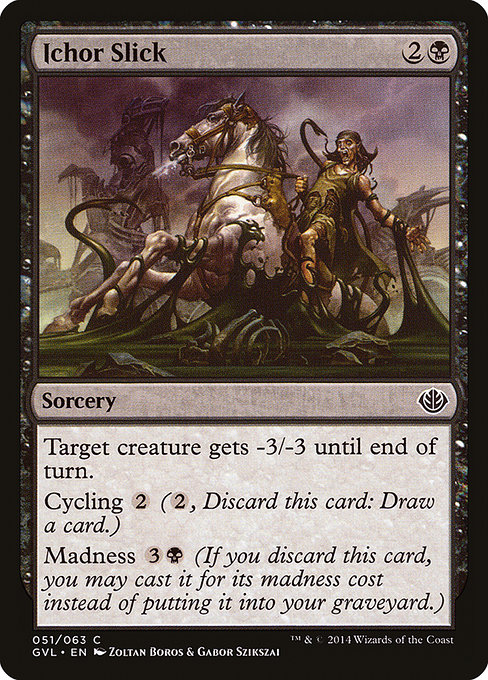 Ichor SlickSorcery
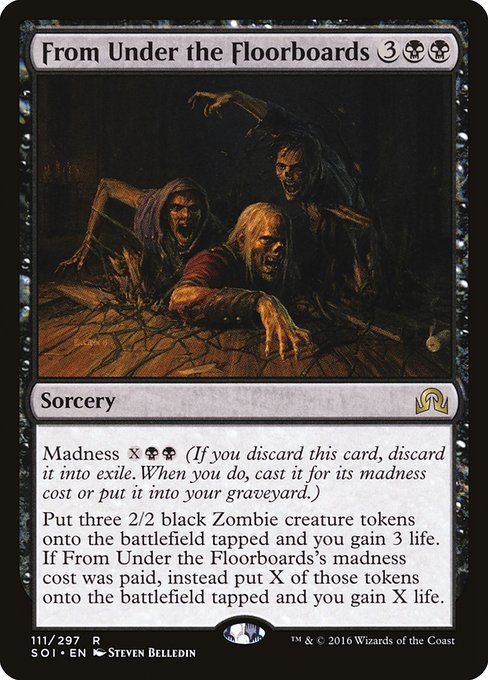 From Under the FloorboardsSorcery
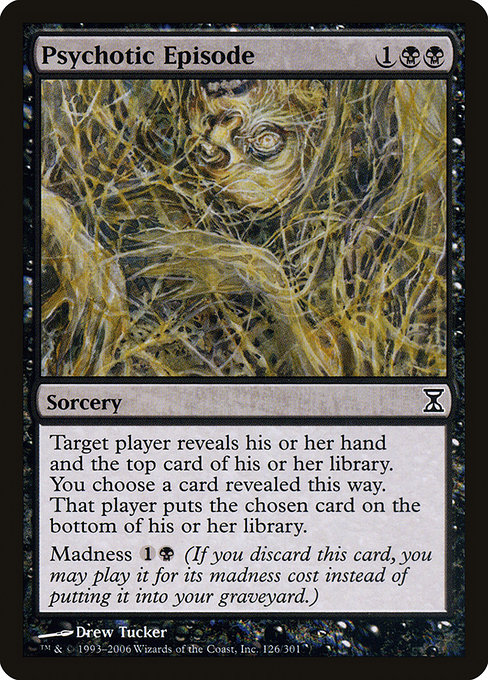 Psychotic EpisodeSorcery
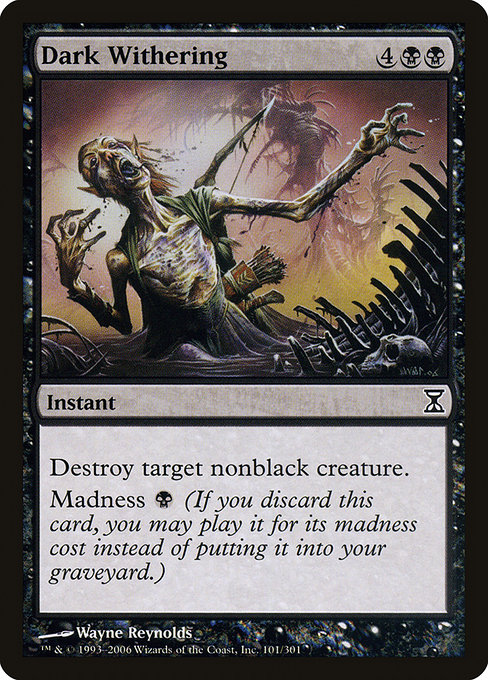 Dark WitheringInstant
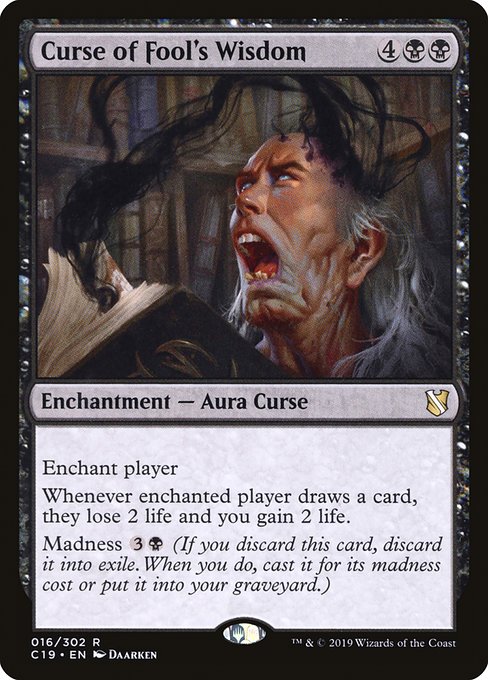 Curse of Fool's WisdomEnchantment — Aura Curse
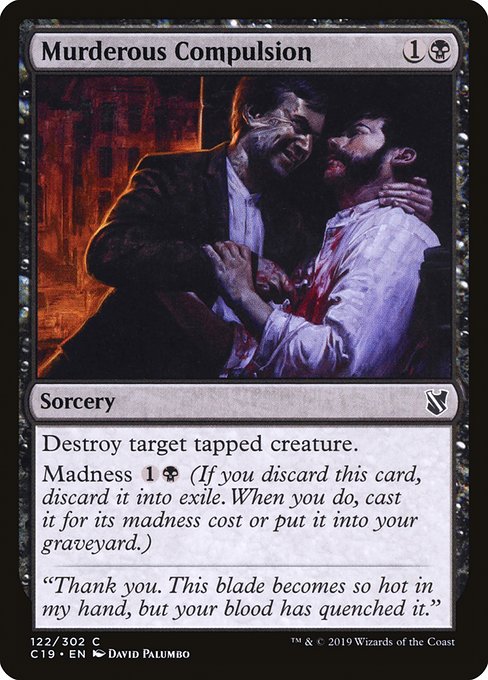 Murderous CompulsionSorcery
 Gibbering DescentEnchantment
 Strength of LunacyEnchantment — Aura