
Emrakul, the World Anew
 Legendary Creature — EldraziPower and toughness12/12
Card text
When you cast this spell, gain control of all creatures target player controls.
Flying, protection from spells and from permanents that were cast this turn
When Emrakul leaves the battlefield, sacrifice all creatures you control.
Madness—Pay six  .
.
Showing Modern Horizons 3#384
Price
6.47 $
Foil 10.85 $
31 printings · up to 26.17 $
Daily estimate from Scryfall, not a shop quote.
Emrakul, the World Anew rulings
Emrakul, the World Anew's triggered ability will resolve before Emrakul does. If Emrakul is countered or otherwise leaves the stack in response to that triggered ability, the triggered ability will still resolve as normal.
The control-change effect of Emrakul's first ability lasts indefinitely. It doesn't wear off during the cleanup step or when Emrakul leaves the battlefield.
If you discard a card with madness, you discard it into exile instead of into your graveyard. When you do, you can either cast it from exile for its madness cost or put it into your graveyard.
Cards are discarded in a Magic game only from a player's hand. Effects that put cards into a player's graveyard from anywhere else do not cause those cards to be discarded.
Madness works independently of why you're discarding the card. You could discard it to pay a cost, because a spell or ability tells you to, or because you have too many cards in your hand during your cleanup step. You can't discard a card with madness just because you want to, though.
A card with madness that's discarded counts as having been discarded even though it's put into exile rather than a graveyard. If it was discarded to pay a cost, that cost is still paid. Abilities that trigger when a card is discarded will still trigger.
A spell cast for its madness cost is put onto the stack like any other spell. It can be countered, copied, and so on. As it resolves, it's put onto the battlefield if it's a permanent card or into its owner's graveyard if it's an instant or sorcery card.
Casting a spell with madness ignores the timing rules based on the card's card type. For example, you can cast a creature with madness if you discard it during an opponent's turn.
If you choose not to cast a card with madness when the madness triggered ability resolves, it's put into your graveyard. Madness doesn't give you another chance to cast it later.
If you discard a card with madness to pay the cost of a spell or activated ability, that card's madness triggered ability (and the spell that card becomes, if you choose to cast it) will resolve before the spell or ability the discard paid for.
If you discard a card with madness while a spell or ability is resolving, it moves immediately to exile. Continue resolving that spell or ability, noting that the card you discarded is not in your graveyard at this time. Its madness triggered ability will be placed onto the stack once that spell or ability has completely resolved.
Emrakul, the World Anew keyword rules
Flying Rule 702.9
Flying is an evasion ability.
A creature with flying can’t be blocked except by creatures with flying and/or reach. A creature with flying can block a creature with or without flying. (See rule , “Declare Blockers Step,” and rule , “Reach.”)
Multiple instances of flying on the same creature are redundant.
Madness Rule 702.35
Madness is a keyword that represents two abilities. The first is a static ability that functions while the card with madness is in a player’s hand. The second is a triggered ability that functions when the first ability is applied. “Madness [cost]” means “If a player would discard this card, that player discards it, but exiles it instead of putting it into their graveyard” and “When this card is exiled this way, its owner may cast it by paying [cost] rather than paying its mana cost. If that player doesn’t, they put this card into their graveyard.”
Casting a spell using its madness ability follows the rules for paying alternative costs in rules and –h.
After resolving a madness triggered ability, if the exiled card wasn’t cast and was moved to a public zone, effects referencing the discarded card can find that card. See rule .
Protection Rule 702.16
Protection is a static ability, written “Protection from [quality].” This quality is usually a color (as in “protection from black”) but can be any characteristic value or information. If the quality happens to be a card name, it is treated as such only if the protection ability specifies that the quality is a name. If the quality is a card type, subtype, or supertype, the ability applies to sources that are permanents with that card type, subtype, or supertype and to any sources not on the battlefield that are of that card type, subtype, or supertype. This is an exception to rule .
A permanent or player with protection can’t be targeted by spells with the stated quality and can’t be targeted by abilities from a source with the stated quality.
A permanent or player with protection can’t be enchanted by Auras that have the stated quality. Such Auras attached to the permanent or player with protection will be put into their owners’ graveyards as a state-based action. (See rule , “State-Based Actions.”)
A permanent with protection can’t be equipped by Equipment that have the stated quality or fortified by Fortifications that have the stated quality. Such Equipment or Fortifications become unattached from that permanent as a state-based action, but remain on the battlefield. (See rule , “State-Based Actions.”)
Any damage that would be dealt by sources that have the stated quality to a permanent or player with protection is prevented.
Attacking creatures with protection can’t be blocked by creatures that have the stated quality.
“Protection from [quality A] and from [quality B]” is shorthand for “protection from [quality A]” and “protection from [quality B]”; it behaves as two separate protection abilities.
“Protection from each [characteristic]” is shorthand for “protection from [quality A],” “protection from [quality B],” and so on for each possible quality the listed characteristic could have; it behaves as multiple separate protection abilities.
“Protection from each [set of characteristics, qualities, or players]” is shorthand for “protection from [A],” “protection from [B],” and so on for each characteristic, quality, or player in the set. It behaves as multiple separate protection abilities.
“Protection from everything” is a variant of the protection ability. A permanent or player with protection from everything has protection from each object regardless of that object’s characteristic values. Such a permanent or player can’t be targeted by spells or abilities and can’t be enchanted by Auras. Such a permanent can’t be equipped by Equipment, fortified by Fortifications, or blocked by creatures. All damage that would be dealt to such a permanent or player is prevented.
“Protection from [a player]” is a variant of the protection ability. A permanent or player with protection from a specific player has protection from each object that player controls and protection from each object that player owns not controlled by another player, regardless of that object’s characteristic values. Such a permanent or player can’t be targeted by spells or abilities the specified player controls and can’t be enchanted by Auras that player controls. Such a permanent can’t be equipped by Equipment that player controls, fortified by Fortifications that player controls, or blocked by creatures that player controls. All damage that would be dealt to such a permanent or player by sources controlled by the specified player or owned by that player but not controlled by another player is prevented.
Multiple instances of protection from the same quality on the same permanent or player are redundant.
Some Auras both give the enchanted creature protection from a quality and say “this effect doesn’t remove” either that specific Aura or all Auras. This means that the specified Auras aren’t put into their owners’ graveyards as a state-based action. If the creature has other instances of protection from the same quality, those instances affect Auras as normal.
One Aura (Benevolent Blessing) gives the enchanted creature protection from a quality and says the effect doesn’t remove certain permanents that are “already attached to” that creature. This means that, when the protection effect starts to apply, any objects with the stated quality that are already attached to that creature (including the Aura giving that creature protection) will not be put into their owners’ graveyards as a state-based action. Other permanents with the stated quality can’t become attached to the creature. If the creature has other instances of protection from the same quality, those instances affect attached permanents as normal.
Emrakul, the World Anew format legality
Constructed
- StandardNot legal
- PioneerNot legal
- ModernLegal
- Future StandardNot legal
Eternal
- LegacyLegal
- VintageLegal
- PauperNot legal
- PremodernNot legal
- Old SchoolNot legal
- Penny DreadfulLegal
Commander
- CommanderLegal
- OathbreakerLegal
- Pauper CommanderNot legal
- Duel CommanderLegal
- PreDHNot legal
Arena & online
- HistoricLegal
- TimelessLegal
- AlchemyNot legal
- GladiatorLegal
- BrawlLegal
- Standard BrawlNot legal
- Competitive BrawlLegal
Other
- TLRNot legal
All printings of Emrakul, the World Anew 31
Cards similar to Emrakul, the World Anew
 Emrakul, the Promised End
 Legendary Creature — Eldrazi
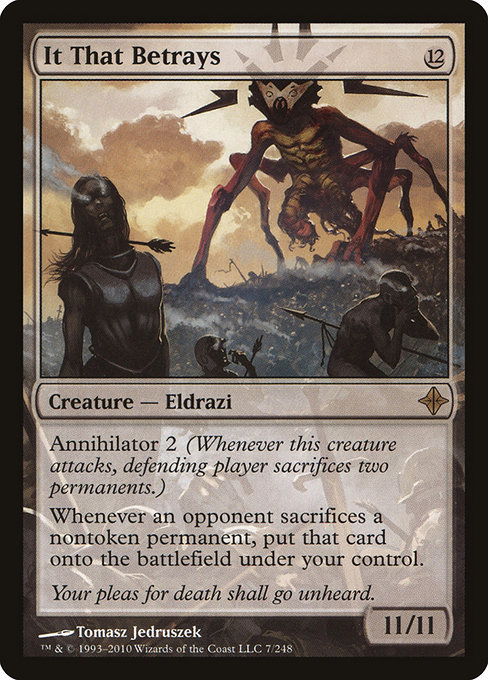 It That BetraysCreature — Eldrazi
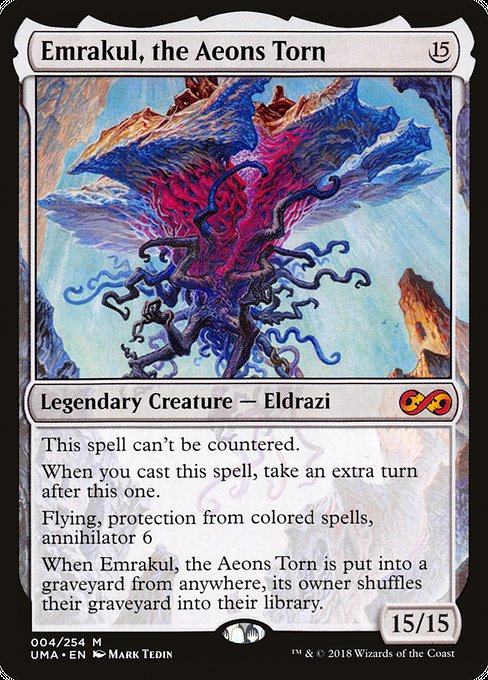 Emrakul, the Aeons Torn
 Legendary Creature — Eldrazi
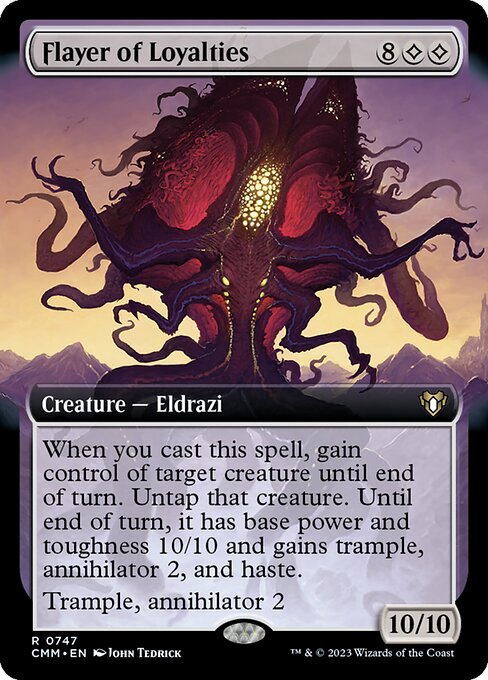 Flayer of Loyalties
 Creature — Eldrazi
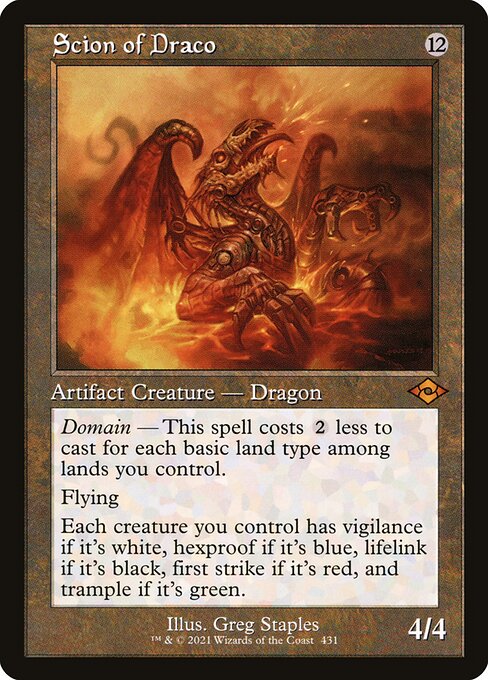 Scion of DracoArtifact Creature — Dragon
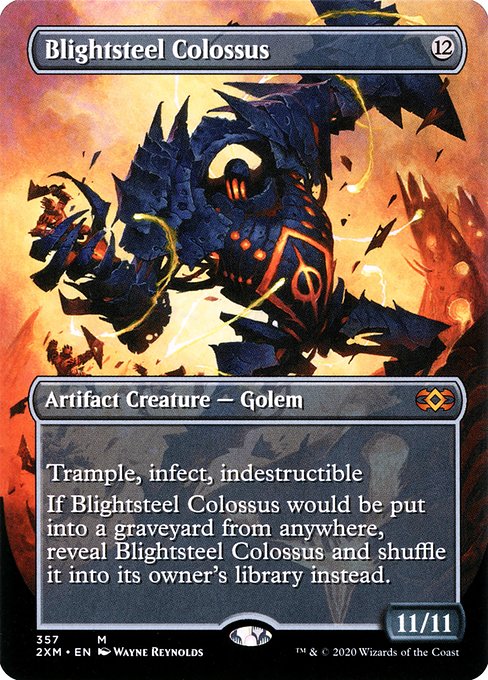 Blightsteel ColossusArtifact Creature — Phyrexian Golem
 Emrakul, the Exigent Doom
 Legendary Creature — Eldrazi
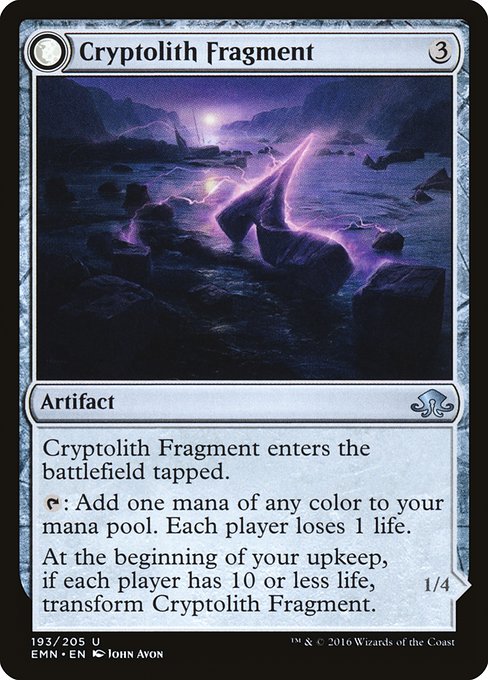 Cryptolith Fragment // Aurora of EmrakulArtifact // Creature — Eldrazi Reflection
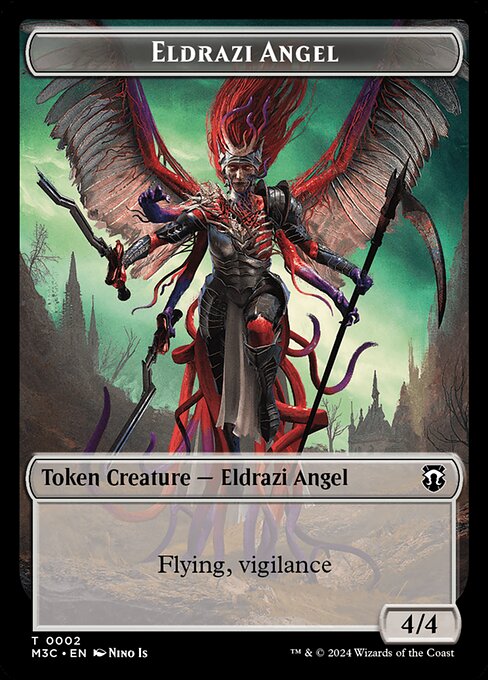 Eldrazi AngelToken Creature — Eldrazi Angel
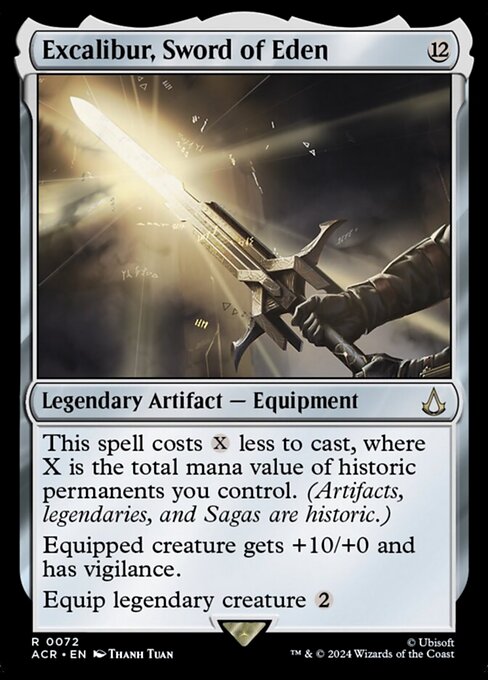 Excalibur, Sword of EdenLegendary Artifact — Equipment
Show 20 more similar cards
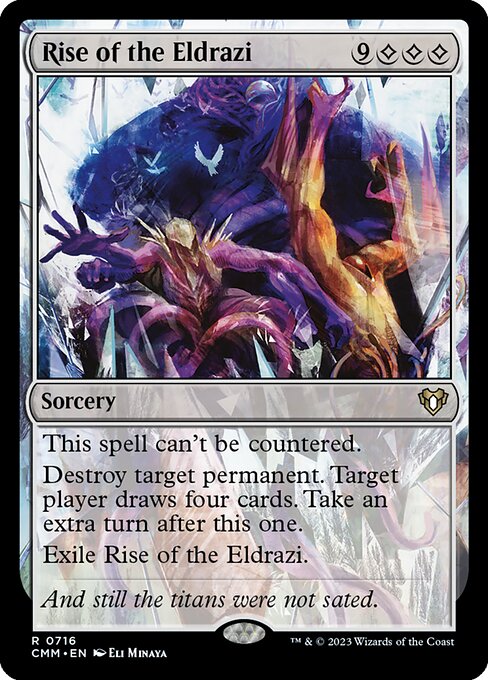 Rise of the Eldrazi
 Sorcery
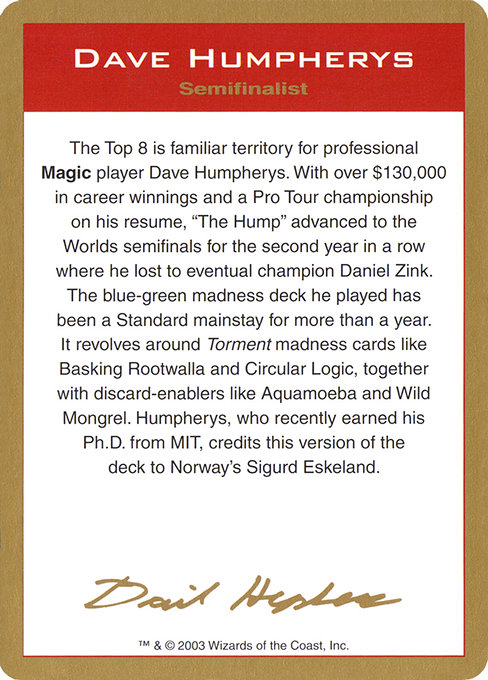 Dave Humpherys BioCard
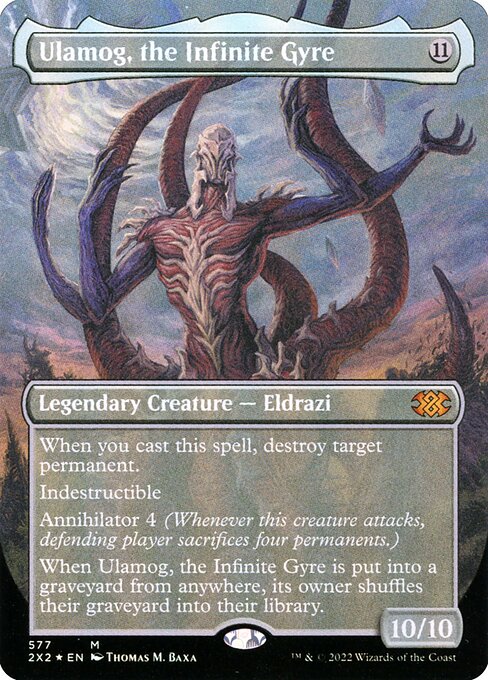 Ulamog, the Infinite Gyre
 Legendary Creature — Eldrazi
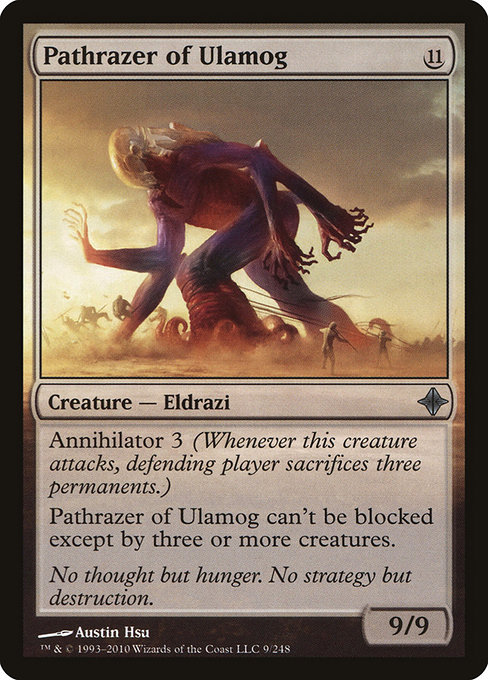 Pathrazer of UlamogCreature — Eldrazi
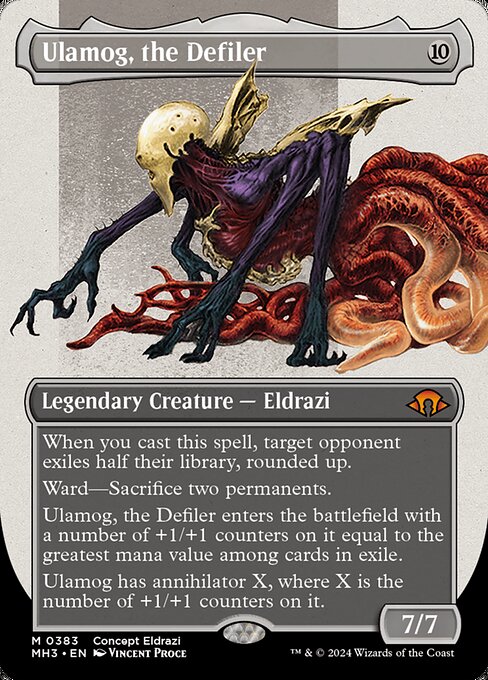 Ulamog, the DefilerLegendary Creature — Eldrazi
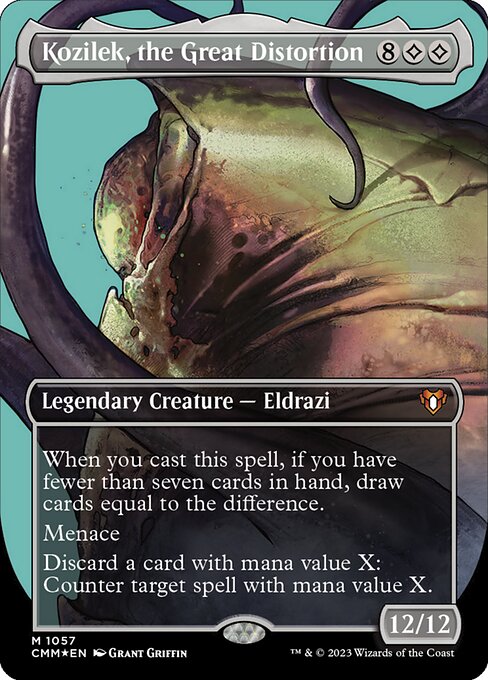 Kozilek, the Great DistortionLegendary Creature — Eldrazi
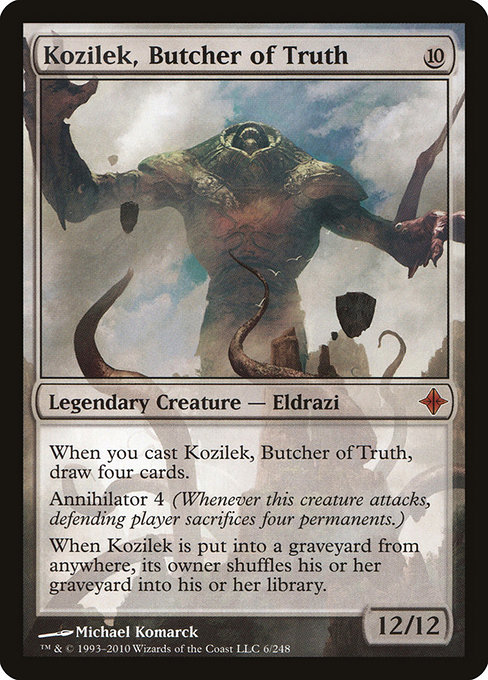 Kozilek, Butcher of TruthLegendary Creature — Eldrazi
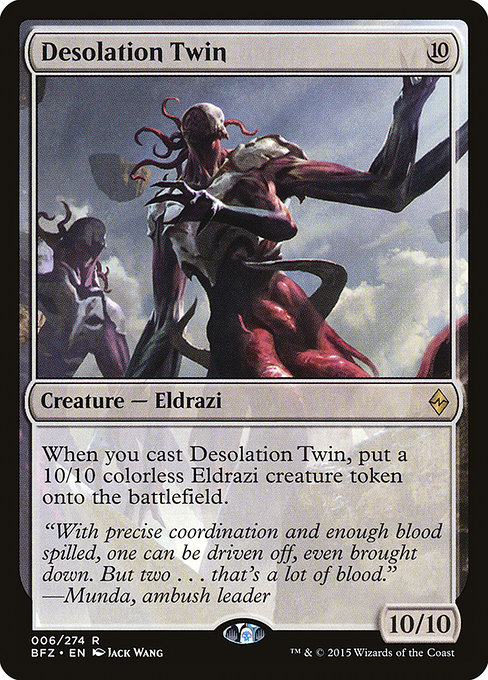 Desolation TwinCreature — Eldrazi
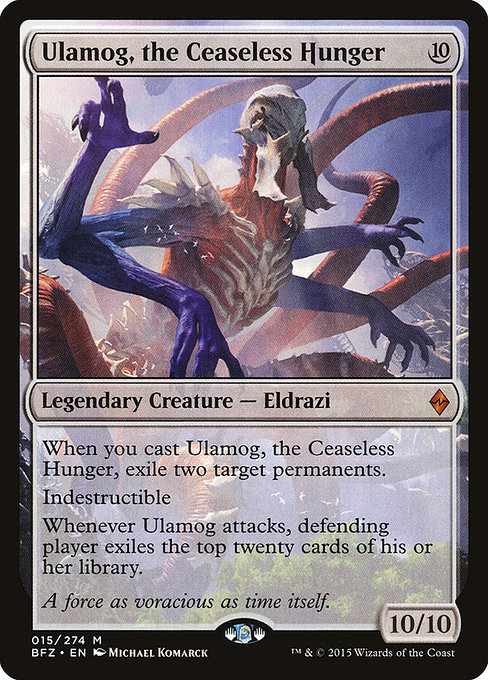 Ulamog, the Ceaseless HungerLegendary Creature — Eldrazi
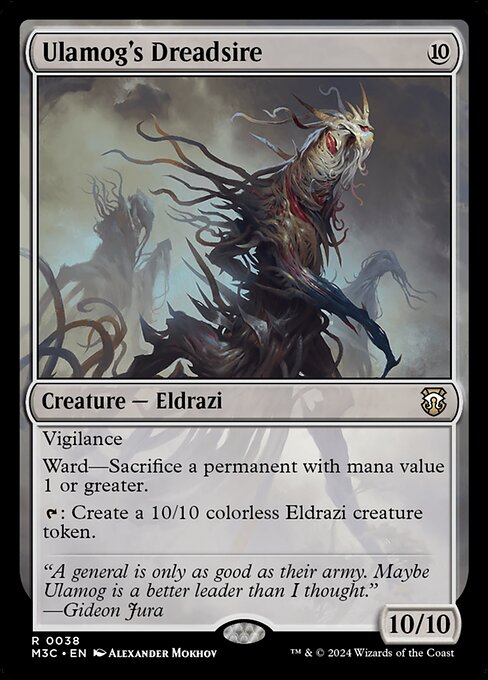 Ulamog's DreadsireCreature — Eldrazi
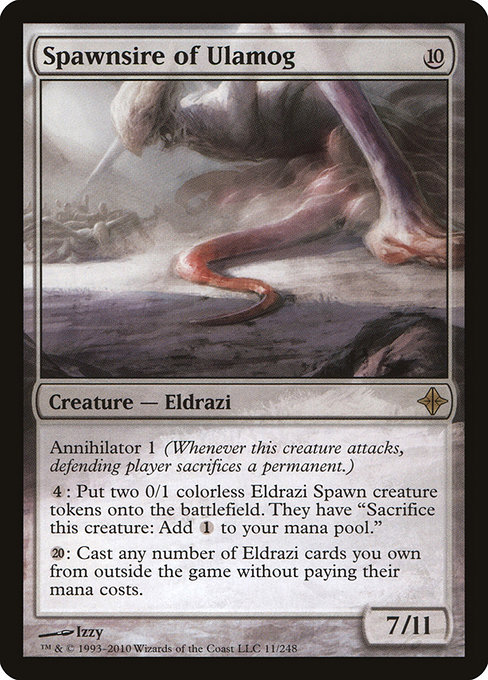 Spawnsire of UlamogCreature — Eldrazi
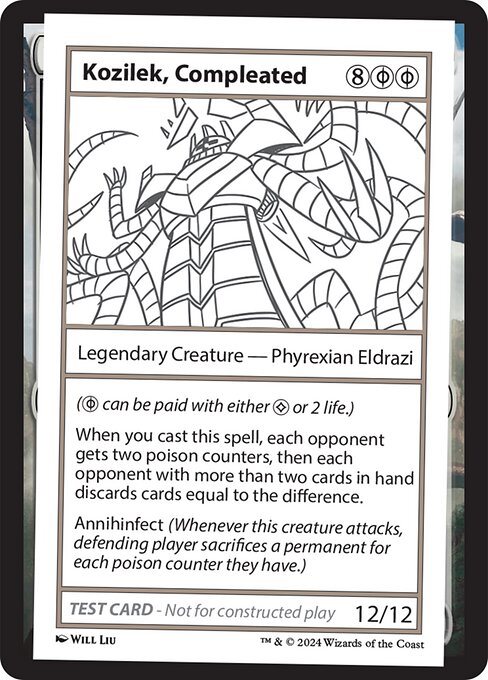 Kozilek, Compleated
 Legendary Creature — Phyrexian Eldrazi
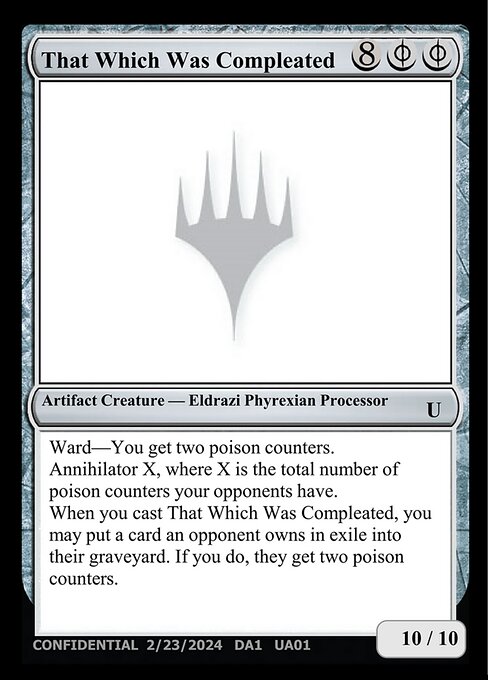 That Which Was CompleatedArtifact Creature — Eldrazi Phyrexian Processor
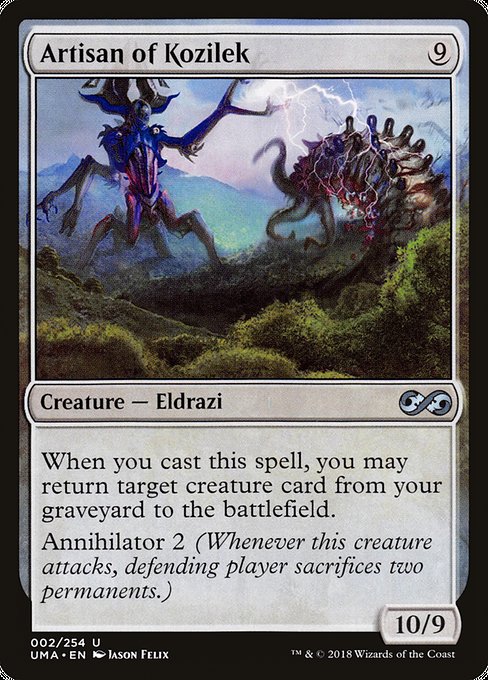 Artisan of KozilekCreature — Eldrazi
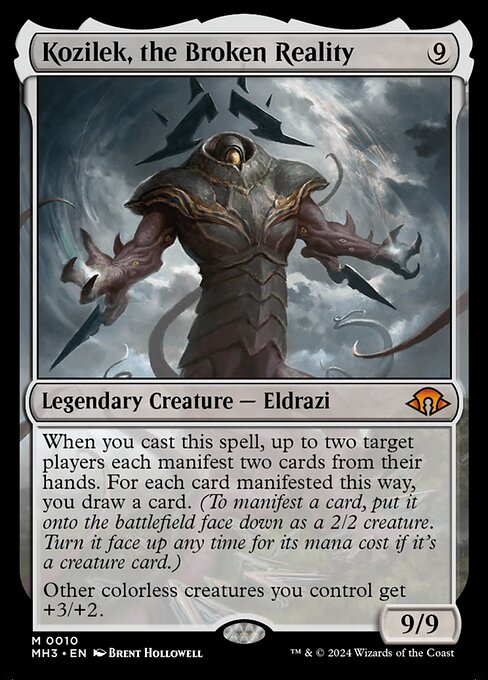 Kozilek, the Broken RealityLegendary Creature — Eldrazi
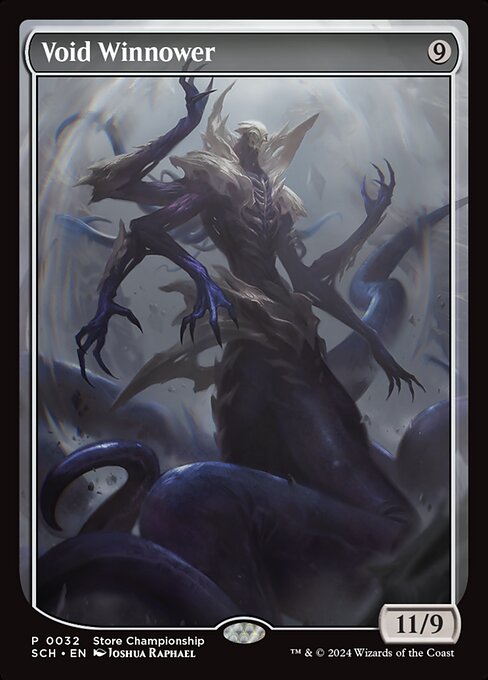 Void WinnowerCreature — Eldrazi
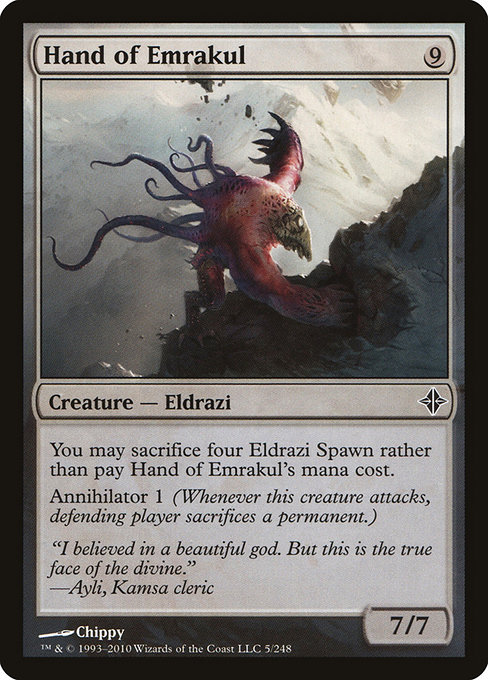 Hand of EmrakulCreature — Eldrazi
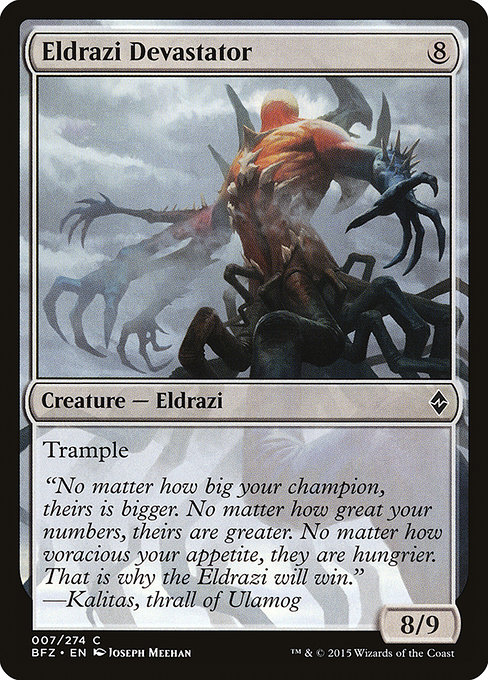 Eldrazi DevastatorCreature — Eldrazi
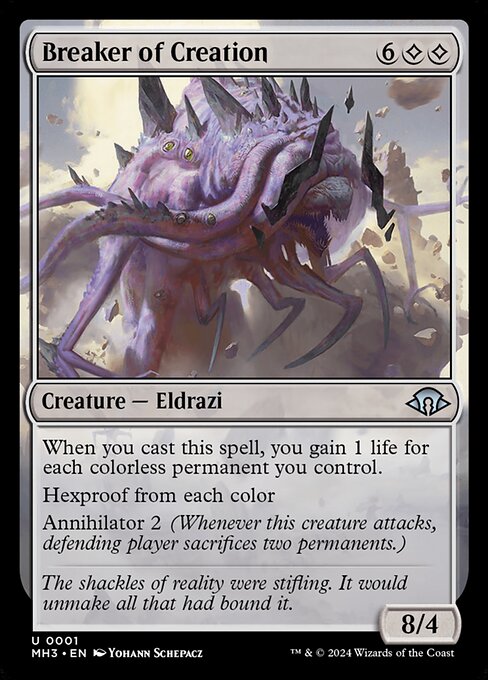 Breaker of Creation
 Creature — Eldrazi
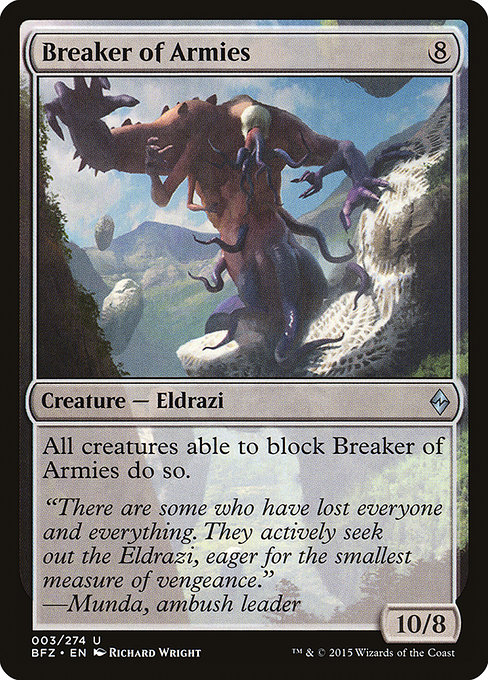 Breaker of ArmiesCreature — Eldrazi