
Norman Osborn // Green Goblin
Norman Osborn

 Legendary Creature — Human Scientist VillainPower and toughness1/1
Card text
Norman Osborn can't be blocked.
Whenever Norman Osborn deals combat damage to a player, he connives. (Draw a card, then discard a card. If you discarded a nonland card, put a +1/+1 counter on this creature.)

 : Transform Norman Osborn. Activate only as a sorcery.
Green Goblin
Legendary Creature — Goblin Human VillainPower and toughness3/3
Card text
Flying, menace
Spells you cast from your graveyard cost  less to cast.
Goblin Formula — Each nonland card in your graveyard has mayhem. The mayhem cost is equal to its mana cost. (You may cast a card from your graveyard for its mayhem cost if you discarded it this turn. Timing rules still apply.)
Showing Marvel's Spider-Man#39
Price
14.86 $
Foil 18.76 $
14 printings · up to 20.06 $
Daily estimate from Scryfall, not a shop quote.
Norman Osborn // Green Goblin rulings
If no card is discarded, most likely because that player's hand is empty and an effect says they can't draw cards, the conniving creature does not receive a +1/+1 counter.
A modal double-faced card can be transformed or be put onto the battlefield transformed. This is a change from previous rules. If an effect instructs you to transform a modal double-faced card on the battlefield, it transforms only if its other face has a permanent type (that is, if its other face isn't an instant or sorcery). If it doesn't, it simply won't transform. Similarly, if an effect attempts to put a modal double-faced card onto the battlefield transformed, it will enter transformed if its back face has a permanent type. If it doesn't, it will simply stay in its current zone.
The mana value of a modal double-faced card is based on the characteristics of the face that's being considered. On the stack or the battlefield, consider whichever face is up. In all other zones, consider only the front face. This is different than how the mana value of other double-faced cards is determined.
Each double-faced card has an icon in the top-left corner of each face. For modal double-faced cards in this set, these icons are a single black triangle for the front face, and a double white triangle for the back face.
Green Goblin's cost-reduction ability doesn't itself allow you to cast any spells from your graveyard. It only reduces the cost of spells that another effect (such as that of Green Goblin's last ability) has allowed you to cast.
To determine whether it is legal to play a modal double-faced card, consider only the characteristics of the face you're playing and ignore the other face's characteristics.
If an effect instructs a player to choose a card name, the name of either face may be chosen. If that effect or a linked ability refers to a spell with the chosen name being cast and/or a land with the chosen name being played, it considers only the chosen name, not the other face's name.
Green Goblin's cost-reduction ability reduces only the generic mana component of a spell's cost. For example, if you cast a spell from your graveyard that would normally cost
, you will have to pay to cast it.If an effect allows you to play a land or cast a spell from among a group of cards, you may play or cast a modal double-faced card with any face that fits the criteria of that effect.
One or both faces of a double-faced card may include a reminder about what's on the other face. This reminder text has no effect on gameplay.
If a resolving spell or ability instructs a specific creature to connive but that creature has left the battlefield, the creature still connives. If you discard a nonland card this way, you won't put a +1/+1 counter on anything. Abilities that trigger "when [that creature] connives" will trigger.
Each face of a double-faced card has its own set of characteristics: name, types, subtypes, abilities, and so on. While a double-faced card is on the stack or battlefield, consider only the characteristics of the face that's currently up. The other set of characteristics is ignored.
Once an ability that causes a creature to connive begins to resolve, no player may take any other actions until it's done. Notably, opponents can't try to remove the conniving creature after you discard a nonland card but before it receives a counter.
If an effect allows you to put a card with particular characteristics onto the battlefield without instructing you to play or cast it, you consider only the characteristics of a modal double-faced card's front face to see if that card qualifies. If it does, it enters the battlefield with its front face up.
While a double-faced card isn't on the stack or battlefield, consider only the characteristics of its front face.
In the Commander variant, a double-faced card's color identity is determined by the mana costs and mana symbols in the rules text of both faces combined. If either face has a color indicator or basic land type, those are also considered.
Norman Osborn // Green Goblin keyword rules
Flying Rule 702.9
Flying is an evasion ability.
A creature with flying can’t be blocked except by creatures with flying and/or reach. A creature with flying can block a creature with or without flying. (See rule , “Declare Blockers Step,” and rule , “Reach.”)
Multiple instances of flying on the same creature are redundant.
Transform Rule 701.28
To transform a permanent, turn it over so that its other face is up. Only transforming tokens and permanents represented by transforming double-faced cards can transform. (See rule , “Double-Faced Cards.”)
Although transforming a permanent uses the same physical action as turning a permanent face up or face down, they are different game actions. Abilities that trigger when a permanent is turned face down won’t trigger when that permanent transforms, and so on.
If a spell or ability instructs a player to transform a permanent that isn’t represented by a transforming token or a transforming double-faced card, nothing happens.
If a spell or ability instructs a player to transform a permanent, and the face that permanent would transform into is represented by an instant or sorcery card face, or is a transforming token that was created with an instant or sorcery face, nothing happens.
Some triggered abilities trigger when an object “transforms into” an object with a specified characteristic. Such an ability triggers if the object either transforms or converts (see rule ) and has the specified characteristic immediately after it does so.
If an activated or triggered ability of a permanent that isn’t a delayed triggered ability of that permanent tries to transform it, the permanent does so only if it hasn’t transformed or converted since the ability was put onto the stack. If a delayed triggered ability of a permanent tries to transform that permanent, the permanent does so only if it hasn’t transformed or converted since that delayed triggered ability was created. In both cases, if the permanent has already transformed or converted, an instruction to do either is ignored.
Some spells and abilities refer to a “transformed permanent.” This phrase refers to a permanent on the battlefield with its back face up that’s also a transforming double-faced card or a transforming token. A permanent with its front face up is never considered a transformed permanent, even if it had its back face up previously.
Menace Rule 702.111
Menace is an evasion ability.
A creature with menace can’t be blocked except by two or more creatures. (See rule , “Declare Blockers Step.”)
Multiple instances of menace on the same creature are redundant.
Connive Rule 701.47
Certain abilities instruct a permanent to connive. To do so, that permanent’s controller draws a card, then discards a card. If a nonland card is discarded this way, that player puts a +1/+1 counter on the conniving permanent.
A permanent “connives” after the process described in rule is complete, even if some or all of those actions were impossible.
If a permanent changes zones before an effect causes it to connive, its last known information is used to determine which object connived and who controlled it.
If multiple permanents are instructed to connive at the same time, the first player in APNAP order who controls one or more of those permanents chooses one of them and it connives. Then if any permanents remain on the battlefield which have been instructed to connive and have not done so, this process is repeated.
Connive N is a variant of connive. The permanent’s controller draws N cards, discards N cards, then puts a number of +1/+1 counters on the permanent equal to the number of nonland cards discarded this way.
Norman Osborn // Green Goblin format legality
Constructed
- StandardLegal
- PioneerLegal
- ModernLegal
- Future StandardLegal
Eternal
- LegacyLegal
- VintageLegal
- PauperNot legal
- PremodernNot legal
- Old SchoolNot legal
- Penny DreadfulNot legal
Commander
- CommanderLegal
- OathbreakerLegal
- Pauper CommanderNot legal
- Duel CommanderLegal
- PreDHNot legal
Arena & online
- HistoricLegal
- TimelessLegal
- AlchemyLegal
- GladiatorLegal
- BrawlLegal
- Standard BrawlLegal
- Competitive BrawlLegal
Other
- TLRNot legal
All printings of Norman Osborn // Green Goblin 14
Cards similar to Norman Osborn // Green Goblin
 A.I.M. Scientists
 Creature — Human Scientist Villain
 Prowler, Clawed ThiefLegendary Creature — Human Rogue Villain
 Leader, Super-GeniusLegendary Creature — Gamma Scientist Villain
 Baron Strucker, HYDRA OverlordLegendary Creature — Human Villain
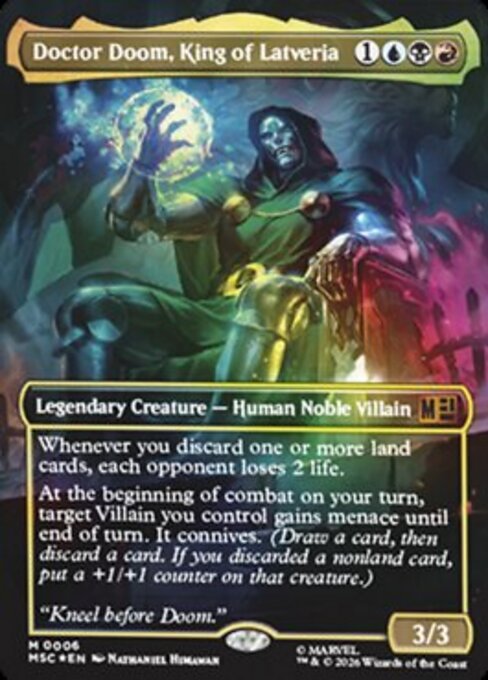 Doctor Doom, King of LatveriaLegendary Creature — Human Noble Villain
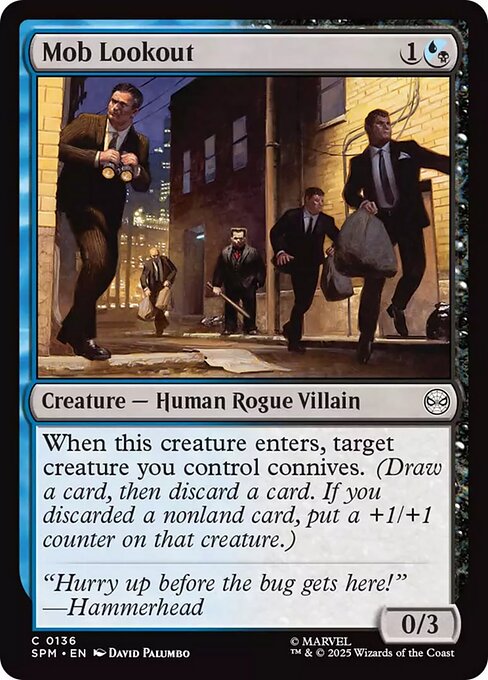 Mob Lookout
 Creature — Human Rogue Villain
 Swordsman, Sharp ScoundrelLegendary Creature — Human Hero Villain
 Red Room RecruitCreature — Human Spy Villain
 Ultron, UnlimitedLegendary Artifact Creature — Robot Villain
 M.O.D.O.K.Legendary Artifact Creature — Villain
Show 20 more similar cards
 Namor, Scourge of the SeasLegendary Creature — Mutant Merfolk Villain
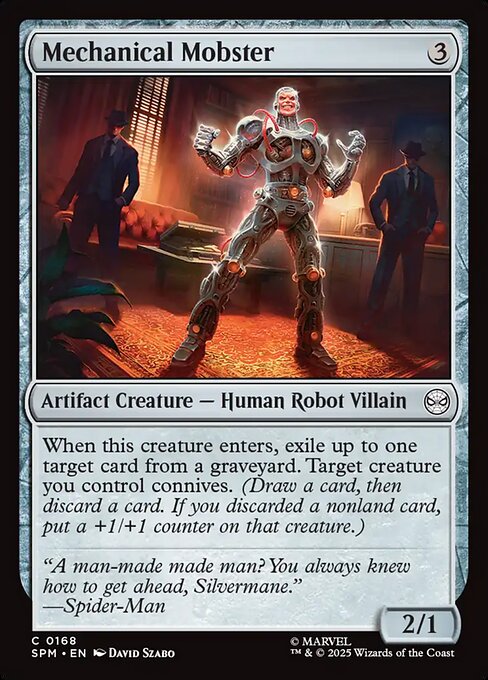 Mechanical MobsterArtifact Creature — Human Robot Villain
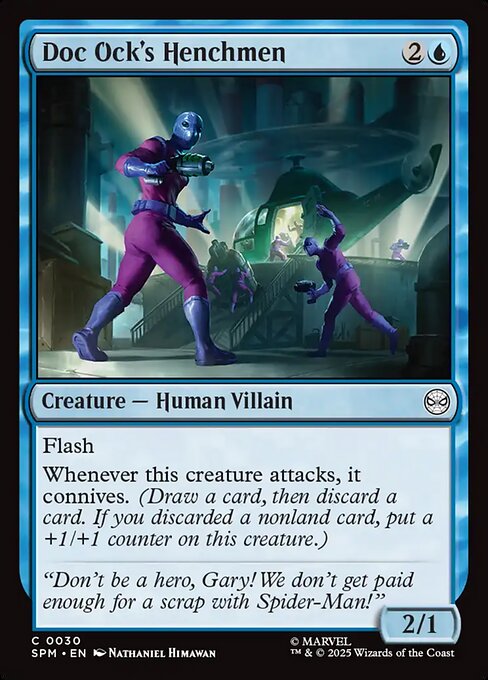 Doc Ock's HenchmenCreature — Human Villain
 Valentina Allegra de FontaineLegendary Creature — Human Spy Villain
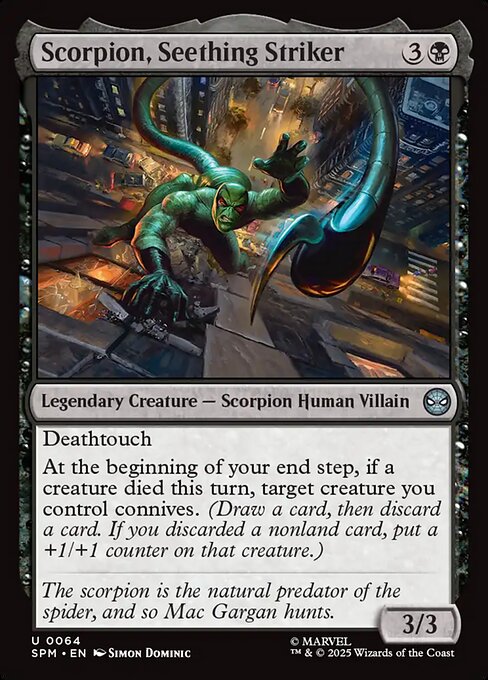 Scorpion, Seething StrikerLegendary Creature — Scorpion Human Villain
 Tiger Shark, Abyssal HunterLegendary Creature — Shark Human Villain
 Kang, Temporal TyrantLegendary Creature — Human Villain
 Pharaoh Rama-Tut
 Legendary Creature — Human Noble Villain
 Madame MasqueLegendary Creature — Human Villain
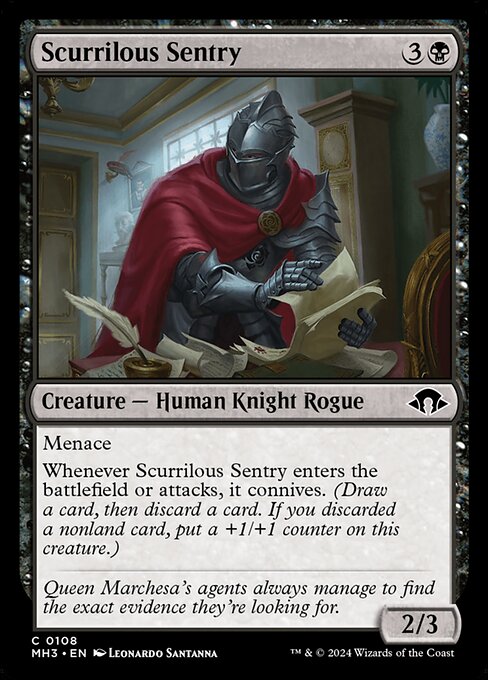 Scurrilous SentryCreature — Human Knight Rogue
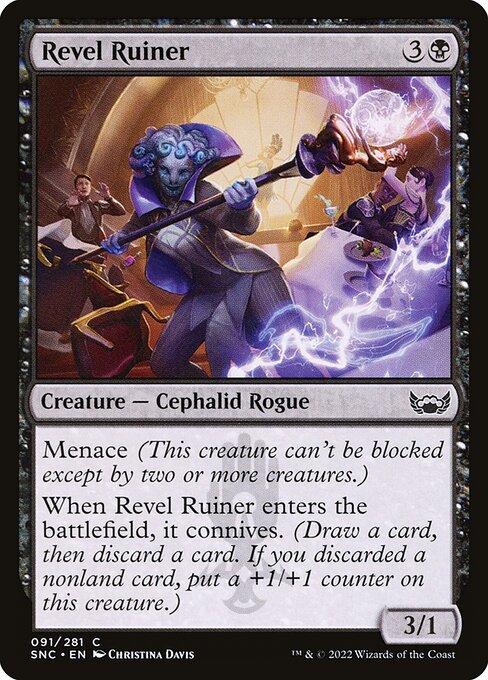 Revel RuinerCreature — Octopus Rogue
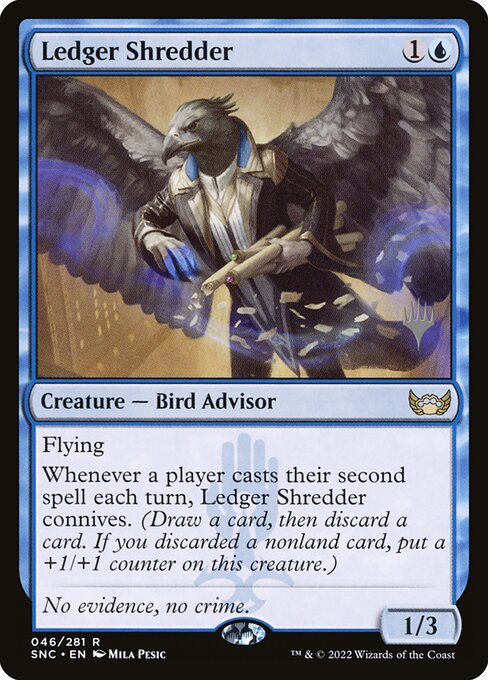 Ledger ShredderCreature — Bird Advisor
 Iron Monger, Sadistic TycoonLegendary Artifact Creature — Human Villain
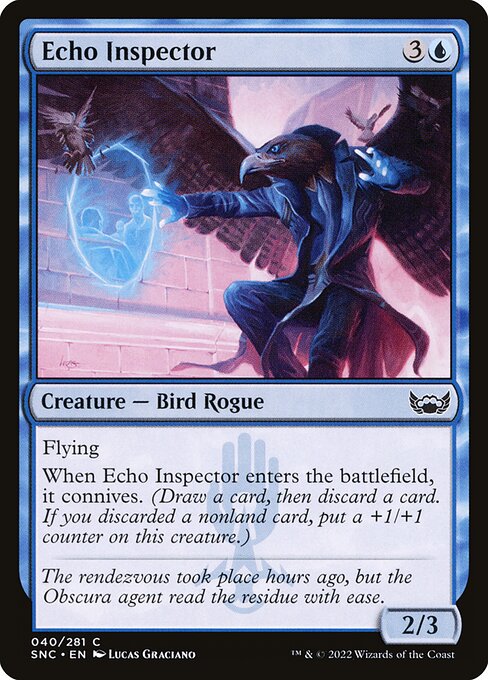 Echo InspectorCreature — Bird Rogue
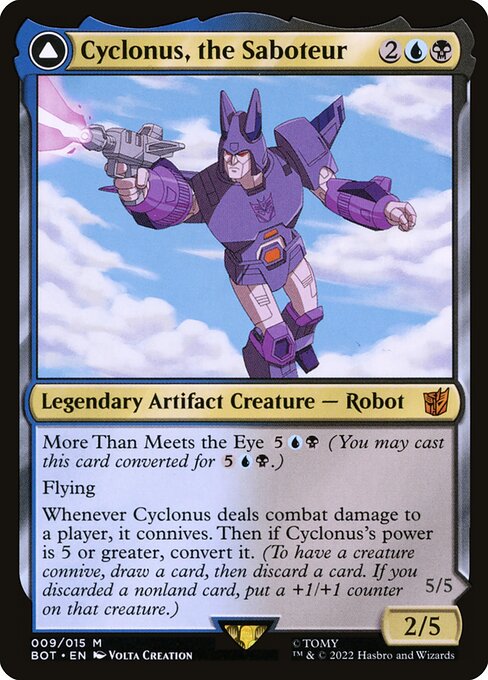 Cyclonus, the Saboteur // Cyclonus, Cybertronian FighterLegendary Artifact Creature — Robot // Legendary Artifact — Vehicle
 Green Goblin, Back for MoreLegendary Creature — Goblin Human Villain
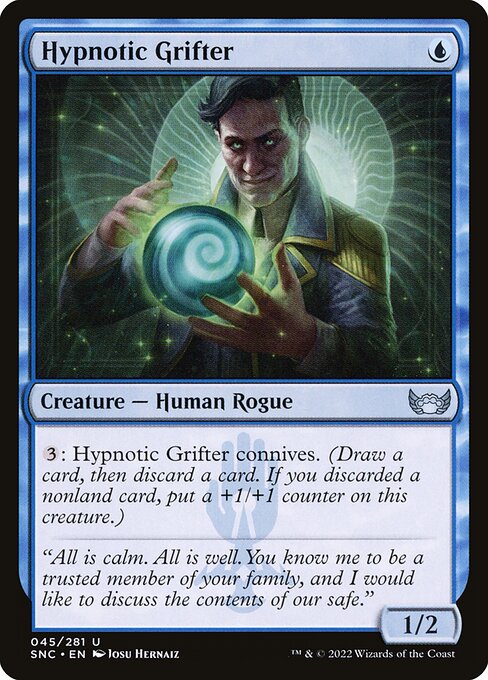 Hypnotic GrifterCreature — Human Rogue
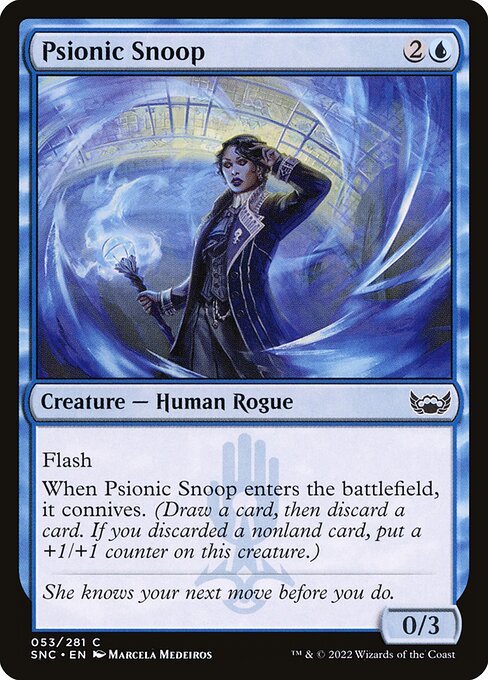 Psionic SnoopCreature — Human Rogue
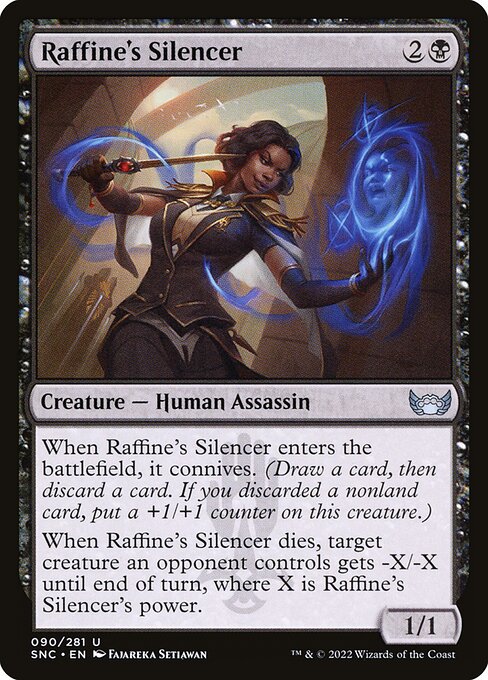 Raffine's SilencerCreature — Human Assassin
 Atlantean SkirmisherCreature — Merfolk Rogue